

Simple Meal Plan to Minimize Common IBS Symptoms

.
I’ve worked with hundreds of people who’ve struggled for decades with unpredictable gut symptoms. Once they learned to identify trigger foods and nourish themselves with the right choices, their digestion often strengthened—and their confidence grew.
Irritable bowel syndrome (IBS) is the world’s most common gut disorder, affecting communication between the brain and digestive system. In IBS, these signals misfire, causing normal digestion to be perceived as pain, bloating, or urgency. This disrupts how intestinal muscles squeeze and relax, changing bowel habits even though the intestines appear normal on tests.
IBS can present in different ways: constipation‑predominant (IBS‑C), diarrhea‑predominant (IBS‑D), and mixed (IBS‑M), where constipation and diarrhea alternate. These patterns help guide dietary choices for symptom relief. In IBS‑C, constipation is the main challenge. People may experience infrequent or difficult bowel movements, hard or lumpy stools, and a recurring feeling of incomplete evacuation, often accompanied by bloating and abdominal discomfort.
Intestinal muscles can contract irregularly—either pushing stool through too quickly, keeping it loose, or slowing it, making it dry and hard. The gut’s nerve endings are extra sensitive to normal stretching from gas or stool, and factors like changes in gut bacteria, immune system activation, stress, and certain foods can amplify this sensitivity. As a result, everyday digestion can trigger severe pain, bloating, and urgency, significantly affecting comfort and quality of life—despite no structural damage to the bowel.
Because IBS-D and IBS-M often require highly individualized dietary approaches—unlike IBS-C—it’s difficult to create a single sample meal plan without first understanding a person’s underlying drivers and food triggers. For example, a 2025 study found that 36.5 percent of IBS-D cases were associated with SIBO, with earlier studies reporting rates as high as 78 percent. In such cases, diet alone is often insufficient, and treatment may require dietary changes combined with medication or targeted nutraceuticals. While elements of this plan may benefit other IBS types, those with IBS-D or IBS-M should work with a healthcare professional to tailor fiber intake, fat levels, and trigger foods to their individual needs, and to determine whether further testing is appropriate.
Why the Meal Plan Helps
The IBS-C meal plan is based on a low-FODMAP diet, a clinically developed approach designed to limit poorly absorbed carbohydrates, sugars, and fibers that can trigger IBS symptoms. FODMAP stands for fermentable oligosaccharides, disaccharides, monosaccharides, and polyols—essentially, short-chain carbohydrates (sugars) that aren’t fully absorbed in your small intestine.
When these sugars reach your large intestine, two things happen: they pull in extra water, and gut bacteria rapidly ferment them, creating excessive gas. This stretches your bowel, causes bloating and cramping, and disrupts normal gut movement, making stools hard or erratic. Common high-FODMAP foods include wheat, certain fruits, onions, garlic, and some beans. Reducing these foods often provides significant symptom relief.
The meal plan below works by:Reducing Fermentation: When you cut back on fermentable carbs and opt for low-FODMAP vegetables and carefully chosen grains, gut bacteria have less “fast food” to ferment. The effect is less gas and belly swelling, and fewer pain signals traveling from your gut to your brain.
Removing Wheat Naturally: By avoiding gluten-containing wheat, you automatically eliminate one of the biggest high-FODMAP foods. Instead, you'll use gluten-free, lower-FODMAP options such as quinoa, millet, and buckwheat (in suitable amounts) so you can enjoy carbs without triggering symptoms.
Balancing Meals Strategically: Including moderate protein and healthy fats at each meal—such as eggs, fish, poultry, olive oil, avocado, nuts, and seeds in tolerated amounts—slows digestion. Slower digestion allows your gut more time to process food, helps stabilize blood sugar, and prevents a gut bacteria “sugar rush.”
Softening Stools: Healthy fats help soften stool, making it easier to pass—especially important for IBS-C. When meals are satisfying and keep you full longer, you’re less likely to reach for high-sugar, high-FODMAP snacks that trigger bloating and discomfort.
Sample 1-Day Meal Plan
This one-day meal plan is designed to gently support digestion, improve constipation, and minimize common IBS triggers while providing satisfying, flavorful meals.Breakfast: Savory Zucchini Pancake
.

- 1 medium zucchini, grated or spiraled
- 3 free-range eggs
- 1/2 cup buckwheat or almond flour
- 1/2 avocado, sliced, or guacamole for serving
- 1/4 cup cherry tomatoes
- 1 tablespoon olive oil or ghee, for frying
- Salt and pepper, to taste
- Whisk eggs in a mixing bowl until well combined.
- Add grated or spiraled zucchini, buckwheat flour (or blended oats), and a pinch of salt and pepper. Mix until the batter is uniform.
- Heat olive oil or ghee in a cast-iron skillet or frying pan over medium heat.
- Pour batter into the pan, spreading it out evenly to form a large pancake, or make two smaller ones.
- Cook for about two minutes on each side, or until golden brown and cooked through.
- Transfer to a plate and serve topped with tomatoes and sliced avocado.
Lunch: Salmon Quinoa Macro Bowl
.
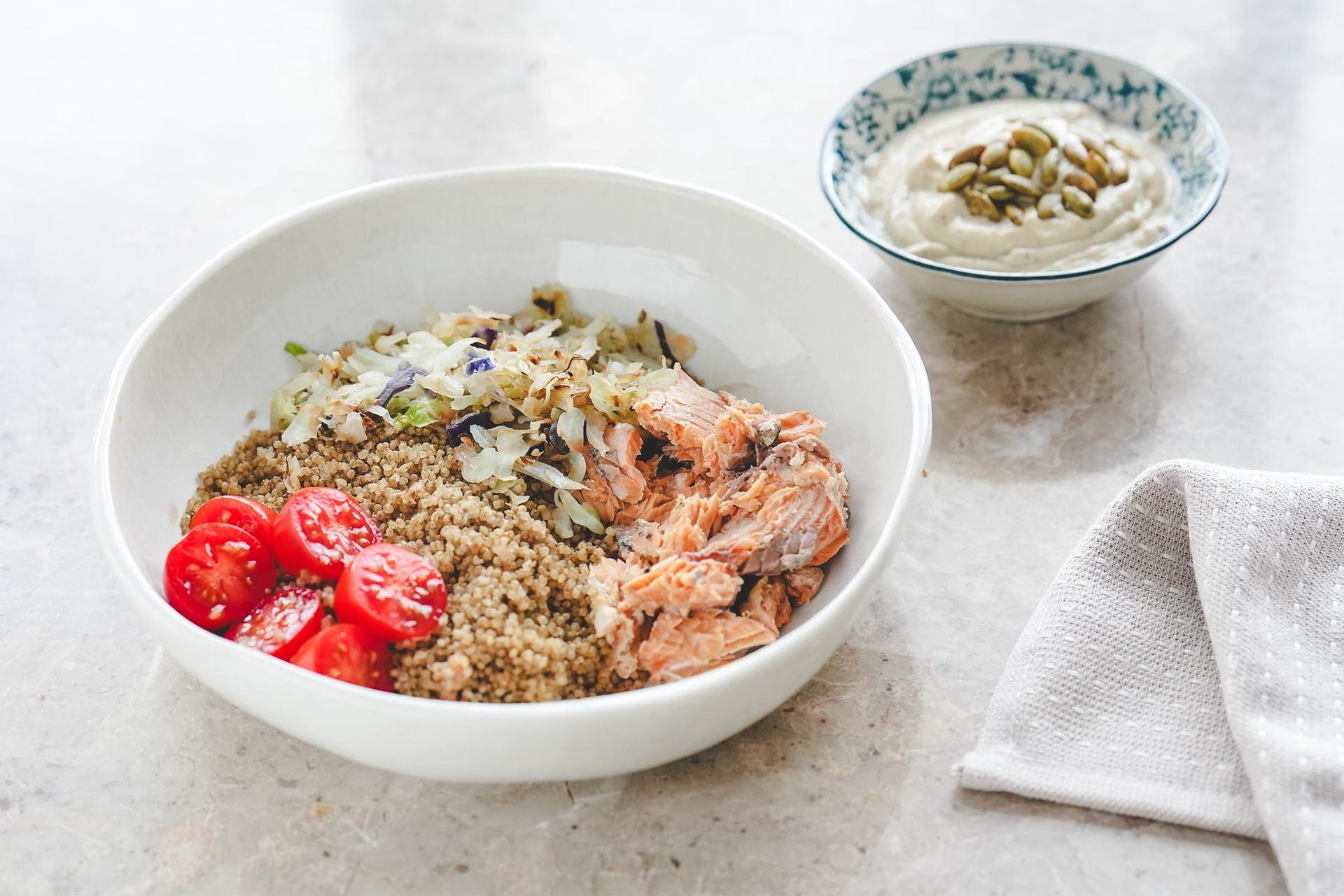
- 4 to 6 ounces wild salmon fillet (fresh or tinned or sardines)
- 1 cup cooked green and red shredded cabbage
- 1/4 cup baby tomatoes, halved
- 1/2 cup pre-cooked quinoa, slightly cooled
- Sea salt, to taste
- 2 tablespoons tahini
- 2 tablespoons lemon juice
- 1 tablespoon water
- Sea salt, to taste
- Optional toppings: 2 tablespoons pumpkin seeds, fresh chopped parsley
- If using fresh salmon, heat a little butter or olive oil in a frying pan over medium-high heat. Cook the salmon until just cooked through, then remove from the heat and set aside. If using tinned wild-caught salmon or sardines, simply open the tin and drain if needed.
- Cook the cabbage in a saucepan or frying pan with a splash of water or extra virgin olive oil, over medium heat for about five minutes, until softened but still bright in color.
- Place the cooked cabbage, baby tomatoes, and pre-cooked quinoa into a serving bowl. Toss gently to combine and season with a little sea salt.
- In a small bowl, whisk together the tahini, lemon juice, water, and a pinch of sea salt to make a smooth dressing, adding a little extra water as needed to reach a pourable consistency.
- Add the salmon or sardines to the bowl, either flaked over the top or arranged alongside the vegetables and quinoa.
- Drizzle with the tahini–lemon dressing, sprinkle with pumpkin seeds and fresh parsley, if using, and serve immediately.
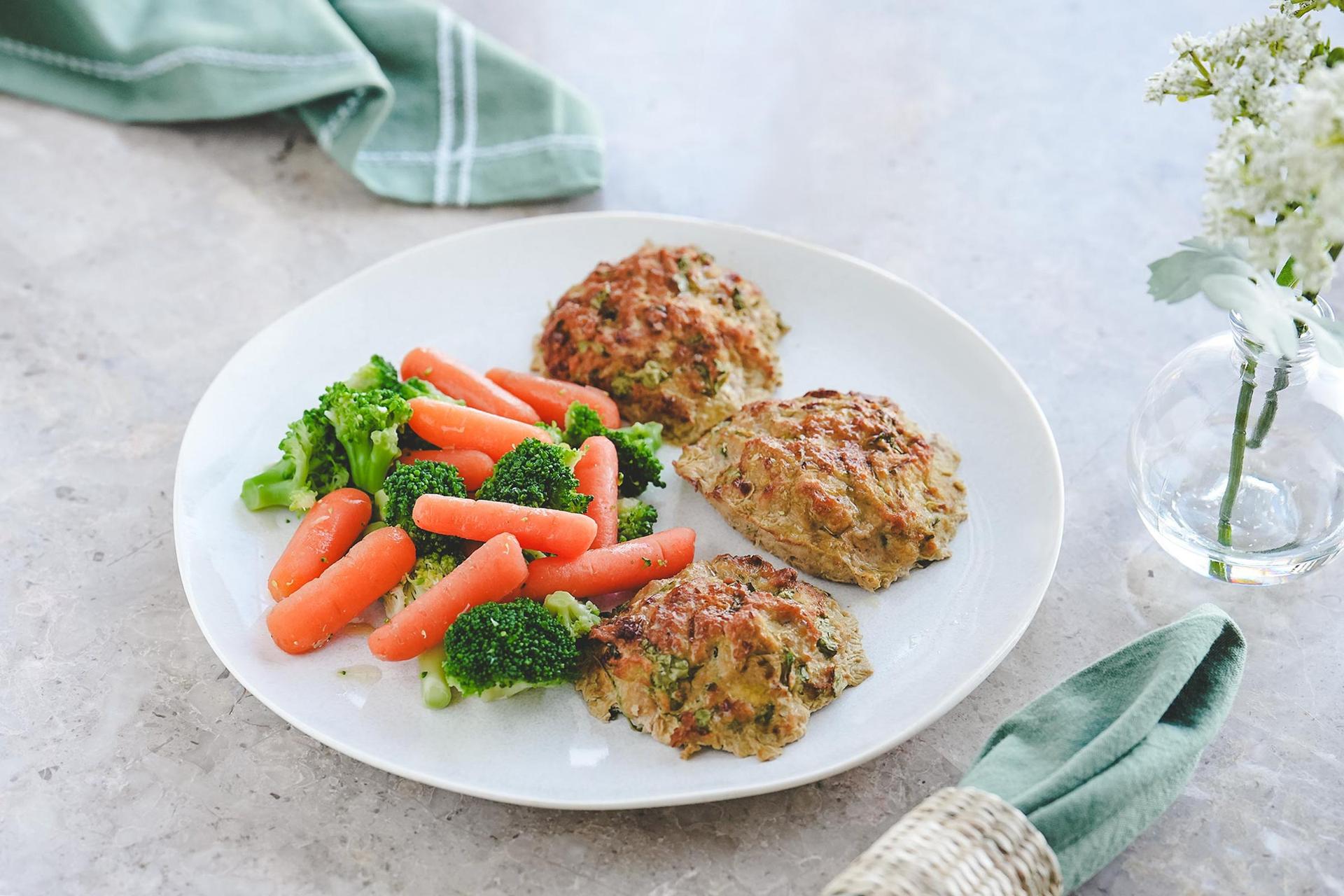
Dinner: Herb Chicken Patties With Broccoli and Carrot
.
.
- 2 ounces chicken or turkey mince
- 1 egg
- 1/2 cup chopped spinach leaves or arugula
- 1 teaspoon dried thyme or Italian herb mix
- 1 tablespoon lemon juice
- Sea salt and pepper, to taste
- 1 to 2 teaspoons coconut oil or extra-virgin olive oil, for pan-frying
- In a bowl, combine chicken mince, spinach or arugula leaves, lemon juice, herbs, salt, and pepper.
- Mix well and shape into two to three small patties.
- Heat the coconut oil or olive oil in a frying pan over medium heat.
- Cook the patties for four to five minutes per side, or until browned and cooked through in the center.
- Keep warm while you prepare the vegetables.
- 1 cup broccoli florets
- 2 medium carrots, sliced or baby carrots
- 1 to 2 teaspoons extra-virgin olive oil or butter
- 1 tablespoon chopped fresh parsley (optional)
- Salt, to taste
- Steam or boil carrots first, then add broccoli and cook until all are tender.
- Drain well, drizzle with olive oil, sprinkle with parsley if using, and season lightly with salt.
Dessert - Kiwi Pudding
.

Kiwi Pudding. (Samira Bouaou/The Epoch Times
.
- 2 kiwifruit, chopped (with or without skin, well washed if using skin)
- 1 tablespoon chia seeds
- 2 tablespoons water
- Optional: 1/4 cup plain yogurt
- In a small bowl or jar, combine the chia seeds with the coconut milk or water.
- Stir well so the seeds are evenly dispersed.
- Let the mixture sit for at least 15 minutes, stirring once or twice, until it forms a thick, gel-like texture.
- Top with the chopped kiwi, arranging some slices on top if desired.
- Serve chilled or at room temperature.
Variations for Those Experiencing Episodes of Diarrhea
If you experience episodes of diarrhea rather than constipation, some modifications can help.Precautions
Always see your doctor if you notice red‑flag symptoms such as blood in the stool, black or tarry stools, unplanned weight loss, fever, or pain that wakes you at night.How to Prevent Flare-Ups
Managing IBS-C entails creating helpful habits that support your gut-brain connection:
- Establish a Toilet Routine: Try sitting on the toilet at the same time each day, such as after breakfast, to encourage regular bowel movements.
- Reduce High-FODMAP Foods: Eat less wheat, onions, garlic, certain fruits, and beans that ferment quickly, pulling water into the bowel, causing gas and bloating.
- Choose Low-FODMAP Alternatives: Opt for low-FODMAP vegetables and suitable grains that provide gentle fiber without causing bloating.
- Stay Hydrated: Drink enough fluids throughout the day to keep your stools soft and easier to pass.
- Move Your Body Regularly: Aim for daily activity like walking or light exercise to help stimulate bowel movement.
- Eat at Regular Times: Maintain consistent meal times and avoid skipping meals or overeating in one sitting.
- Limit Triggers: Cut back on caffeine, alcohol, and ultra-processed foods, which commonly trigger flare-ups.
- Manage Stress and Sleep: Your brain and gut communicate constantly, and stress can tighten or slow the bowel. Practice relaxation techniques, breathing exercises, and maintain a healthy bedtime routine.
FAQs
Q: Do I have to follow a low‑FODMAP diet forever? A: No. The strict low‑FODMAP phase is meant to be short-term. After four to six weeks, you slowly reintroduce foods to see what you personally tolerate—your diet can be individualized to be as varied and relaxed as possible.Disclaimer
This information is not a substitute for medical care. Check with a health care provider if your symptoms change, and red‑flag symptoms such as unexplained weight loss, blood in stool, and fever.What's Your Reaction?
 Like
0
Like
0
 Dislike
0
Dislike
0
 Love
0
Love
0
 Funny
0
Funny
0
 Wow
0
Wow
0
 Sad
0
Sad
0
 Angry
0
Angry
0
















Comments (0)