

Shadow Minister Vows to ‘Directly’ Call Out CCP Hostilities, Pushes for Military Build-Up


Shadow Minister for Defence Industry Jacinta Nampijinpa Price after the Liberals party room meeting for a leadership ballot at Parliament House in Canberra, Australia, on May 13, 2025. AAP Image/Mick Tsikas
Shadow Defence Industry Minister Jacinta Price has vowed to always call out the CCP’s “hostile activities.”
Months into her defence portfolio, the senator outlined her views on how the Australian government should tackle aggression from the Chinese Communist Party (CCP), while advocating for the small-medium business sector to produce weapons and for civilians to be trained with crisis-time skills.
“If a threat is disregarded, downplayed, or left undiscussed by parliamentarians, Australians are unlikely to appreciate the threat and even less likely to support necessary policy responses,” she said.
“That’s why, as a shadow minister in the defence portfolio, I will regularly and directly call out the hostile activities of the CCP,” she wrote in an Aug. 23 commentary in The Australian.
The senator stressed the difference between the CCP from the Chinese people or Australians of Chinese ancestry.
“Just as Indigenous activists don’t speak for Indigenous Australians, the CCP doesn’t speak for Australians of Chinese ancestry—many of whom have criticised communist China’s authoritarianism at great risk to themselves and their families,” she said.
CCP’s Aggression Concern
While China is a major trading partner, Price cautioned that Australians cannot ignore the communist regime’s “military adventurism, coercion, and aggression.”
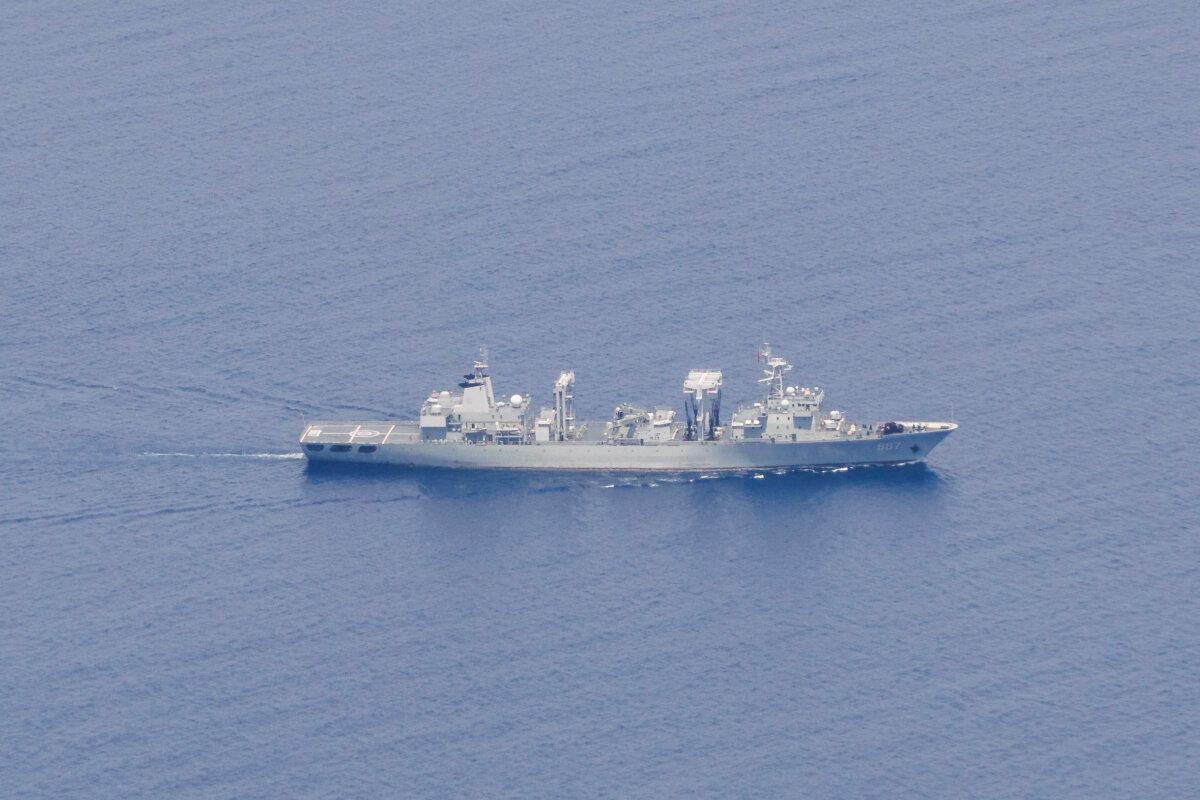
She listed several recent examples, including the CCP’s illegal militarisation of islands in the South China Sea, blocking the Philippines coastguard, intrusion of Japan’s airspace, the navy’s unnotified live-fire exercise off Australia’s coast, and CCP leader Xi Jinping’s vow to “reunify” Taiwan, a self-ruling democracy Beijing views as a breakaway province, by “all necessary means.”
Price also referred to the CCP’s imposition of trade barriers and bans on Australian goods, in retaliation for former Morrison government’s call for an independent investigation into the origins of COVID-19.
“[Prime Minister] Anthony Albanese may yet find out—as other world leaders have—that carrots can quickly turn into sticks,” she said.
“Pointing out that the CCP is causing tensions across our region is neither ‘beating the drums of war’ nor ‘fearmongering.’ Rather, it’s a fact we must face as a nation to stir us into action to help preserve peace in the region and to deter aggression.”
Changed Character of Warfare
Citing the wars in Ukraine and the Middle East, the minister calls for a “sovereign defence industry” that can produce “small, simple, and smart weapons” at speed and scale, rather than just increasing the percentage of defence spending as a share of GDP.
“Precision missiles and munitions, as well as drones, unmanned vehicles, and autonomous vessels, are not a fad—they have changed the character of warfare,” Price said.
She emphasised the need to have more Australian small and medium-sized businesses producing weapons domestically.
“With technology changing the battlefield in unprecedented ways, the closed shop that is our defence industry must be opened up—especially to businesses in the broader economy whose work has potential military applications,” she said.
“In the event of conflict in our region, global supply chains will be even more stretched, making sovereign weapons production an imperative—not a choice.”
.
Basic Training for Civilians
In addition, Price pointed to the gap between the 7,000 people enlisted in 2024-25 as permanent Australian Defence Force (ADF) workers and the 75,000 applicants, stating that the current recruitment processes can’t cope with demand, and many eligible individuals are missing out.
She suggested using sporting clubs, ovals, and recreation centres as weekly gathering hubs for basic training like first aid, navigation, self-defence, field movements, and drone piloting, so that civilians can possess “skills that could be mobilised quickly in a time of crisis.”
“Such sessions—be they run by volunteers, community organisations, veterans or ADF personnel—could whet one’s appetite to join the ADF. At the very least, they would equip Australians with new skills, strengthen community bonds, and nurture a sense of national pride when we need it most.”
.
What's Your Reaction?
 Like
0
Like
0
 Dislike
0
Dislike
0
 Love
0
Love
0
 Funny
0
Funny
0
 Wow
0
Wow
0
 Sad
0
Sad
0
 Angry
0
Angry
0













Comments (0)