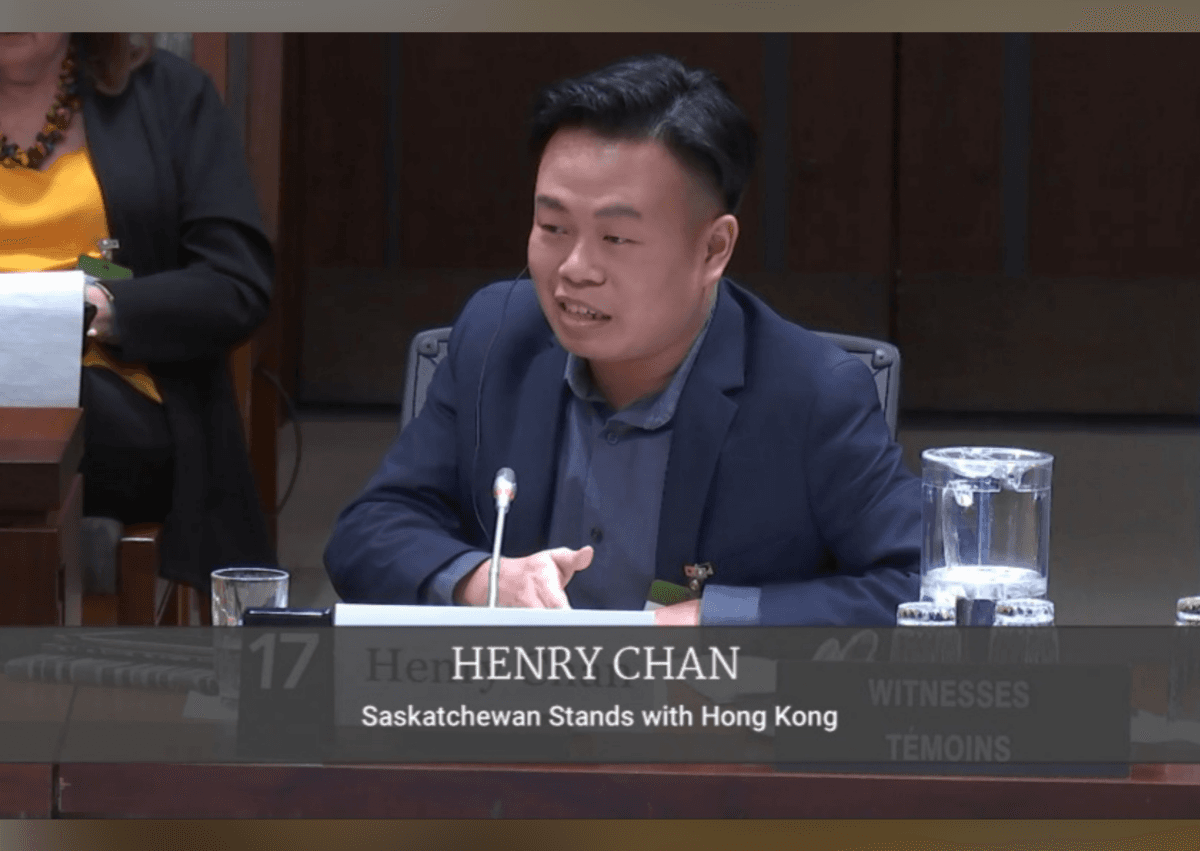
As Premier Scott Moe prepares to travel to China this weekend to engage with Beijing and pursue expanded trade ties, a Saskatoon-based Hong Kong democracy group is warning against closer relations, saying Canada risks vulnerability by deepening ties with a regime that has used canola as a “political weapon.”
“If we are ‘elbows up’ to the United States, why on earth are we not putting our elbows way higher up when it comes to an authoritarian regime—the Chinese government?” he added, making reference to the hockey analogy Prime Minister Mark Carney used as a key slogan during his election campaign while pledging to stand up to U.S. tariffs.
.
China last month
imposed 75.8 percent tariffs on Canadian canola—on top of agricultural tariffs it had imposed earlier this year—weeks after Canada
levied additional tariffs on Chinese steel. Ottawa has not retaliated against any of Beijing’s tariffs but recently
stood by its latest levies on Chinese steel and aluminum citing China’s non-market practices.
Premier Moe is leading a trade
delegation to China from Sept. 6 to Sept. 9, where Canadian officials, including Carney’s parliamentary secretary Kody Blois, will
discuss “trade irritants” with Chinese representatives.
“Saskatchewan has the strongest economy in Canada, but our canola producers and processors are facing a significant challenge due to Chinese tariffs,” Moe said in a Sept. 4 social media
post.
“That [is] why I am going to China, accompanied by the Parliamentary Secretary to Prime Minister Carney, to advocate for the removal of tariffs on canola, peas and other Canadian exports.”
Moe said at a Sept. 4
press conference he would also explore opportunities for the Canada-China relationship to “actually expand as opposed to contracting.” He has also called on Ottawa to remove its 100 percent tariffs on Chinese electric vehicles (EVs) to have canola tariffs lifted, and has previously
suggested that Canada could strengthen trade ties with Beijing to reduce its reliance on the United States.
Carney
said earlier this week that Canada will be looking to expand trade relations with China given its position as Canada’s second-largest trading partner. However, he said increased cooperation will need to be “consistent” with Canadian values, including respect for Canada’s sovereignty.
“We have differences with China, different approaches to a variety of things, but they are our second-largest trading partner, and there are areas where we can cooperate,” Carney said.
Conservative Leader Pierre Poilievre has
spoken against lifting tariffs on Chinese EVs, citing the security risks involved in having Chinese companies collect data from Canadian users. He has said Canada should come up with a strong response to Beijing
’s “unfair and unjustified tariffs,” rather than make concessions.
China is the second largest market for Canadian canola,
after the United States. Total exports of canola products to China last year were valued at nearly $5 billion. Canola is one of Saskatchewan
’s main export products.
.
China
’s first round of tariffs this year came months after Canada imposed 100 percent tariffs on Chinese-made EVs and 25 percent tariffs on Chinese aluminum and steel, with Ottawa
citing “unfair” competition from Chinese producers. The latest Beijing tariffs stem from an
“anti-dumping” investigation the regime initiated last year shortly after Canada announced its tariffs on Chinese EVs and metals.
On Increasing Canada’s Reliance on China
Chan says increasing Canada’s reliance on China, particularly in the canola sector, would give Beijing leverage in future negotiations. He says that Canada should hold off on making concessions and instead focus on trade diversification, with Ottawa supporting canola farmers through the transition to other markets.
“China needs canola, so we should be holding out and not playing our trump card just yet,” Chan said. “Right now, what we’re doing is we’re showing all of our cards before it even hurts.”
He adds that Canada’s push to resolve the canola dispute may signal to Beijing that its use of tariffs as a tool of economic pressure is effective. He says the tariffs appear designed to apply maximum pressure by being imposed while Canada is also dealing with U.S. trade tensions and by leveraging internal political divisions.
“They’re also trying to spur the internal divide between East and West politics, because China probably knows that Premier Moe has a rural farming base that he needs to support,” Chan said.
On diversification of canola exports, Moe has said that replacing the Chinese market could be difficult. “It is going to be very challenging, if not impossible, for us to find another market with the single volume that China may take,” Moe said during an Aug. 21
press conference.
Meanwhile, Carney’s parliamentary secretary, Blois, has said that Canada will continue efforts to reopen the Chinese market while simultaneously pursuing trade diversification. He said that although no single market can match China’s scale, partnerships across multiple jurisdictions could offer a comparable alternative.
Documents released last month
show that upon taking office in March, Canada’s new Trade Minister Maninder Sidhu was briefed by Global Affairs on Beijing’s “economic coercion,” its “pervasive” non-market practices, and Canada’s ongoing efforts to diversify trade away from China.
Canada’s public inquiry into foreign interference identified the Chinese regime as “the most active perpetrator of foreign interference targeting Canada’s democratic institutions,” according to its final
report released in January.
Chan says that closer ties with Beijing would put Canada’s interests at risk given the differences in ideology and values.
“We have to remember that China, as of right now, is the single largest abuser of human rights,” he said.
“We need to make sure that we’re very clear that even if we’re fighting with the United States, we cannot cooperate with China.”
.




 Like
0
Like
0
 Dislike
0
Dislike
0
 Love
0
Love
0
 Funny
0
Funny
0
 Wow
0
Wow
0
 Sad
0
Sad
0
 Angry
0
Angry
0











Comments (0)