

Japan Aids South American Countries to Combat China’s Illegal Fishing, Threats to Maritime Security


.
Japan has announced it is giving aid to South American countries to combat China’s illegal fishing in their territorial waters amid the Chinese communist regime’s expansion of influence in the region.
Analysts told The Epoch Times that Japan’s move signals that the international community is joining forces to combat the threats to global maritime security posed by the illegal Chinese fishing, including intelligence gathering for military purposes and “gray zone” operations.
In addition to drones, the aid equipment includes inflatable patrol boats and tools to analyze drone footage to identify the nationality, crew size, and routes of illegal fishing vessels.
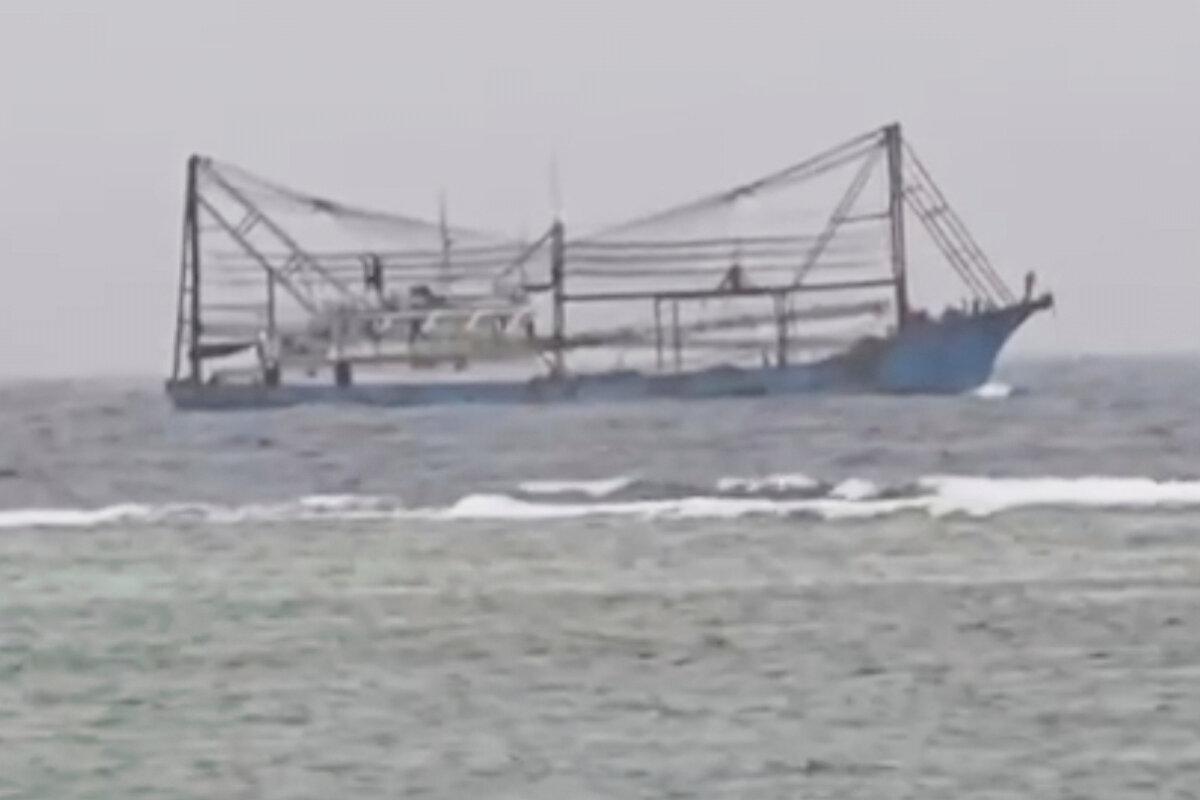
In recent years, Chinese distant-water fishing fleets have frequently appeared in the waters surrounding the Galapagos Islands of Ecuador and have been accused of sailing southward along the coast of Peru after turning off their GPS transponders.
The Japanese government stated that these problems are not unique to South American countries. Chinese fishing vessels have also illegally operated in the Yamato Bank area near the Noto Peninsula in Ishikawa Prefecture, and similar incidents have occurred along Japan’s northeastern Pacific coast.
CCP’s Threats to US Maritime Security
In recent years, the ruling Chinese Communist Party (CCP) has been expanding its influence in Latin America, taking advantage of U.S. foreign policy shifts.Sun Kuo-hsiang, a professor of international affairs and business at Nanhua University in Taiwan, told The Epoch Times that China does worry about backlash, but it often calculates that the political cost is manageable.
“Because many incidents occur just outside South American EEZs (or are hard to document when vessels switch off GPS/AIS), enforcement capacity is uneven, and Beijing can lean on damage-control diplomacy, such as denying wrongdoing, and stressing ‘zero tolerance’ for IUU fishing, while keeping broader economic ties including trade, investment, and market access insulated from fisheries disputes,” Sun said.
Japan’s close ally, the United States, has also started to address the threat posed by the CCP’s distant-water illegal fishing.
In early December 2025, Rep. Gregory Meeks, the ranking Democrat on the House Foreign Affairs Committee, and Rep. Young Kim, the Republican chair of the Subcommittee on East Asia, the Pacific, and the Global Environment, jointly introduced legislation to crack down on illegal fishing from China.
The lawmakers stated that nearly 44 percent of illegal fishing vessels worldwide “originate from China.”
“If Beijing won’t hold these exploitive vessels and individuals accountable, the U.S. must.”
.
As to Japan’s aid to Latin American countries to combat the CCP, Sun said that Japan’s move aligns with U.S. interests, but it’s not best read as Japan doing Washington a favor.
“It’s closer to a parallel strategy: constraining China’s gray-zone–style maritime behavior (IUU fishing and related monitoring problems) by strengthening partners’ maritime domain awareness (MDA) and enforcement capacity—something Japan has also pursued with the U.S. and other partners in prior anti-IUU frameworks,” Sun said.
Chang said the statement made by Raul Pedrozo, a professor at the Naval War College, in 2022 is still true today: “The leading global maritime security threat today is not piracy, but rather illegal, unreported, and unregulated fishing and China is once again the kingpin.”
Chang cited James Fanell of the Geneva Centre for Security Policy in the article, stating that “China’s distant-water vessels are equipped with the BeiDou navigation system, which gives these fleets the capability to provide real-time data regarding the location of other nations’ military, coast guard, and fishing fleet disposition and operating areas.”
“These fishing fleets are composed of elements of the People’s Armed Forces Maritime Militia, which can be used to conduct kinetic operations short of full-fledged wartime actions. China’s fleets are more than just part of a fishing operation; they should be considered another facet of the ‘military-civil fusion’ program,” according to Fanell.
.
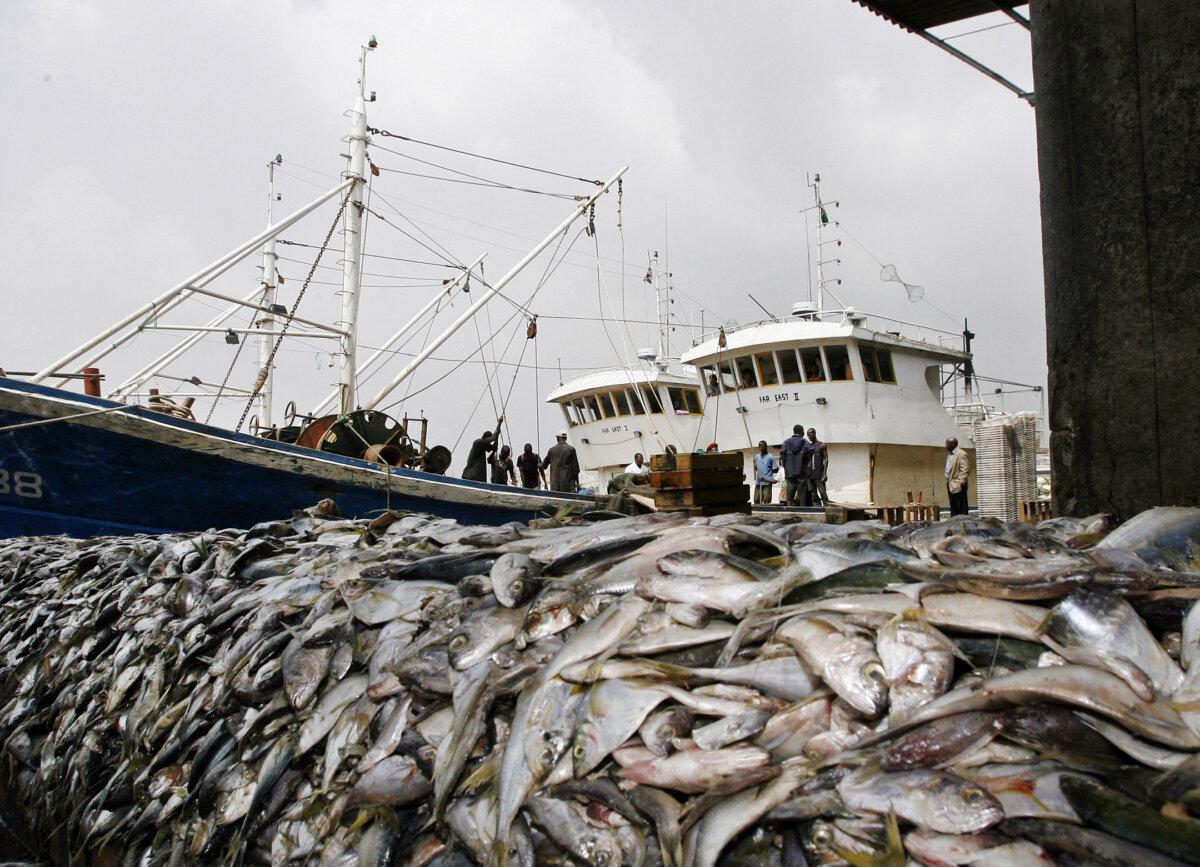
China-based current affairs commentator Xu Zhen told The Epoch Times that because of the CCP’s record of covering up, it’s highly deceptive that the CCP uses fishing or merchant vessels to carry out military missions in a gray zone, such as cutting underwater cables.
However, he said, “Western countries, primarily the United States, have gradually seen through the CCP’s evil tactics. Therefore, they have begun to clear out the CCP’s possible gray zone activities starting from the United States’ backyard, South America, and extend to the Indo-Pacific.”
Xu noted that many South American coastal countries’ coast guards lack the capability to monitor the movements and activities of Chinese fishing vessels that turn off their GPS, operate without reporting their location, and are suspected of illegal fishing and seabed surveying.
“Japan’s move, however, effectively transfers its extensive experience in monitoring Chinese vessels to South America. This is one of the coordinated measures by the Western international community to comprehensively control the threat posed by the CCP. In the future, Western countries will comprehensively clear the CCP’s activities along its Belt and Road Initiative,” he said.
What's Your Reaction?
 Like
0
Like
0
 Dislike
0
Dislike
0
 Love
0
Love
0
 Funny
0
Funny
0
 Wow
0
Wow
0
 Sad
0
Sad
0
 Angry
0
Angry
0














Comments (0)