

Iran's Diplomatic Gamble Backfires: Trump Slams Tehran's Peace Proposal as 'Totally Unacceptable'
Diplomatic efforts to end the 10-week-old US–Iran conflict have hit a new wall. Iran submitted a counteroffer to Washington's peace proposal — only to see President Trump reject it within hours via social media. Oil markets reacted immediately, with prices surging past $100 a barrel.


.
A Counteroffer That Went Nowhere Fast
The latest attempt to break the deadlock between Washington and Tehran lasted less than a day. Iran delivered its response to a US peace proposal through Pakistani mediators on Sunday — and by the time most Americans were finishing their morning coffee, President Donald Trump had already dismissed it publicly.
"I don't like it — TOTALLY UNACCEPTABLE," Trump wrote on Truth Social, giving no further elaboration.
The US proposal had focused on a simple first step: stop the fighting, then negotiate the harder issues — including Iran's nuclear program. Tehran, however, came back with a far more expansive set of demands.
What Iran Actually Demanded
According to Iranian state media and the semi-official Tasnim news agency, Tehran's response was anything but a concession. Iran insisted on a broader settlement that would include an end to hostilities on all fronts — particularly in Lebanon, where Israeli forces continue to clash with the Iran-backed militant group Hezbollah.
Beyond that, Tehran demanded full compensation for war damages, insisted on its claim of sovereignty over the Strait of Hormuz, and called for the United States to lift its naval blockade of Iranian ports, guarantee no further military strikes, remove all economic sanctions, and end the ban on Iranian oil exports.
Iran's President Masoud Pezeshkian made clear his country's posture. Tehran would never "bow before the enemy," he wrote on social media, framing any negotiations not as capitulation but as a defense of Iranian national interests "with resolute strength."
For Washington, those terms were a non-starter.
Oil Markets React Sharply
The immediate loser from the renewed impasse is the global oil market. Brent crude surged past $104 a barrel following news of the breakdown, while US crude (West Texas Intermediate) climbed above $98 — reflecting deep uncertainty about when the Strait of Hormuz will reopen for normal shipping traffic.
The strait is one of the most critical chokepoints in global energy infrastructure. Before the conflict erupted in late February, roughly one-fifth of the world's seaborne oil and a significant share of global liquefied natural gas (LNG) passed through it daily. Since Iran began blocking commercial shipping in response to US and Israeli military operations, that flow has essentially been shut off.
The economic ripple effects are being felt by ordinary Americans. Gasoline prices have risen sharply, and administration officials have acknowledged the pain — while insisting it is temporary. White House economic adviser Kevin Hassett said on Sunday that once the strait reopens, a "gusher of oil" would bring prices back down, potentially ahead of November's midterm elections.
Whether that timeline holds is far from certain.
NATO Won't Act Without a Full Deal
The US has found itself increasingly isolated diplomatically. NATO allies have declined American calls to send warships to force the strait open, insisting that any such mission requires both a full peace deal and an internationally authorized mandate.
At the United Nations Security Council, efforts to pass a resolution guaranteeing freedom of navigation through the strait were vetoed by Russia and China in April — a move that drew condemnation from Western ambassadors and praise from Tehran's representative. Beijing, which receives roughly a third of its oil through the Hormuz Strait, continues to resist military solutions while quietly pressing Iran through back channels.
It is a dynamic that fits a recurring pattern: China benefits from the crisis as a diplomatic broker while avoiding any costs of the conflict itself.
Trump Heads to Beijing as Pressure Mounts
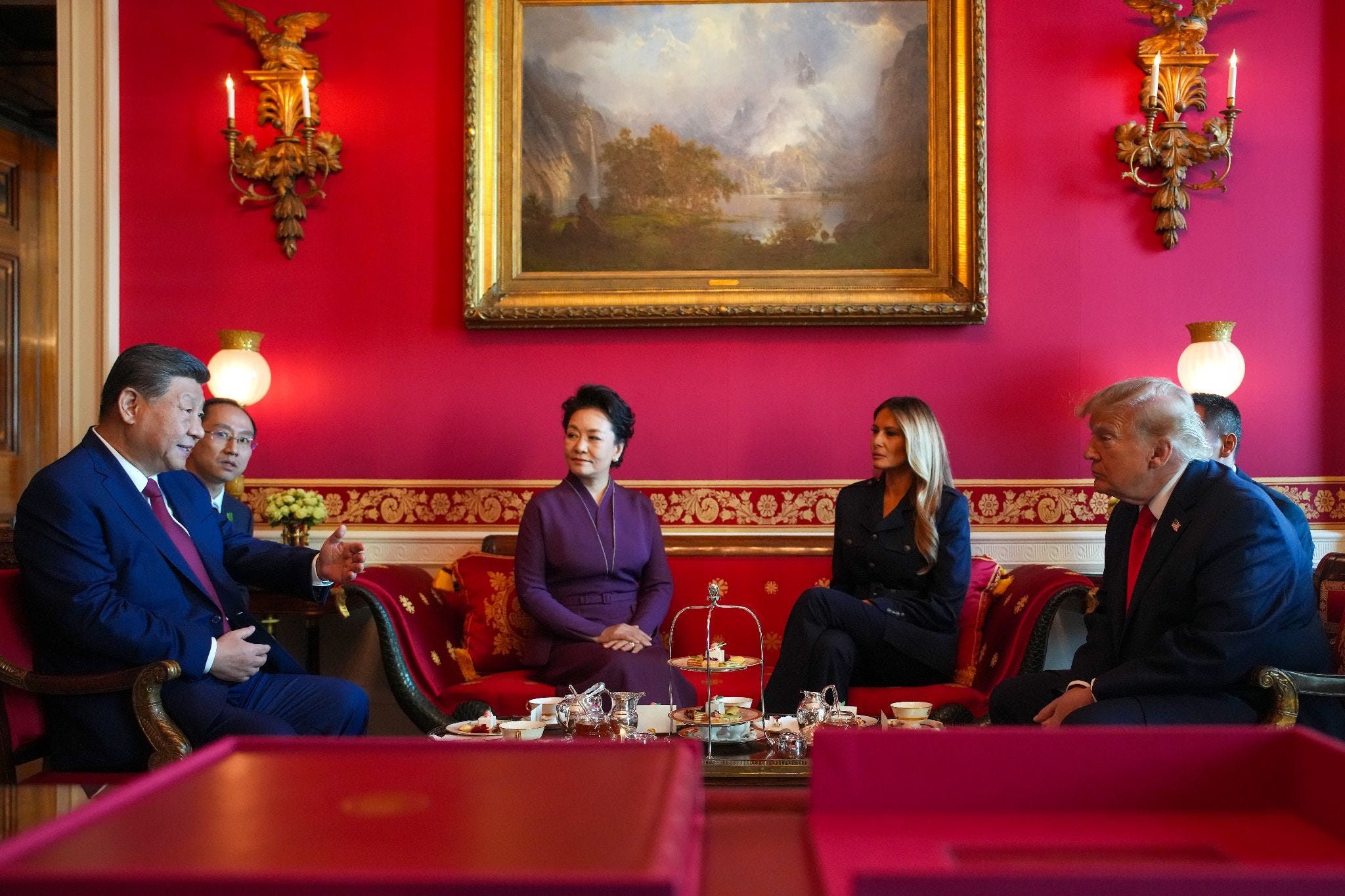
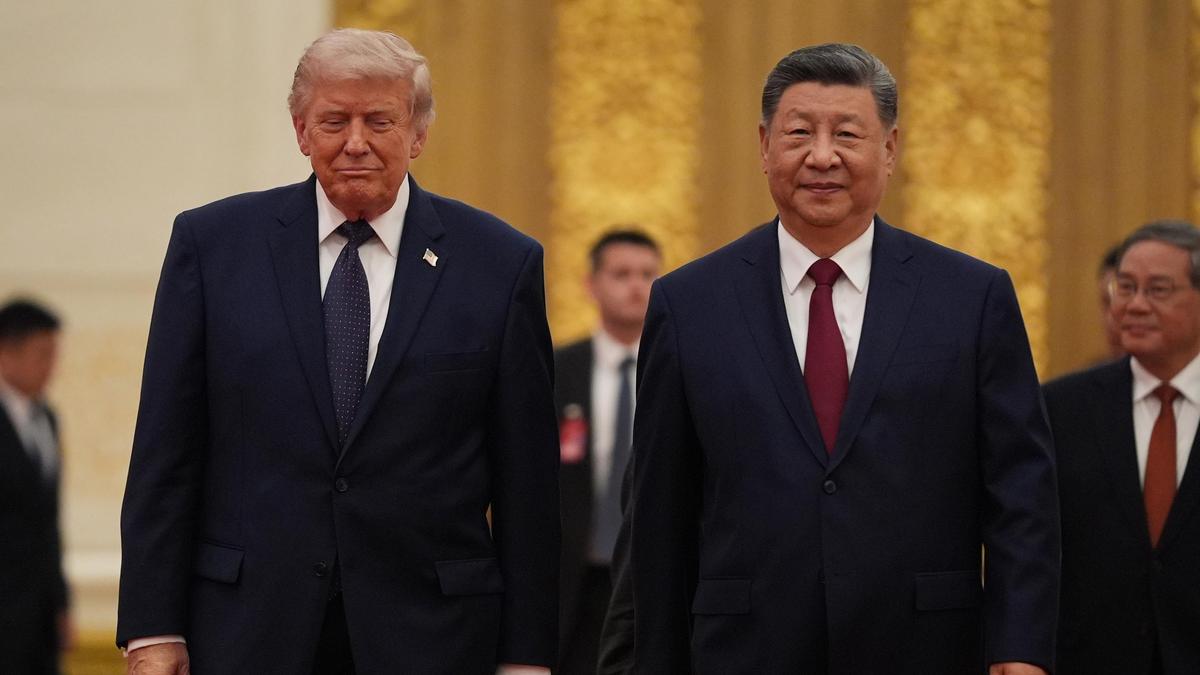
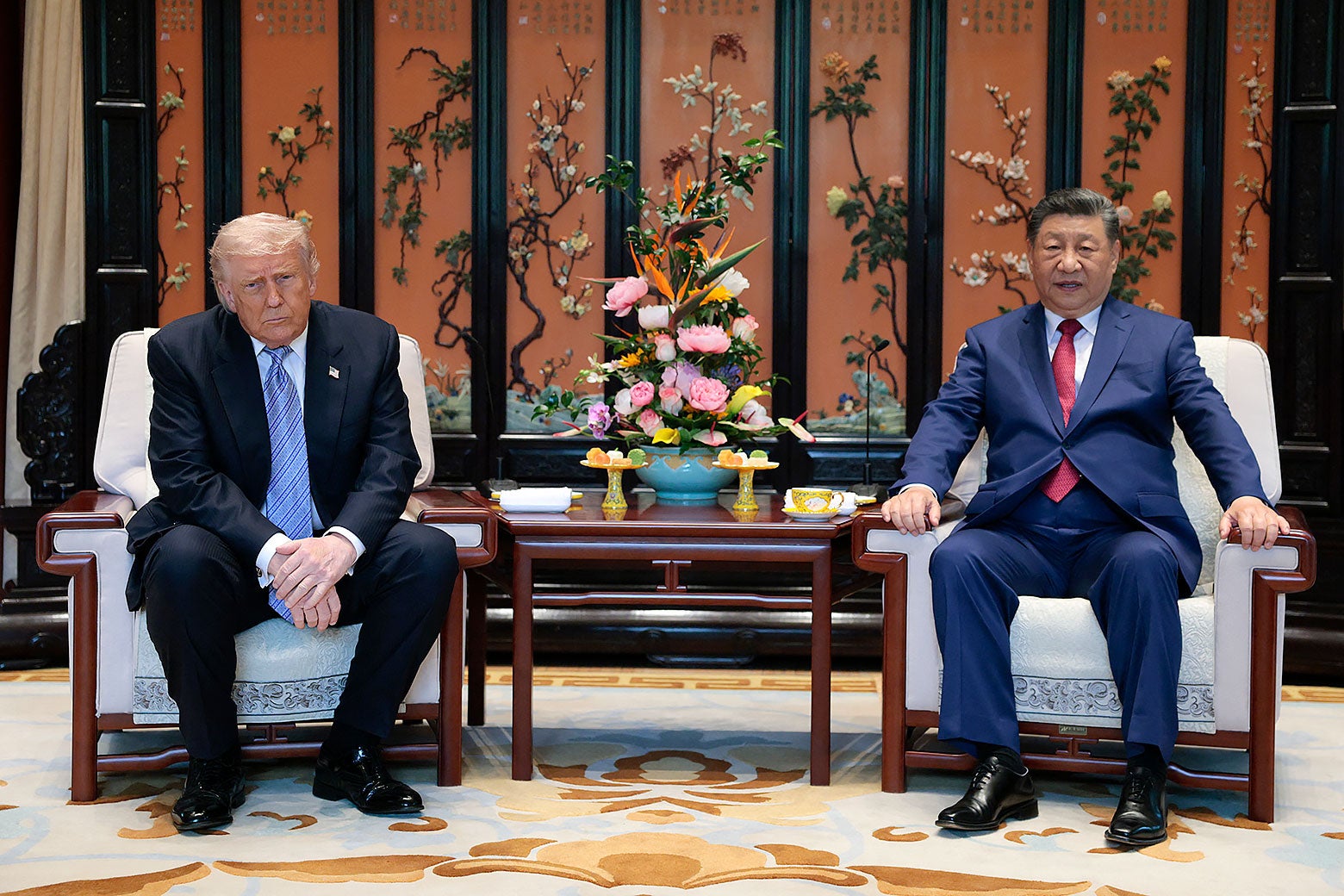
The diplomatic calendar now shifts to Asia. Trump is expected to arrive in Beijing on Wednesday for meetings with Chinese President Xi Jinping. Iran is expected to be a central topic, with the US hoping China will use its economic leverage over Tehran to push for a deal.
Trump has been explicit: he wants China to help close this chapter. Whether Xi is willing to spend that political capital — and what he would demand in return — remains to be seen.
War Far From Over, Netanyahu Warns
Israeli Prime Minister Benjamin Netanyahu, meanwhile, signaled that even a US–Iran ceasefire would not automatically end Israel's military objectives. Speaking in an interview with CBS News' 60 Minutes, Netanyahu said the war was not over because "more work" remains — specifically, removing enriched uranium stockpiles from Iran, dismantling enrichment facilities, and neutralizing Iran's network of regional proxies and ballistic missile capabilities.
Netanyahu said diplomacy would be the preferred path for dealing with the uranium question — but did not rule out the use of force. He also acknowledged, with unusual candor, that Israeli military planners had underestimated Iran's ability to strangle global shipping through the Hormuz Strait. "It took a while for them to understand how big that risk is," he said, "which they understand now."
Drones, Mines, and a Ceasefire Under Strain
On the ground and at sea, the so-called ceasefire — nominally in effect since April 16 — continues to fray. Over the weekend, the United Arab Emirates reported intercepting two drones launched from Iran. Qatar condemned a drone strike on a cargo vessel in its waters that had originated in Abu Dhabi. Kuwait activated its air defenses against hostile drones entering its airspace.
Fighting between Israel and Hezbollah has also continued in southern Lebanon, despite a US-brokered truce. Netanyahu made clear that a resolution with Tehran would not automatically translate into peace in Lebanon — the two conflicts, for now, remain distinct.
What Comes Next
With military options still on the table, diplomatic momentum stalled, energy markets under pressure, and midterm elections less than six months away, the Trump administration faces a tightening window. The president's Beijing visit may be the next real test of whether a breakthrough is possible — or whether the crisis has entered a more dangerous, prolonged phase.
As we have reported previously on the Strait of Hormuz situation, the waterway has become the single most consequential pressure point of this conflict — and the world cannot afford for it to remain closed much longer.
.
Sources:
- Reuters – Trump rejects Iran's response to US peace proposal as 'unacceptable', May 11, 2026: https://www.reuters.com/world/china/trump-rejects-irans-response-us-peace-proposal-unacceptable-2026-05-11/
- CNN – Live updates: Trump calls Iranian response to US peace proposal 'totally unacceptable', May 10–11, 2026: https://www.cnn.com/2026/05/10/world/live-news/iran-war-news
- CNBC – Oil prices today: Trump, Iran, Strait of Hormuz, May 7, 2026: https://www.cnbc.com/2026/05/07/oil-prices-today-trump-iran-strait-of-hormuz-us-crude-brent-.html
- CNBC – Oil prices fall after Iran sends updated peace proposal to mediators in Pakistan, May 1, 2026: https://www.cnbc.com/2026/05/01/oil-prices-today-brent-wti-us-iran-war-trump-war-powers-deadline.html
***
.
What's Your Reaction?
 Like
0
Like
0
 Dislike
0
Dislike
0
 Love
0
Love
0
 Funny
0
Funny
0
 Wow
0
Wow
0
 Sad
0
Sad
0
 Angry
0
Angry
0














Comments (0)