

Feeling Cold and Fatigued? Signs of Yang Deficiency and How to Replenish Energy


.
As winter sets in, many people report increased fatigue—a symptom commonly associated in traditional Chinese medicine (TCM) with a condition known as yang deficiency. Yang is regarded as the vital driving force that maintains normal bodily functions and helps defend against external pathogens.
Yin and yang energies are opposing yet interdependent, and their balance is essential for health. When yin and yang are in harmony, people experience vitality, emotional stability, and well-being. However, an imbalance between them can lead to a variety of health problems.
Symptoms of Yang Deficiency
When yang energy is insufficient, the body’s metabolic functions may weaken, leading to a range of symptoms, Xin said. These include:- Decreased physical strength: Persistent fatigue, weakness in the limbs, and reduced mobility
- Poor appetite: A sudden disinterest in food or a tendency to feel bloated after meals
- Sleep disturbances: Difficulty falling asleep or excessive daytime sleepiness
- Low mood: Especially common in menopausal women, often accompanied by afternoon bloating, irritability, and emotional instability
- Abdominal discomfort: Bloating, diarrhea, or constipation
- Breathing issues: Frequent sensations of chest tightness
- Lowered body temperature: Cold hands and feet
- Heart yang deficiency: Shortness of breath, heart palpitations, and labored breathing, which may indicate heart failure
- Spleen yang deficiency: Frequent diarrhea and rapid food passage through the digestive system
- Kidney yang deficiency: Lower back and knee soreness, fatigue while climbing stairs, cold limbs, and frequent nighttime urination
Sun Exposure to Replenish Yang Energy
Sunlight is a natural source of yang energy. A traditional saying goes: “Sunbathing in winter is better than drinking ginseng soup.”The best times to sunbathe are early morning or late afternoon in summer, and around midday in winter, when sunlight is gentler or stronger, respectively. Each session should ideally last 20 to 30 minutes to avoid sunburn.
Xin also recommends different timing for sun exposure based on individual needs:
Alternative Methods for Replenishing Yang Energy
Xin also recommends other methods to replenish yang energy, especially during the winter:Use of Far-Infrared Devices
Far-infrared lamps, often used in TCM clinics, help deliver heat deeply into tissues.Hot Spring Bathing
Some mineral-rich hot springs emit infrared-like wavelengths, which may help activate yang energy.Diet Therapy
Eating warming foods such as ginger tea or ginseng soup can help support yang energy.Moderate Physical Activity
Gentle forms of exercise—tai chi, squats, walking, or yoga—can stimulate yang energy.Moxibustion
Burning moxa sticks releases infrared radiation, which promotes microvascular dilation and enhances blood circulation. This may boost metabolism, strengthen the immune system, and relieve pain. However, moxibustion should be used in well-ventilated spaces or outdoors, due to the smoke.Electric Heaters
Carbon-based heaters emit more infrared-like wavelengths than halogen heaters, with higher efficiency and lower temperatures for safer heating.Infrared-Embedded Products
Blankets, electric pads, and heat wraps made from infrared-emitting materials may relieve localized pain—especially effective when used on the lower back during sleep.Hair Dryers
Though milder, hair dryer heat mimics red light therapy. Directing warm air to specific acupoints may help promote circulation and dispel cold.
According to TCM, meridians are pathways through which energy flows within the human body. These channels connect the internal organs to the body’s surface. Along the meridians are specific points known as acupoints, each with distinct functions. Stimulating these points through techniques such as acupuncture and massage may help treat organ-related health conditions.Replenishing Yang Energy With a Hair Dryer
Warm air from a hair dryer can be directed at specific acupoints on the body to help support yang energy, Xin said.When using a hair dryer to stimulate acupoints, consider the following:
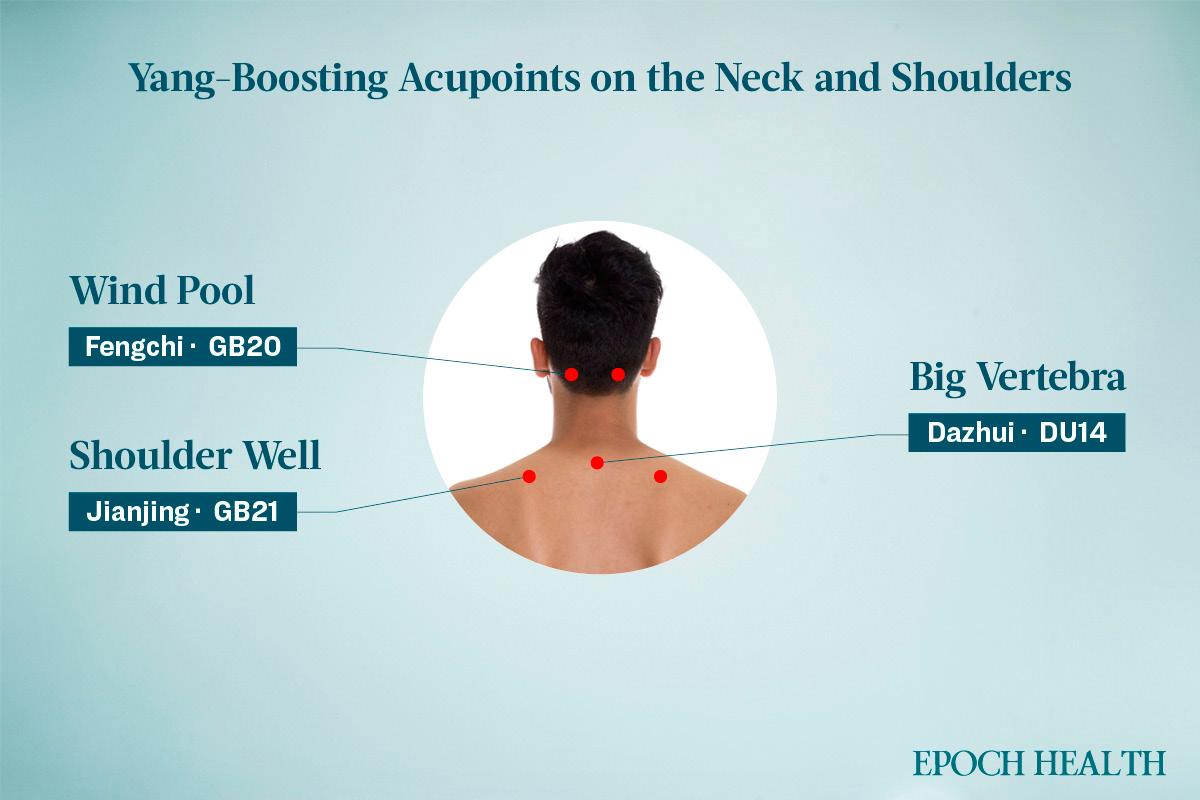
Neck and Shoulder Area
For those prone to cold heads, tightness, or headaches, warm the Fengchi (located where the two tendons meet at the back of the neck), Jianjing (the highest point of the shoulders), and Dazhui (the most prominent point at the base of the neck when the head is tilted forward) acupoints.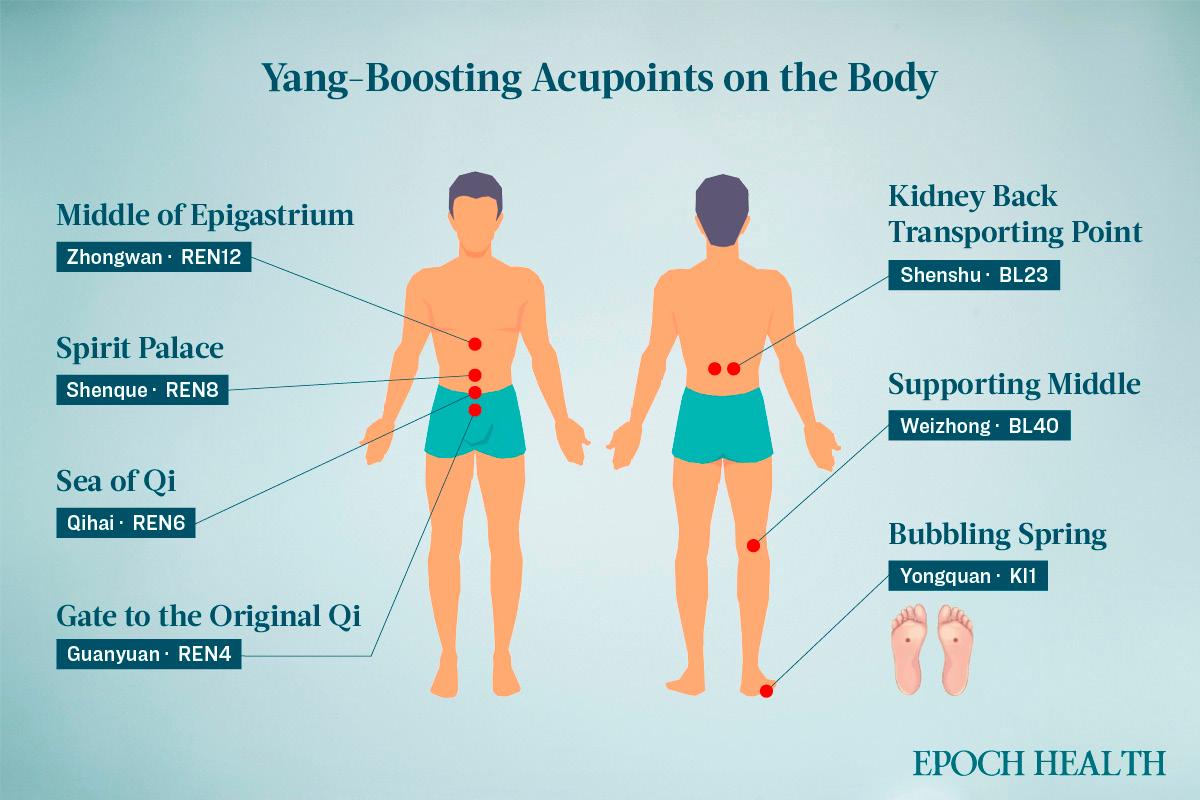
Abdominal Area
For people with diarrhea, menstrual cramps, or general abdominal discomfort, target Zhongwan (between the belly button and the bottom of the sternum), Shenque (navel), Qihai, and Guanyuan (both located between the navel and pubic bone).Lower Back
For kidney deficiency or soreness, use warm air on the Shenshu acupoints in the lumbar region, or apply a heating pad for similar benefits.Behind the Knees
To address leg weakness or difficulty walking uphill, warm the Weizhong acupoint at the crease behind the knee.Soles of the Feet
For cold feet or poor circulation, target the Yongquan acupoint—located about one-third down the sole from the toes.Key Areas to Keep Warm
Xin emphasized the importance of keeping these areas warm:Head and Neck
For people with cardiovascular conditions, exposure to cold in the head and neck area may increase the risk of stroke.Abdomen
According to TCM, the abdomen plays an important role in producing energy from food and drink—known as postnatal qi—which is crucial for digestion, nutrient absorption, and overall metabolism. Exposure to cold may disrupt these functions and lead to diarrhea.Lower back
The lower back corresponds with the kidneys. People with kidney weakness are more likely to experience lower back soreness or fatigue. A heating pad or warm compress may help—but they should be used over clothing to prevent burns.Feet
Cold exposure to the feet can lower core body temperature. Wear warm footwear in cold weather and avoid slippers or going out barefoot.Diet Therapy for Winter Support
In addition to staying warm, diet therapy can help the body resist cold, Xin said.- Pumpkin and pork rib soup
- Chestnut and chicken stew
- Chinese yam and pork rib soup
- Lamb stew with dang gui (angelica sinensis)
- Ginger–red date millet porridge
What's Your Reaction?
 Like
0
Like
0
 Dislike
0
Dislike
0
 Love
0
Love
0
 Funny
0
Funny
0
 Wow
0
Wow
0
 Sad
0
Sad
0
 Angry
0
Angry
0


















Comments (0)