

Commission Makes Sweeping Recommendations to Counter Beijing’s Aggressive Tactics


.
“Without swift and focused action, the United States could face a future where we depend on China for access to the most cutting-edge innovations in fields from medicine to robotics.”
Pointing to how Beijing recently weaponized its monopoly over critical minerals, Price warned the same could happen in pharmaceuticals and other equipment.
“We can be sure China will be ready to weaponize these chokepoints again when politically advantageous,” Price said.
At the same time, Beijing is manipulating global prices across strategic sectors by dumping subsidized products on the market, and influencing Southeast Asian nations to its benefit.
Beijing Courts, Manipulates Neighbors
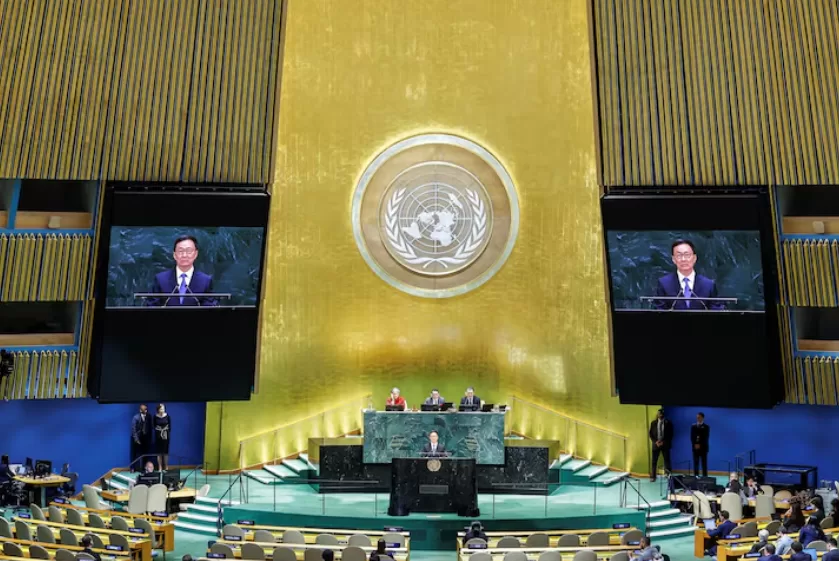
The 2025 annual report opens with Beijing’s diplomatic push this year to create a new world order, traversing the world, “claiming that China—and not the United States—is the more responsible steward of international order and the global economy.”At the hearing, Randall Schriver, vice chair of the commission, listed several actions Beijing has taken to “threaten the very international order it proclaims to uphold.”
He pointed to the spike in incidents and new capabilities used around Taiwan, which Chinese leader Xi Jinping has said he wants to take by force if necessary.
“These include self-propelled landing barges, the world’s largest amphibious assault ship, and hypersonic anti-ship missiles that could target U.S. warships—just to name a few,” he said.
Schriver noted that Chinese incursions into Taiwanese airspace increased 15 times in the past five years, from 20 to more than 3,000 in 2024, and are on pace to increase by a third in 2025.
Chinese vessels have clashed with the Philippine coast guard and other ships regularly. Beijing also funds and enables Russia’s war efforts and supports the North Korean regime financially, enabling its nuclear buildup.
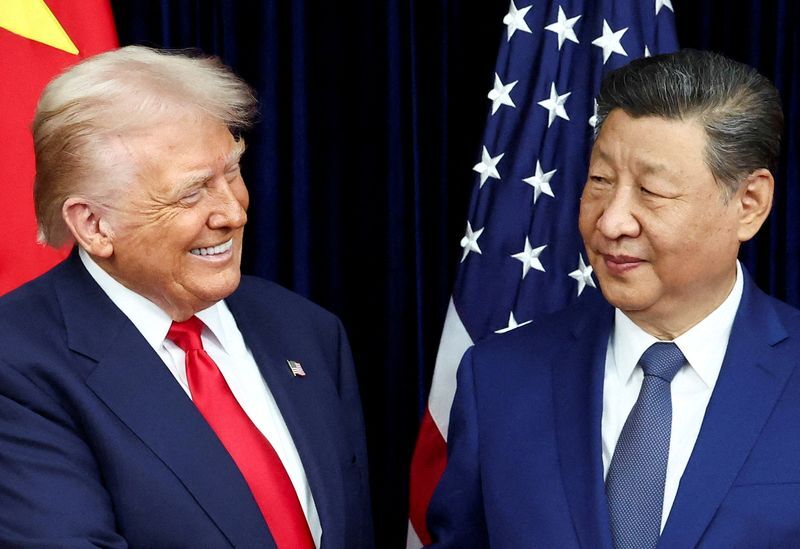
At the same time, Beijing has been courting neighbors, as seen in several international summits this year.
But Schriver said commission fact-finding missions to the Philippines, Indonesia, Vietnam, and Cambodia, and found that though proximity to China means Beijing affects “virtually all aspects” of their lives, but they are very different “politically, economically, and culturally.”
“The message delivered to us by interlocutors in all these countries was consistent and clear: deeper economic and security engagement from the United States in Southeast Asia would be welcomed,” Schriver said.
The report notes that Beijing’s dumping practices affect developing nations as well, driving factories in some of these Southeast Asian countries out of business.
The Chinese regime also influences the scam centers in Southeast Asia, in the sense that it cracks down violently when they target Chinese citizens, which incentivizes the scam rings to primarily defraud Americans, according to the report.
Aaron Friedberg, commissioner of the commission, added that there was an ironic loop created in the relationships between the affected nations and the Chinese regime, wherein the scam rings are started by Chinese criminals who fled the country, and followed by Beijing offering security and law enforcement support to address the problem.
The commission recommended new legislation to better equip the Philippines to counter China including with better cybersecurity, energy security, and public health infrastructure.
It also recommended restoring Radio Free Asia and Voice of America funding and operations to counter the Chinese regime’s propaganda and bypass regime censorship.
Countering Beijing’s Sanction Evasion Network
The commission recently published a report on how China is a “flagrant enabler” of global sanctions and export-control evasion, leading other authoritarian nations to build out a network that deteriorates the power of U.S. export control actions.One of its recommendations to Congress is to introduce legislation requiring a “consolidated economic statecraft entity” with the ability to enforce and go after violators of U.S. sanctions.
Commissioner Michael Kuiken said that the relevant authority is currently spread out across various agencies right now and the recommendation is to “put them in one place so you have an enforcing function.”
Friedberg said these authoritarian states have welcomed being able to do business without the dollar, which helps insulate them from sanctions.
Commissioner Leland Miller noted that the current administration wants to advance the American AI stack, and if the United States wants to share technology more aggressively, it also needs to “play defense more aggressively.”
Miller said the recommendations to counter sanctions evasions also include technological solutions, such as location tracking for chips.
Biotech Dependency
Along with critical minerals, the United States has long recognized a dependency on China for pharmaceuticals, which was especially spotlighted during the COVID-19 pandemic.Miller said the panel spent months doing a deep dive on pharmaceuticals and found the situation was “murky” to the extent that the United States can’t even understand “the extent of the vulnerability.” Similar to critical minerals, even products imported from places other than China use materials that come from China.
“One of the things that we want to make sure is we’re not providing Beijing the capital or the technological inputs to build their technological dominance or their war machine. But the other side of this is we need to be very careful that we understand our own vulnerabilities ... and of our allies,” said Miller.
The commission made several recommendations related to building a “resilient bioeconomy industrial base” by the end of the decade.
“One is taking the USDA, the U.S. Department of Agriculture’s biopreferred program and putting it on steroids ... figure out how we can create markets for a lot of companies that exist in this ecosystem,” Kuiken said.
“And the other is the Department of Energy has this incredibly powerful program called the Loan Program’s Office,” he said, which could be used to shorten application timelines and cut down on red tape to kickstart biotech companies.
At the Expense of China
The commissioners noted that Beijing is willing to accept a lot of pain to its domestic economy to achieve its strategic goals.Friedberg said that China is not as independent as it claims to be, with its huge dependency on exports.
Kuiken added that Beijing’s approach has been “debt be damned,” not caring how much it has to spend.
.
What's Your Reaction?
 Like
0
Like
0
 Dislike
0
Dislike
0
 Love
0
Love
0
 Funny
0
Funny
0
 Wow
0
Wow
0
 Sad
0
Sad
0
 Angry
0
Angry
0

















Comments (0)