

China's Purge Goes Deeper: Officials Freeze Up as Xi's Loyalty Hunt Expands
China's Communist Party anti-corruption drive has quietly shifted gear. What began as a campaign against financial misconduct now increasingly targets political loyalty, old social ties, and even past social media posts. Inside China's bureaucracy, officials are responding with silence, avoidance, and fear.

.
More Than Just Corruption
Beijing's decade-long anti-graft campaign has always claimed one official purpose: cleaning up corruption. But what is unfolding inside China's vast state apparatus in 2026 tells a more complicated story.
According to insiders with direct knowledge of conditions within China's officialdom, the scrutiny has expanded well beyond financial misconduct. Officials are now being reviewed for their political views, their associations with other leaders, and even remarks posted on Chinese social media platforms like WeChat and Weibo — sometimes years in the past.
The message filtering through the bureaucracy is clear: expressing doubt about Xi Jinping's continued leadership, even in private digital spaces, can now trigger an investigation.
Record Numbers, Expanding Reach
The scale of the current campaign is staggering. China's Central Commission for Discipline Inspection (CCDI) — the Party's supreme internal watchdog — and the National Commission of Supervision (NCS) together opened more than one million disciplinary cases in 2025 alone. That included 115 officials at the provincial or ministerial level or above.
For the first quarter of 2026, the pace continued: 245,000 new cases were opened, affecting officials from provincial governors down to rural administrators and enterprise employees.
According to analysis by The Diplomat, the CCDI's influence has never been stronger. Its deputy secretary was elevated to vice chairman of the Central Military Commission in 2025 — a striking signal of how central the purge has become to Xi's grip on power. Xi himself declared the anti-corruption effort remains "severe and complex," with no end in sight.
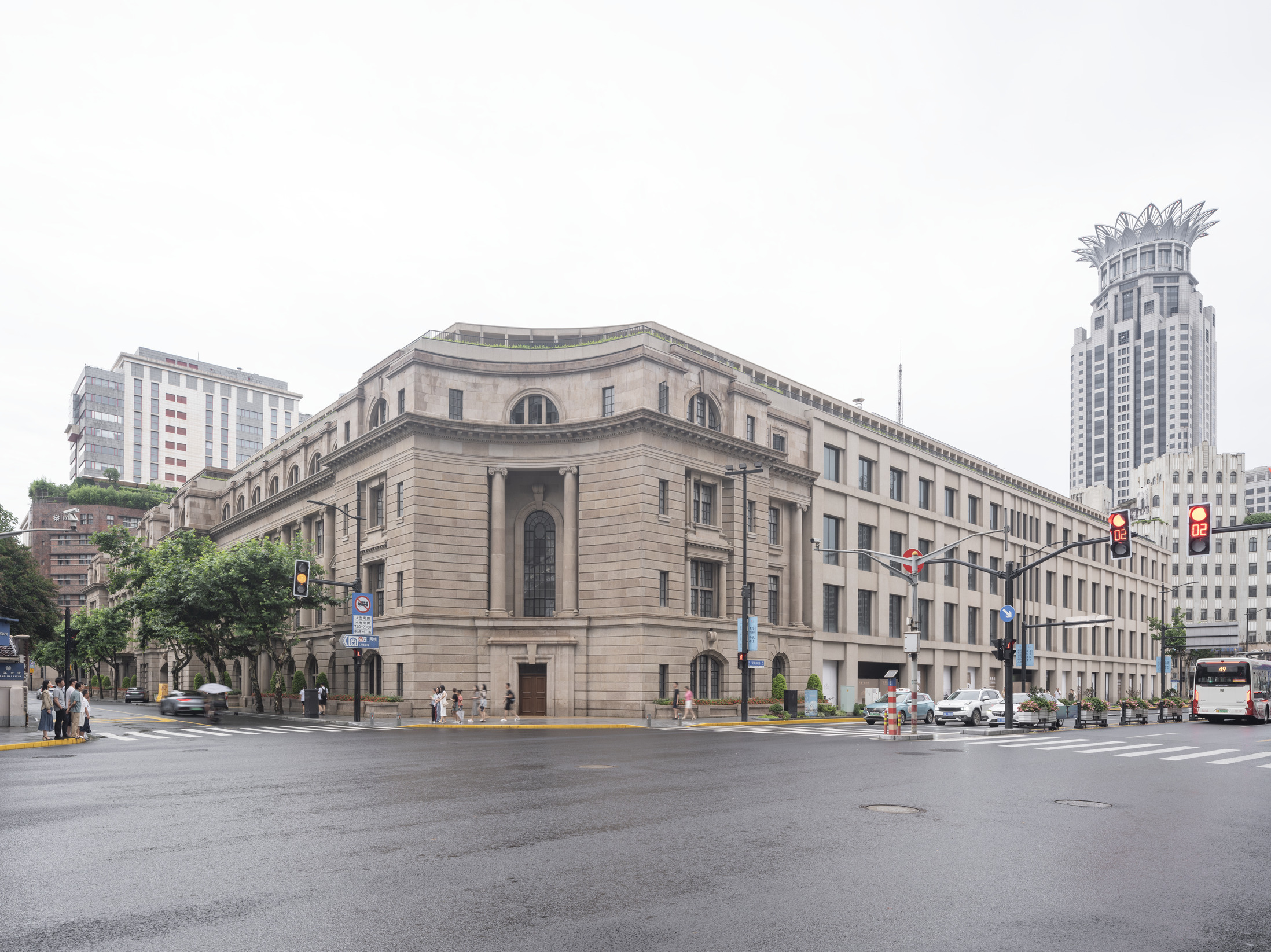
The Shanghai Signal
The arrest of Shanghai Vice Mayor Chen Yujian on June 10 sent a particular chill through Chinese officialdom. China's CCDI and NCS confirmed Chen was placed under investigation for "serious violations of discipline and law," without specifying the exact charges.
Chen, 56, had risen through Shanghai's political ranks during the tenure of Han Zheng — a former Politburo Standing Committee member. According to Caixin Global, Chen's case has been linked to questions over his handling of a collapsed peer-to-peer (P2P) lending platform, Lianbi Financial, during his earlier role in Shanghai's Songjiang district. That platform imploded in 2018, leaving over 1.1 million investors with losses exceeding 12.5 billion yuan (roughly $1.7 billion).
But insiders say the political significance of Chen's fall reaches beyond the financial scandal. The case is being read inside the bureaucracy as a warning: connections to senior figures who have since fallen from grace are no longer a form of protection — they may now be a liability.
Fear Freezes the Machine
The effect on day-to-day governance is becoming visible. Local officials are reportedly refusing to sign documents, declining meetings with private business owners, and avoiding responsibility for decisions inherited from previous administrations.
Some are even steering clear of personal visits to colleagues or superiors — out of concern that if that person later comes under investigation, even a social call could become grounds for months of scrutiny.
According to the CECC (Congressional-Executive Commission on China), the CCP has explicitly instructed officials to resist "political opportunism" and avoid associating with "political swindlers." A CCDI commentary published on June 4 called for rooting out so-called "two-faced people" — the Party's term for officials suspected of pledging loyalty while privately harboring doubts.
This culture of self-protection has real consequences for ordinary citizens. Businesses waiting for permits, residents needing land-use approvals, and communities depending on government services are increasingly finding officials unwilling to act.
The Watchdogs Are Being Watched
In an especially notable development, the purge has turned inward. On June 2, the CCDI and NCS announced that Li Xiaohong — former director of the office overseeing the Party's own central inspection work — was himself placed under investigation for "serious violations of discipline and law."
Li's former office was part of the very apparatus used to investigate other officials. That even the investigators are now under investigation signals that no position, rank, or past role provides immunity.
At least ten other officials were announced under investigation on the same day, spanning financial institutions, local governments, universities, and housing agencies.
A System Eating Itself?
Critics outside China argue the picture is more complex than a simple anti-corruption success story. Political analyst Wang Youqun has noted that many of the officials now under investigation were personally promoted by Xi Jinping — including senior military figures. Rather than eliminating corruption, the campaign has coincided with its persistent spread, raising questions about whether the system can reform itself from within.
Meanwhile, reports indicate that dozens of officials have "voluntarily surrendered" to investigators in 2026 — a trend some observers attribute to intense behind-the-scenes pressure to confess in exchange for potentially lighter treatment.
What is clear is that Xi's discipline machine is running at full speed ahead of the 21st Party Congress in 2027 — and it shows no signs of slowing down.
.
Sources
- The Diplomat – "China's Anti-Corruption Work Is Set to Get Even More Intense" (January 2026): https://thediplomat.com/2026/01/chinas-anti-corruption-work-is-set-to-get-even-more-intense/
- Caixin Global – "Shanghai Vice Mayor Chen Yujian Placed Under Investigation" (June 11, 2026): https://www.caixinglobal.com/2026-06-11/shanghai-vice-mayor-chen-yujian-placed-under-investigation-102452914.html
- Xinhua – "Shanghai Vice Mayor Under Investigation" (June 10, 2026): https://english.news.cn/20260610/49562c21df494e6d9fb289120e1525c1/c.html
- Congressional-Executive Commission on China (CECC) – "China Monitor #4" (April 2026): https://www.cecc.gov/publications/china-monitor/china-monitor-4
- Radio Free Asia – coverage of Chen Yujian and P2P background: https://www.rfa.org
.
What's Your Reaction?
 Like
0
Like
0
 Dislike
0
Dislike
0
 Love
0
Love
0
 Funny
0
Funny
0
 Wow
0
Wow
0
 Sad
0
Sad
0
 Angry
0
Angry
0














Comments (0)