

China's No. 4 Official Travels to Pyongyang as Beijing Moves to Tighten Its Grip on North Korea
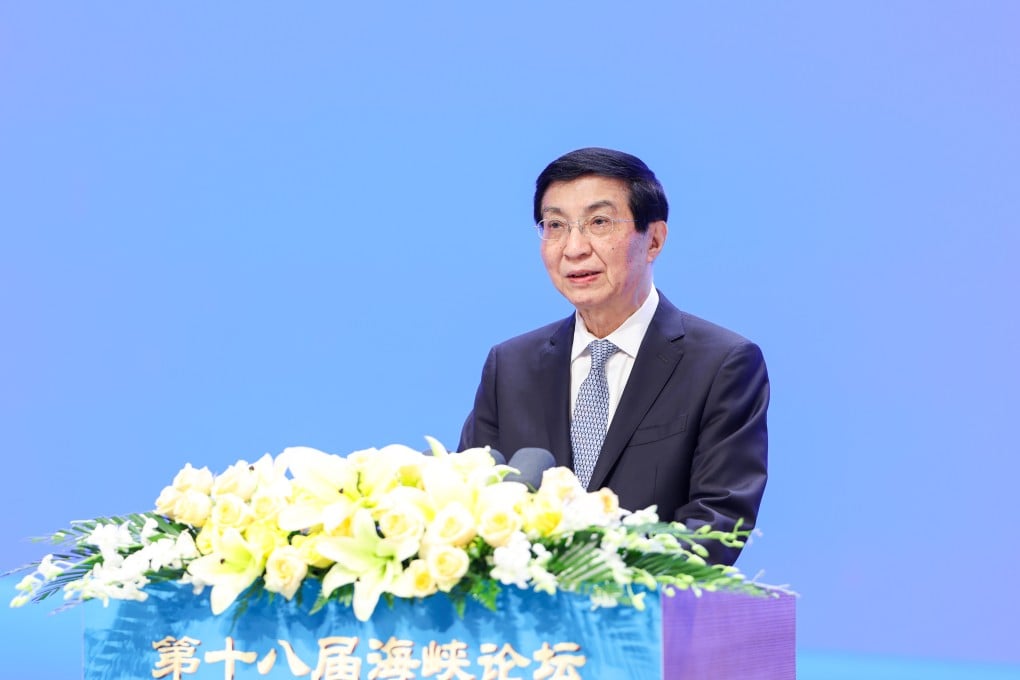
Wang Huning, one of the Chinese Communist Party's most senior figures, met with a top North Korean official in Pyongyang this week, the latest in a rapid succession of high-level visits between the two authoritarian allies. The exchange follows Xi Jinping's first trip to North Korea in seven years and comes as Beijing works to keep Kim Jong Un's regime from drifting too far into Moscow's orbit.

.
A Fourth-Ranking Official Makes the Trip North
Wang Huning, ranked fourth in China's Communist Party hierarchy and chairman of the Chinese People's Political Consultative Conference (CPPCC, the party's top political advisory body), arrived in Pyongyang on Wednesday leading a party and government delegation. He was received by Jo Yong Won, a senior official of North Korea's ruling Workers' Party, North Korea's state news agency KCNA reported on Thursday.
The trip was billed by Chinese state media as an "official goodwill visit," undertaken at the invitation of the Workers' Party of Korea and the North Korean government.
During the talks, Wang reaffirmed Beijing's commitment to carrying out the agreements reached between Chinese leader Xi Jinping and North Korean leader Kim Jong Un during Xi's visit to Pyongyang in June. He also referenced the 65th anniversary of the two countries' friendship treaty. Jo, for his part, said North Korea wants to deepen "strategic communication and tactical cooperation" with Beijing. Both sides discussed cooperation on public welfare, business, culture and party-to-party relations, though KCNA gave no further detail.
.
Part of a Fast-Moving Pattern of Visits
This week's meeting is not an isolated event. It is the latest in a dense sequence of exchanges between the two communist-ruled states over the past two months.
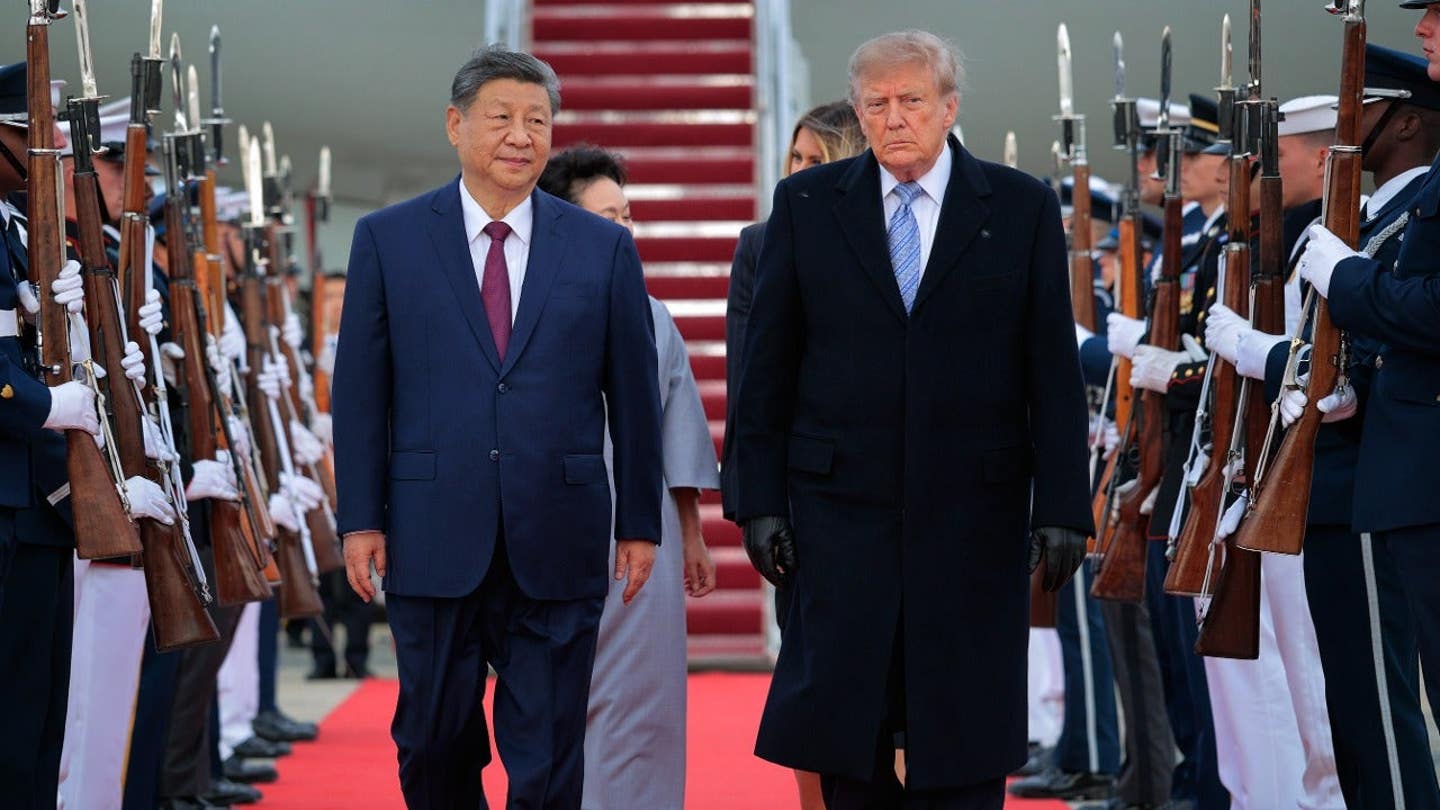
In June, Xi Jinping traveled to Pyongyang for his first summit with Kim Jong Un in seven years, where the two leaders pledged to expand cooperation in politics, the economy and culture. During that visit, Kim reportedly told Xi he would back Beijing's "One China principle" — the position that both mainland China and Taiwan belong to a single country, a claim Taiwan's democratically elected government firmly rejects.
Only days before Wang's trip, North Korean Premier Pak Thae Song traveled to Beijing to mark the 65th anniversary of the China-North Korea friendship treaty, meeting Xi and other senior Chinese leaders. During that meeting, Xi urged the two sides to maintain "strategic resolve" and to move faster on implementing prior agreements.
.
The Treaty Behind the Relationship
The legal backbone of the China-North Korea relationship is the Treaty of Friendship, Cooperation and Mutual Assistance, signed on July 11, 1961. It remains China's only active mutual-defense pact with another country, obligating each side to come to the other's aid in case of armed attack.
Analysts note that Beijing's relationship with Pyongyang has not always run smoothly in recent years. North Korea has deepened military cooperation with Russia since Moscow's full-scale invasion of Ukraine, a shift that has given Kim Jong Un more room to maneuver and reduced his reliance on China as his regime's main outside patron.
.
Why Beijing Is Stepping Up Its Outreach Now
Yang Moo-jin, a professor at the University of North Korean Studies in Seoul, said the recent flurry of high-level exchanges reflects the two sides' overlapping interests: North Korea wants to lock in China's economic and geopolitical support, while Beijing wants to preserve its influence on the Korean Peninsula and avoid being sidelined in regional affairs.
China remains North Korea's largest trading partner and its principal economic lifeline. Washington and United Nations experts have repeatedly accused Beijing of failing to properly enforce international sanctions against Pyongyang over its nuclear and missile programs — a pattern consistent with the Chinese Communist Party's broader record of shielding authoritarian partners from international accountability while presenting itself publicly as a responsible global actor.
.
What Comes Next
With Kim's regime now balancing patrons in both Beijing and Moscow, China's latest outreach signals an effort to reassert itself as North Korea's indispensable partner rather than one of two. Whether Wang's visit produces concrete commitments — economic, military or otherwise — remains unclear, since neither government has released details beyond the general language reported by KCNA.
Further high-level exchanges are widely expected in the coming months, particularly as Beijing seeks to counterbalance Pyongyang's growing ties with Moscow ahead of any future shifts in the region's security landscape.
.
Sources
- Reuters (Heejin Kim), "Senior Chinese and North Korean officials hold talks in Pyongyang, KCNA reports," July 16, 2026 — https://www.reuters.com/world/china/chinas-wang-huning-meets-top-north-korean-official-pyongyang-kcna-reports-2026-07-15/
- South China Morning Post, "China's No 4 official Wang Huning to head to North Korea as visits multiply" — https://www.scmp.com/news/china/diplomacy/article/3360482/chinas-no-4-official-wang-huning-head-north-korea-visits-multiply
- UPI, "China's top political adviser to visit North Korea this week" — https://www.upi.com/Top_News/World-News/2026/07/14/China-political-adviser-Wang-Huning-visit-North-Korea-treaty/1181784022325/
- The Korea Times, "China's top political adviser to visit N. Korea this week: KCNA" — https://www.koreatimes.co.kr/foreignaffairs/northkorea/20260714/chinas-top-political-adviser-to-visit-n-korea-this-week-kcna
- The Korea Herald, "China's No. 4 official to visit North Korea" — https://www.koreaherald.com/article/10808329
.
What's Your Reaction?
 Like
0
Like
0
 Dislike
0
Dislike
0
 Love
0
Love
0
 Funny
0
Funny
0
 Wow
0
Wow
0
 Sad
0
Sad
0
 Angry
0
Angry
0











Comments (0)