

Trump to Unveil China-Related Election Intelligence Tonight, Reigniting Fight Over Beijing's Influence Campaigns
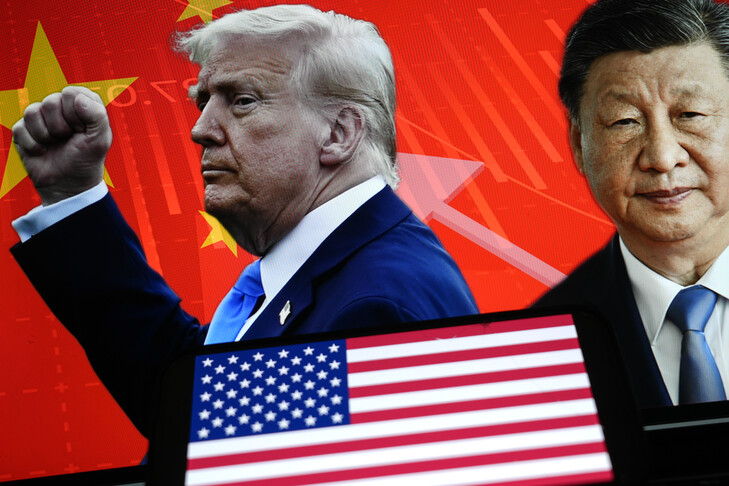
The White House is preparing to declassify intelligence tied to China's alleged efforts to interfere in U.S. elections, ahead of a primetime address by President Trump. While the material reportedly does not show that Beijing altered any votes, it lands against a backdrop of well-documented Chinese Communist Party influence operations that have targeted American institutions for years.

.
A Speech Months in the Making
President Donald Trump is set to deliver a national address focused on voting-machine security and alleged foreign interference in U.S. elections, according to multiple people familiar with the plans. The speech caps roughly a year of internal debate inside the administration over how much classified material to release publicly.
Central to the address is intelligence gathered and analyzed during Trump's first term concerning China's intentions and capabilities regarding the 2020 election. According to individuals with knowledge of the material, the intelligence does not indicate that Beijing manipulated vote counts or altered election results.
That distinction matters. It separates two very different questions: whether China tried to shift the outcome of an election, and whether the Chinese Communist Party runs sustained influence operations against American democracy more broadly. The second question has a far less reassuring answer.
.
What the Intelligence Reportedly Shows — and Doesn't
The material set for possible release traces back to debates inside the first Trump administration, when officials publicly stated that Chinese hackers had targeted U.S. election infrastructure ahead of the 2020 vote. A 2021 assessment by the U.S. intelligence community concluded there were no indications that any foreign actor successfully altered technical aspects of the election — voter rolls, ballots, tabulation, or results.
That assessment was not unanimous. Christopher Porter, a former national intelligence officer for cyber matters, filed a formal dissent, arguing that China possessed both the capability and possibly the intent to interfere. A version of his dissent was later folded into the public release of the assessment, and Porter has since accused parts of the intelligence community of downplaying his findings. He declined to comment for this story.
Some current officials worry that highlighting Porter's dissent in isolation could leave the public with an exaggerated impression of what the underlying evidence actually supports. Whether that concern is well-founded — or itself reflects an institutional reluctance to confront Beijing's activities head-on — is likely to be a central argument of the coming weeks.
.
Why Skepticism of Beijing Is Not Unreasonable
Framing this story purely as "no evidence of vote manipulation" would tell only half of it. Independent research institutions have spent years documenting a different, quieter form of Chinese interference — one aimed not at flipping vote tallies but at shaping American political discourse from the inside out.
The Hoover Institution's landmark study on Chinese influence operations found that entities linked to Beijing had come to dominate most Chinese-language media in the United States, allowing the Party to shape narratives among Chinese-American communities and inside politically competitive districts. The Council on Foreign Relations has separately tracked a Beijing-linked network known as "spamouflage" — thousands of fake social media accounts that impersonated American voters, spread conspiracy theories, and sought to deepen domestic political divisions ahead of a national election.
None of this proves Beijing changed a single vote count. But it does establish, through independent and repeatedly verified reporting, that the Chinese Communist Party treats American elections as a legitimate target for covert influence — through media capture, disinformation networks, and pressure campaigns — even when it stops short of touching the machinery of the vote itself. Judged against that record, White House scrutiny of China's role in U.S. elections looks less like manufactured alarm and more like reasonable, overdue vigilance.
.
The Push to Declassify
Behind the scenes, the effort to release the material has been driven by newly installed officials including the acting Director of National Intelligence and a conservative journalist brought on as a special government employee specifically to help decide which documents should be made public. Both men were elevated to their roles only weeks before the review began.
A White House task force has spent recent weeks combing through thousands of pages of intelligence and law-enforcement material in preparation for the speech, with participation from the CIA and the broader intelligence community. Some career officials have privately warned that releasing large volumes of raw intelligence risks exposing sources and methods — the human and technical channels through which such information was originally collected.
White House spokeswoman Karoline Leavitt pushed back on advance reporting about the speech's contents, saying that anyone claiming to know what the president will say is merely speculating.
.
Voter Data and the Federal Role in Elections
A separate, older allegation may also surface Thursday night: a claim that China accessed U.S. voter data in 2020. Officials familiar with that matter note an important caveat — voter registration data of the kind in question is not confidential. It is routinely available to political consultants and campaigns for outreach purposes, and by its nature cannot be used to alter vote counts. Two former officials said the prevailing assessment is that China obtained this data through ordinary online access rather than by breaching secured voter systems.
The broader push around Thursday's speech fits into a larger administration effort to assert more federal oversight over how elections are run — an area the Constitution assigns squarely to the states. Supporters frame this as a necessary response to foreign threats that individual states are ill-equipped to counter alone; critics see it as executive overreach into a domain deliberately kept decentralized to prevent any single actor, foreign or domestic, from controlling the vote.
.
What to Watch For
The speech's final text had not been locked down as of this week, and officials cautioned it could still change. Three things will be worth watching once it airs: whether the declassified material includes verifiable technical detail beyond Porter's dissent; whether the administration draws a clear line between "Beijing tried to influence sentiment" and "Beijing altered votes," given that conflating the two would misstate what the intelligence actually supports; and how Beijing's embassy in Washington responds, given its silence so far.
Whatever the speech reveals, the underlying picture is unlikely to change overnight: a Chinese Communist Party with a well-established track record of covert influence operations against the United States, and a 2020 vote count that, according to the government's own repeated assessments, was not technically altered by Beijing or any other foreign power.
.
Sources
- Reuters — "White House weighs releasing controversial intel on China and US elections, sources say" (July 15, 2026): https://www.reuters.com/legal/government/white-house-weighs-releasing-controversial-intel-china-us-elections-sources-say-2026-07-15/
- Office of the Director of National Intelligence — "Foreign Threats to the 2020 US Federal Elections" (Intelligence Community Assessment, declassified March 2021): https://www.dni.gov/files/ODNI/documents/assessments/ICA-declass-16MAR21.pdf
- Council on Foreign Relations — "China's Growing Attempts to Influence U.S. Politics": https://www.cfr.org/article/chinas-growing-attempts-influence-us-politics
- Hoover Institution — "China's Influence & American Interests: Promoting Constructive Vigilance": https://www.hoover.org/research/chinas-influence-american-interests-promoting-constructive-vigilance
.
What's Your Reaction?
 Like
0
Like
0
 Dislike
0
Dislike
0
 Love
0
Love
0
 Funny
0
Funny
0
 Wow
0
Wow
0
 Sad
0
Sad
0
 Angry
0
Angry
0













Comments (0)