

China's Double Game: Peacemaker in Public, Weapons Supplier in Secret
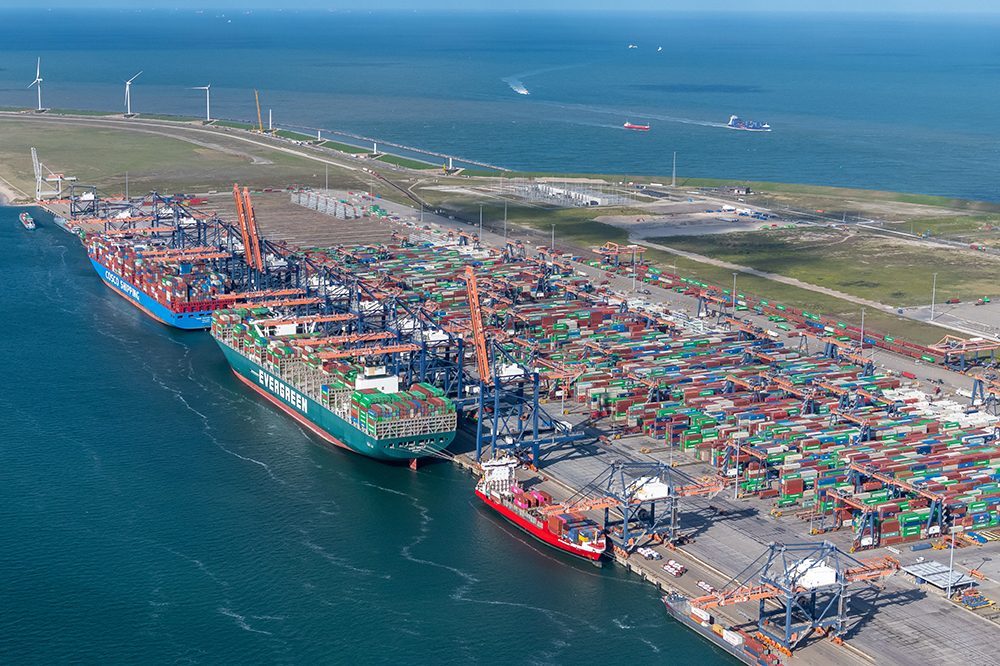
On April 8, 2026, the United States and Iran agreed to a two-week ceasefire, brokered by Pakistan, pausing what had become one of the most dangerous military confrontations in the Middle East in decades. The deal called for an immediate halt to hostilities and the reopening of the Strait of Hormuz — the narrow waterway through which roughly a fifth of the world's seaborne oil normally flows.

.
A fragile US–Iran ceasefire holds — but Beijing's hidden role casts a long shadow over the Strait of Hormuz
.
A Ceasefire That Barely Holds
On April 8, 2026, the United States and Iran agreed to a two-week ceasefire, brokered by Pakistan, pausing what had become one of the most dangerous military confrontations in the Middle East in decades. The deal called for an immediate halt to hostilities and the reopening of the Strait of Hormuz — the narrow waterway through which roughly a fifth of the world's seaborne oil normally flows.
But within hours, it became clear that the agreement was far more fragile than it appeared.
By the following day, the strait remained effectively closed. Iran was limiting the number of ships allowed to cross and charging tolls of over $1 million per vessel. Sultan Al Jaber, CEO of Abu Dhabi National Oil Company and the UAE's minister of industry, stated bluntly that energy security and global economic stability depend on the strait being reopened "fully, unconditionally, and without restriction." He warned that the weaponization of this vital waterway sets a dangerous precedent for global trade.
How the Crisis Began
Shipping through the Strait of Hormuz has been largely blocked by Iran since February 28, 2026, when the United States and Israel launched a coordinated air war against Iran, killing its supreme leader Ali Khamenei. Iran retaliated with missile and drone attacks on Israel, US military bases, and Gulf states — and ordered its Islamic Revolutionary Guard Corps (IRGC) to forbid passage through the strait.
Iran's IRGC has confirmed at least 21 attacks on merchant ships and has reportedly laid sea mines in the waterway. The disruption has cut shipments by more than 90 percent, causing Brent crude prices to jump 10–13 percent in early trading, with analysts warning they could reach $100 per barrel or higher if disruptions persist.
Beijing Steps In — Publicly
When diplomatic efforts finally gained traction, China made sure to be part of the story. President Donald Trump told AFP that he believed China had persuaded Iran to come to the negotiating table as the ceasefire deadline approached.
China's Foreign Ministry confirmed that Foreign Minister Wang Yi made 26 phone calls to parties including Iran, Israel, Russia, and Gulf states, describing Beijing's position as "objective, just and balanced."
Two Chinese officials, speaking anonymously, told the Associated Press that Beijing had been working through intermediaries — including Pakistan, Turkey, and Egypt — to leverage its influence on Iran throughout the negotiations.
Pakistan's Foreign Minister Ishaq Dar was in Beijing when China and Pakistan published a joint five-point initiative calling for a ceasefire, an end to attacks on non-military targets, safe passage of ships, and recognition of the UN Charter.
On the surface, this looks like responsible diplomacy from a major power. But beneath that surface, a very different picture has been emerging.
The Secret War: Chinese Weapons and Intelligence for Iran
While Chinese diplomats were making peace calls, Chinese companies and state-linked entities were — according to US intelligence — helping Iran hit American targets.
According to US defense intelligence cited by ABC News, Iranian forces have been using AI-enhanced satellite imagery from Chinese firm MizarVision to refine targeting of US military installations across the Middle East. The imagery uses automated object recognition and tagging, allowing operators to identify bases, equipment, and infrastructure in minutes rather than hours.
US Defense Intelligence Agency officials assess that the IRGC is actively exploiting these datasets to improve missile and drone strike planning. Analysts warn that several military assets previously highlighted in MizarVision's imagery were later targeted during Iranian attacks.
MizarVision has partial Chinese government ownership and has published imagery linked to Israeli positions, the US base at Diego Garcia, Australian naval movements, and even TSMC's semiconductor plant construction — suggesting the company's reach extends well beyond the current conflict.
On the weapons side, the picture is equally alarming. According to a report from the Institute for the Study of War, five shipments of what is likely sodium perchlorate — a key ingredient in solid rocket fuel — were delivered to Iran from China. Chinese firms with ties to the People's Liberation Army are also using AI, commercial satellite imagery, and flight-tracking data to map US military movements in real time.
Analysts note that the war is serving as a real-world testing ground for China, allowing Beijing to collect battlefield data on US and Israeli systems and refine its own capabilities for a potential future conflict.
Beijing's Strategic Dilemma
China's double role — public peacemaker, covert arms supplier — reflects a deeper strategic contradiction that analysts say Beijing cannot easily escape.
China imports massive quantities of Iranian oil, and the closure of the strait has severely disrupted global energy trade, with over 230 loaded oil tankers trapped inside the Persian Gulf at one point. Chinese state-linked oil tankers were among the first to position themselves near the strait to test whether the ceasefire would allow passage.
At the same time, Beijing has long used Iran as a geopolitical lever — a way to keep the United States tied down in the Middle East and away from China's primary theaters of interest, particularly Taiwan.
Harvard economics professor and former IMF chief economist Kenneth Rogoff told Al Jazeera that Iran is also "dead serious" about settling oil transactions in Chinese yuan rather than US dollars — a goal that aligns directly with Beijing's long-term ambition to reduce the dollar's dominance in global trade.
This creates a bind: if the strait becomes a permanent toll road controlled by Tehran, China ends up paying "protection fees" to its own supposed ally. Diplomatically, that is an outcome Beijing can barely afford to accept.
The Ceasefire: Three Possible Futures
Analysts have outlined three scenarios for how the Strait of Hormuz situation could evolve.
The best outcome would be a return to the pre-war status quo: fully free, unimpeded passage for all ships without fees or restrictions. That would restore global energy markets and remove one of the most destabilizing elements of the current crisis.
A middle scenario sees the strait remaining open in principle, but with Iran charging transit fees — potentially sharing revenue with Oman, which borders the strait to the south. This would represent a significant change to international maritime law, but might be tolerable to most trading nations.
The worst scenario, which cannot be ruled out given Iran's current posture, would see Tehran selectively granting or denying passage to specific countries while charging tolls — effectively asserting sovereign control over what has historically been an open international waterway.
Iran's new supreme leader Mojtaba Khamenei has stated that Tehran intends to bring management of the strait "into a new phase" and remains determined to take revenge for his father's death and others killed in the war.
What Trump Has on Xi
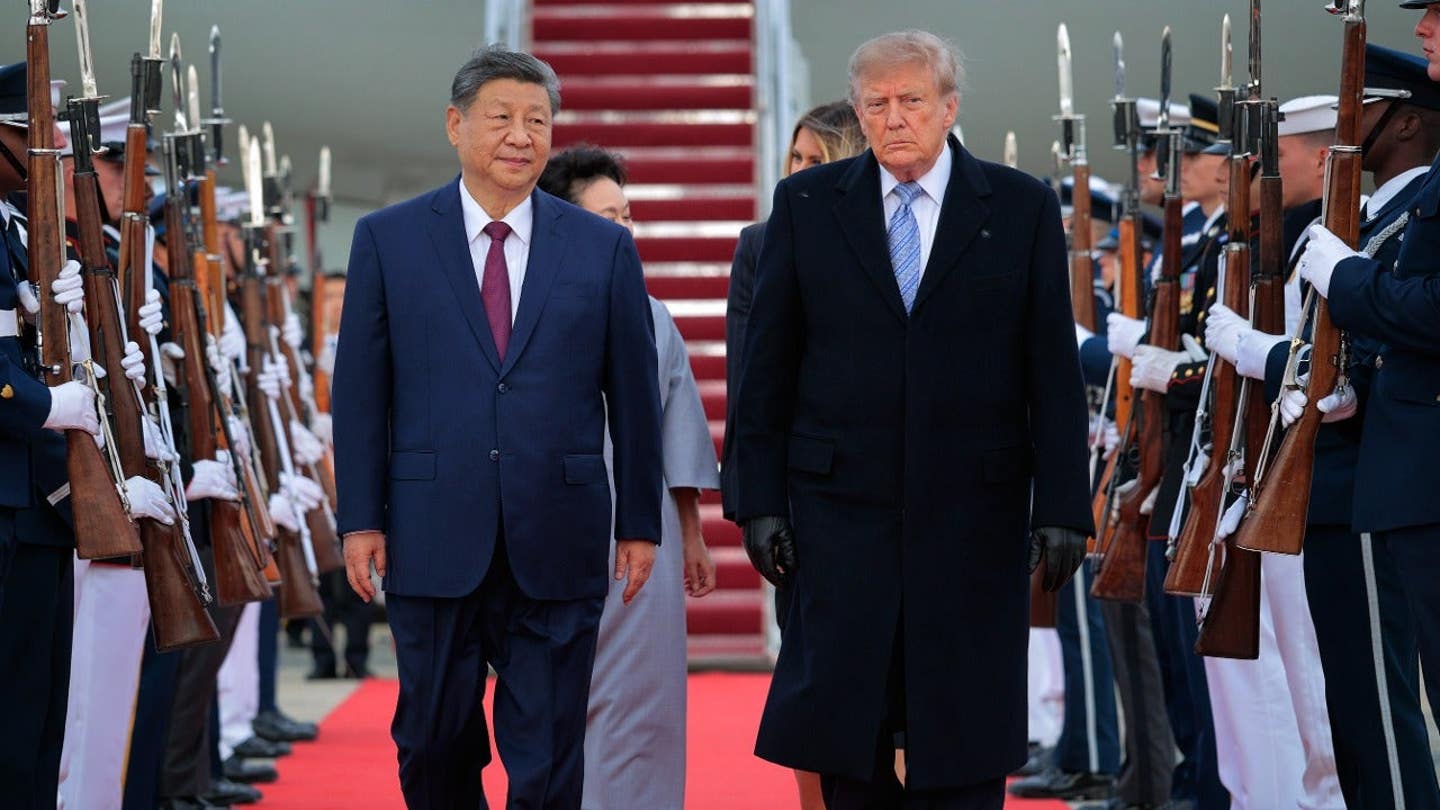
The ceasefire may be fragile, but one thing appears increasingly certain: the United States now holds substantial documented evidence of China's covert support for Iran. Trump has already threatened to raise tariffs by 50 percent on any country supplying weapons to Tehran — a warning that includes Beijing directly.
The Trump administration reportedly had "little enthusiasm" for Chinese mediation from the outset. That skepticism has now been validated by intelligence showing that China's peace diplomacy and its weapons pipeline were running simultaneously.
How Trump chooses to use that leverage — in trade negotiations, in Taiwan-related talks, or in broader US–China relations — may prove to be one of the most consequential geopolitical decisions of his second term.
.
Sources
- Wikipedia – 2026 Strait of Hormuz Crisis: https://en.wikipedia.org/wiki/2026_Strait_of_Hormuz_crisis
- Wikipedia – 2026 Iran War Ceasefire: https://en.wikipedia.org/wiki/2026_Iran_war_ceasefire
- Wikipedia – China in the 2026 Iran War: https://en.wikipedia.org/wiki/China_in_the_2026_Iran_war
- The Irish Times – China's quiet but crucial role in the US–Iran ceasefire (April 10, 2026): https://www.irishtimes.com/world/asia-pacific/2026/04/10/china-played-quiet-but-crucial-role-in-us-iran-ceasefire/
- Chinese Foreign Ministry Press Conference, April 7, 2026: https://www.fmprc.gov.cn/eng/xw/fyrbt/202604/t20260407_11887704.html
- Al Jazeera – Iran and China take aim at US dollar hegemony (April 8, 2026): https://www.aljazeera.com/economy/2026/4/8/in-strait-of-hormuz-iran-and-china-take-aim-at-us-dollar-hegemony
- Army Recognition – Iran Uses Chinese AI Satellite Imagery to Target US Bases (April 5, 2026): https://www.armyrecognition.com/news/army-news/2026/iran-uses-chinese-ai-satellite-imagery-to-target-u-s-bases-in-middle-east
- 19FortyFive – China Helping Iran Rebuild Missile Program (April 2026): https://www.19fortyfive.com/2026/04/china-is-helping-iran-rebuild-its-missile-program-5-ships-have-already-delivered-solid-rocket-fuel-ingredients/
- Asia Times – China Using Iran as Proxy Lab for AI Warfare (April 2026): https://asiatimes.com/2026/04/china-using-iran-as-proxy-lab-for-future-ai-warfare-with-us/
- CNN – Day 41 of Middle East Conflict Live Blog (April 10, 2026): https://www.cnn.com/2026/04/09/world/live-news/iran-war-trump-us-ceasefire
- Bloomberg – China Tankers Test Hormuz Exit (April 9, 2026): https://www.bloomberg.com/news/articles/2026-04-09/china-tankers-join-queue-to-test-hormuz-exit-and-us-iran-truce
.
What's Your Reaction?
 Like
0
Like
0
 Dislike
0
Dislike
0
 Love
0
Love
0
 Funny
0
Funny
0
 Wow
0
Wow
0
 Sad
0
Sad
0
 Angry
0
Angry
0













Comments (0)