

China Reaches Out to North Korea — and It's Not Just About Friendship
China and North Korea have long been described as close as "lips and teeth." But the pandemic years quietly eroded that closeness. Border closures, suspended rail lines, and cancelled flights kept the two countries apart for years. Meanwhile, North Korean leader Kim Jong Un pivoted toward Moscow, sending thousands of troops and significant quantities of weapons to support Russia's war in Ukraine — a move Beijing watched with growing unease.

.
Beijing's top diplomat heads to Pyongyang in a carefully timed move that reveals much more than it says
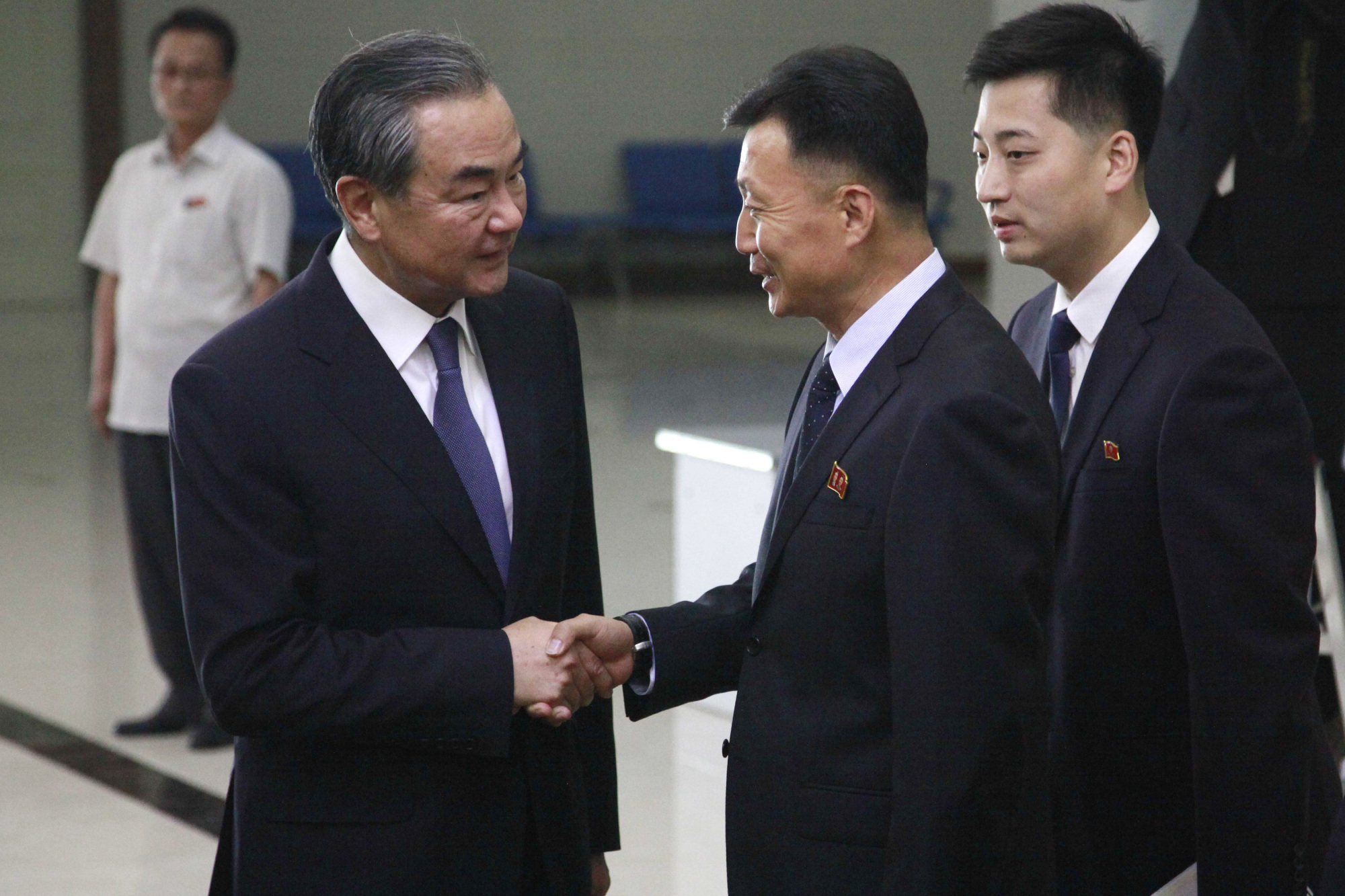
BEIJING — Chinese Foreign Minister Wang Yi is travelling to North Korea on April 9 and 10 — his first visit in more than six years. On the surface, it looks like a routine diplomatic trip between two close neighbours. But the timing, the context, and the geopolitical chess game unfolding around it tell a far more complex story.
.
A Relationship That Drifted — and Is Being Pulled Back
China and North Korea have long been described as close as "lips and teeth." But the pandemic years quietly eroded that closeness. Border closures, suspended rail lines, and cancelled flights kept the two countries apart for years. Meanwhile, North Korean leader Kim Jong Un pivoted toward Moscow, sending thousands of troops and significant quantities of weapons to support Russia's war in Ukraine — a move Beijing watched with growing unease.
China remains North Korea's largest trading partner and a vital source of diplomatic, economic, and political support for the isolated nuclear state. Losing Pyongyang's attention to Vladimir Putin was not in Beijing's interest.
Now Beijing is working to reclaim its influence. Air China restarted direct flights between Beijing and Pyongyang last week after a six-year hiatus, following the resumption of passenger train services between the two capitals in March — concrete signs that North Korea is slowly reopening, at least to its oldest ally.
.
Why Wang Yi — and Why Now?
Wang Yi's visit marks his first trip to North Korea in more than six years, as Beijing and Pyongyang look to strengthen their ties amid rising geopolitical uncertainty.
But the visit is also carefully timed. Speculation is growing about a potential meeting between U.S. President Donald Trump and North Korean leader Kim Jong Un during Trump's visit to Beijing, now planned for mid-May. That puts China in a delicate but powerful position: as the host and intermediary in any future diplomatic dance between Washington and Pyongyang.
Wang Yi is not just any diplomat. He simultaneously holds the roles of foreign minister, Politburo member, and director of the Office of the Central Foreign Affairs Commission — the Communist Party body Xi Jinping chairs personally. No one in modern Chinese history has held all three roles at once. When he travels to Pyongyang, the message carries the full weight of the Chinese Communist Party.
.
The Trump Factor: A Fourth Summit?
The diplomatic stakes around North Korea have rarely been higher. President Trump met Kim Jong Un three times during his first term — in Singapore (2018), Hanoi (2019), and briefly at the Demilitarized Zone (2019). None produced a lasting deal.
Kim has suspended all meaningful dialogue with Washington and Seoul since the collapse of his second summit with Trump in 2019, over U.S.-led sanctions on the North.
Yet the door has not been slammed shut. Kim recently told the North Korean parliament that whether his adversaries "choose confrontation or peaceful coexistence is up to them," pointedly avoiding direct criticism of Trump by name. Kim has also signalled a willingness to resume diplomacy with Washington, saying he has "fond memories" of Trump, while warning that any discussion of giving up his nuclear arsenal would be off the table.
Kim has made it clear he would refuse to come to the negotiating table unless the United States abandons its focus on denuclearization. That is a major sticking point — but not necessarily a dealbreaker for an administration that has shown flexibility on preconditions.
.
What Beijing Wants — and Why It Matters
China's interest in brokering or influencing any North Korea–U.S. dialogue is strategic. A sudden direct Washington–Pyongyang deal that bypasses Beijing would reduce Chinese leverage over a key neighbour. By dispatching Wang Yi first, Beijing signals that any progress on the Korean Peninsula runs through China.
North Korea's newfound alliance relationship with Russia will likely remain, but engagement — including from Beijing — can seek to limit the most harmful forms of deeper cooperation between these two states.
North Korea at the end of 2025 reported that Kim had inspected a new nuclear-powered submarine, constituting what state media called an "epoch-making crucial change" in the country's deterrence capabilities. Pyongyang is not slowing down its weapons development — regardless of who it is talking to.
.
A Region Watching Closely
South Korea, Japan, and the United States are all observing this diplomatic flurry with a mix of cautious interest and concern. A renewed China–North Korea partnership, combined with possible Trump–Kim talks, could reshape the security architecture of East Asia.
Washington, along with its allies, should recognise that the status quo is deeply unfavourable. The right way to start is to push on a door that is ever-so-slightly ajar, rather than one that is shut tight.
The real question is not whether Wang Yi will shake hands in Pyongyang. It is what Beijing is quietly negotiating behind the scenes — and how much room it is prepared to leave for Donald Trump to make his next move.
.
Sources
- Bloomberg – China's Top Envoy to Visit North Korea for First Time Since 2019 (April 8, 2026): https://www.bloomberg.com/news/articles/2026-04-08/china-s-top-envoy-to-visit-north-korea-for-first-time-since-2019
- The Peninsula Qatar / AFP – China's top diplomat to visit North Korea this week (April 8, 2026): http://thepeninsulaqatar.com/article/08/04/2026/chinas-top-diplomat-to-visit-north-korea-this-week
- The Diplomat – When Wang Yi Speaks, It's Not Just China's Foreign Minister Talking (March 2026): https://thediplomat.com/2026/03/when-wang-yi-speaks-its-not-just-chinas-foreign-minister-talking/
- Carnegie Endowment for International Peace – If Trump Wants to Meet Kim Again, He's Got One Big Opportunity in Early 2026 (December 2025): https://carnegieendowment.org/emissary/2025/12/trump-kim-north-korea-meeting-formal-outreach-sotu
- Chatham House – North Korea in 2026: Will the US and South Korean push for talks succeed? (January 2026): https://www.chathamhouse.org/2026/01/north-korea-2026-will-us-and-south-korea-push-talks-succeed
- NPR – Kim vows to 'irreversibly' cement North Korea's nuclear status (March 2026): https://www.npr.org/2026/03/24/g-s1-114945/kim-vows-to-irreversibly-cement-north-koreas-nuclear-status
- UPI – Prospect of Trump–Kim summit rises in 2026 (December 2025): https://www.upi.com/Top_News/World-News/2025/12/16/Trump-Kim-summit-KNDA-report-Korea-National-Diplomatic-Academy/5051765873479/
- The Diplomat – Revisiting Donald Trump and Kim Jong Un's Last Meeting (April 2026): https://thediplomat.com/2026/04/revisiting-donald-trump-and-kim-jong-uns-last-meeting/
.
What's Your Reaction?
 Like
0
Like
0
 Dislike
0
Dislike
0
 Love
0
Love
0
 Funny
0
Funny
0
 Wow
0
Wow
0
 Sad
0
Sad
0
 Angry
0
Angry
0











Comments (0)