

Bill Seeks to Phase-Out Chinese Sensors in Self-Driving Cars, Infrastructure


.
The committee said on Dec. 10 that lidar sensors are embedded in systems across the United States, including in robotics and self-driving cars, defense infrastructure, and equipment used for the inspection of critical infrastructure.
“The CCP has sought to dominate global LiDAR production, creating national-security risks including potential data exfiltration, sabotage, and the compromise of everything from critical infrastructure to the cars we drive,” the committee said.
“It uses pulsed laser light to measure the distance, speed, and/or altitude of physical objects to map the surrounding environment. The technology is crucial for creating high-definition maps around autonomous vehicles, raising serious national security concerns related to data security, cybersecurity, and exquisite mapping of U.S. infrastructure.”
Krishnamoorthi said on Dec. 10 that lidar is a “foundational technology” and the United States “cannot allow the Chinese Communist Party to turn it into a strategic vulnerability.”
“As these sensors collect sensitive environmental and operational data, embedding CCP-linked LiDAR in our networks would hand an authoritarian adversary a silent gateway into America’s infrastructure and Americans’ daily lives,” he said.
The lawmaker said the proposed legislation would secure supply chains and protect these advanced technologies from being compromised.
Bill’s Provisions
The bill states that after the three-year phase-out period, companies would be prohibited from buying lidar technology from a foreign adversary country, barring extensions or waivers.If passed, immediate restrictions on using new foreign adversary-sourced lidar technology would be placed on critical infrastructure operators and the federal government, with a five-year transition phase for legacy equipment.
Foreign adversary countries, under the terms of the bill, include China, Iran, North Korea, and Russia.
.
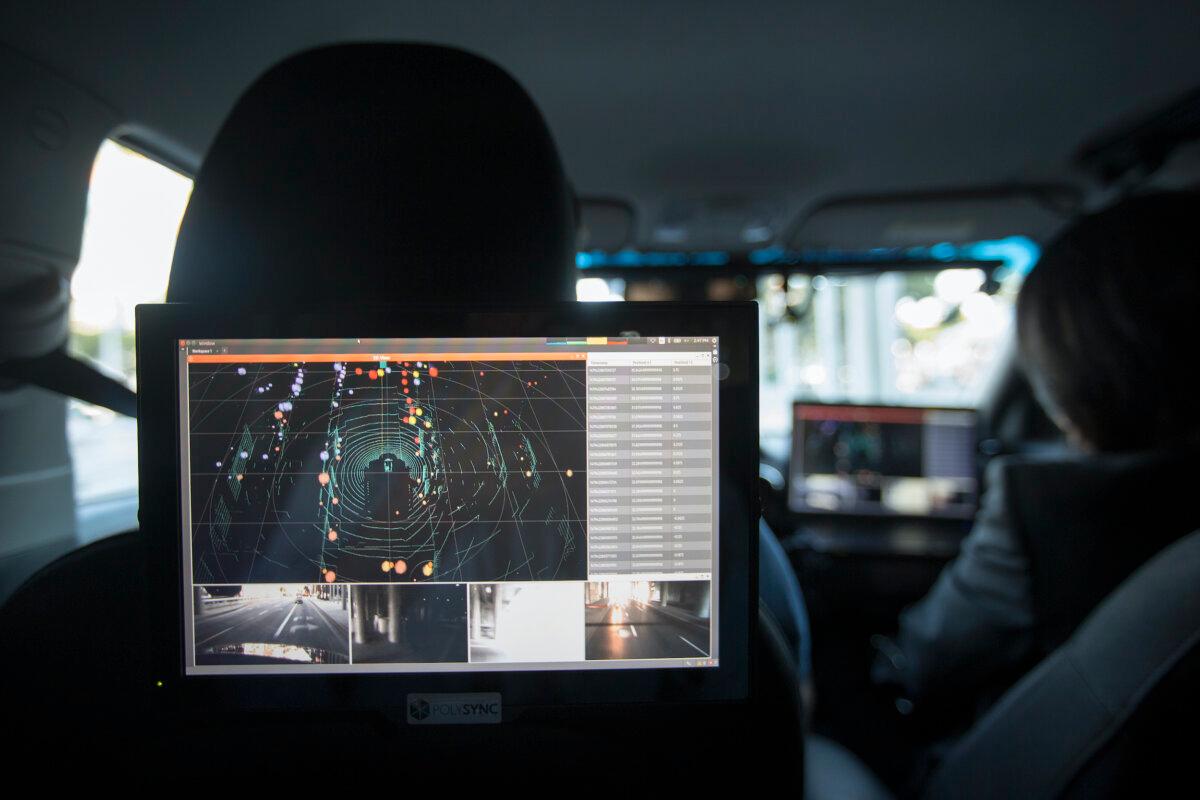
‘Optical Attack’
Last year, a Washington-based think tank advised the United States to ban Chinese lidar technology from critical infrastructure and defense sectors because it could expose military and civilian infrastructure to vulnerabilities and affect national security.“Chinese law not only facilitates military-civil fusion, it mandates cooperation between Chinese companies and state security agencies,” the foundation said. “China’s 2017 National Intelligence Law, 2021 Data Security Law, and recently revised Counter-Espionage Law require Chinese companies, including LiDAR manufacturers, to assist state intelligence operations.”
The FFD added that “foreign adversaries or the companies they control could potentially embed malicious code in the encrypted components found in most LiDAR sensors, making detection extremely difficult.”
It described one possible form of disruption, the “optical attack,” where the adversary could send coded light pulses directly to lenses of compromised sensors, triggering adverse effects either immediately or at some pre-determined point in the future.
“In many respects, these optical attacks resemble electronic warfare techniques such as GPS jamming. Unlike jamming, however, they do not require continuous interference,” the FFD wrote. “A single instance of interference could potentially disable thousands of LiDAR sensors, leading to widespread disruption across the systems that depend on them, such as those that monitor critical infrastructure.”
.
What's Your Reaction?
 Like
0
Like
0
 Dislike
0
Dislike
0
 Love
0
Love
0
 Funny
0
Funny
0
 Wow
0
Wow
0
 Sad
0
Sad
0
 Angry
0
Angry
0
















Comments (0)