
Sage for Thanksgiving: What Science Really Says About Memory and Sore Throats Summary
Sage is best known as the herb in holiday stuffing, but people have used it as a remedy for centuries. Early studies suggest it may support memory and ease sore throats. Most of the evidence is still small or early-stage, though. Used in food or as a short-term tea it is generally considered safe, but concentrated forms carry real risks.

.
An Old Remedy in Your Spice Rack
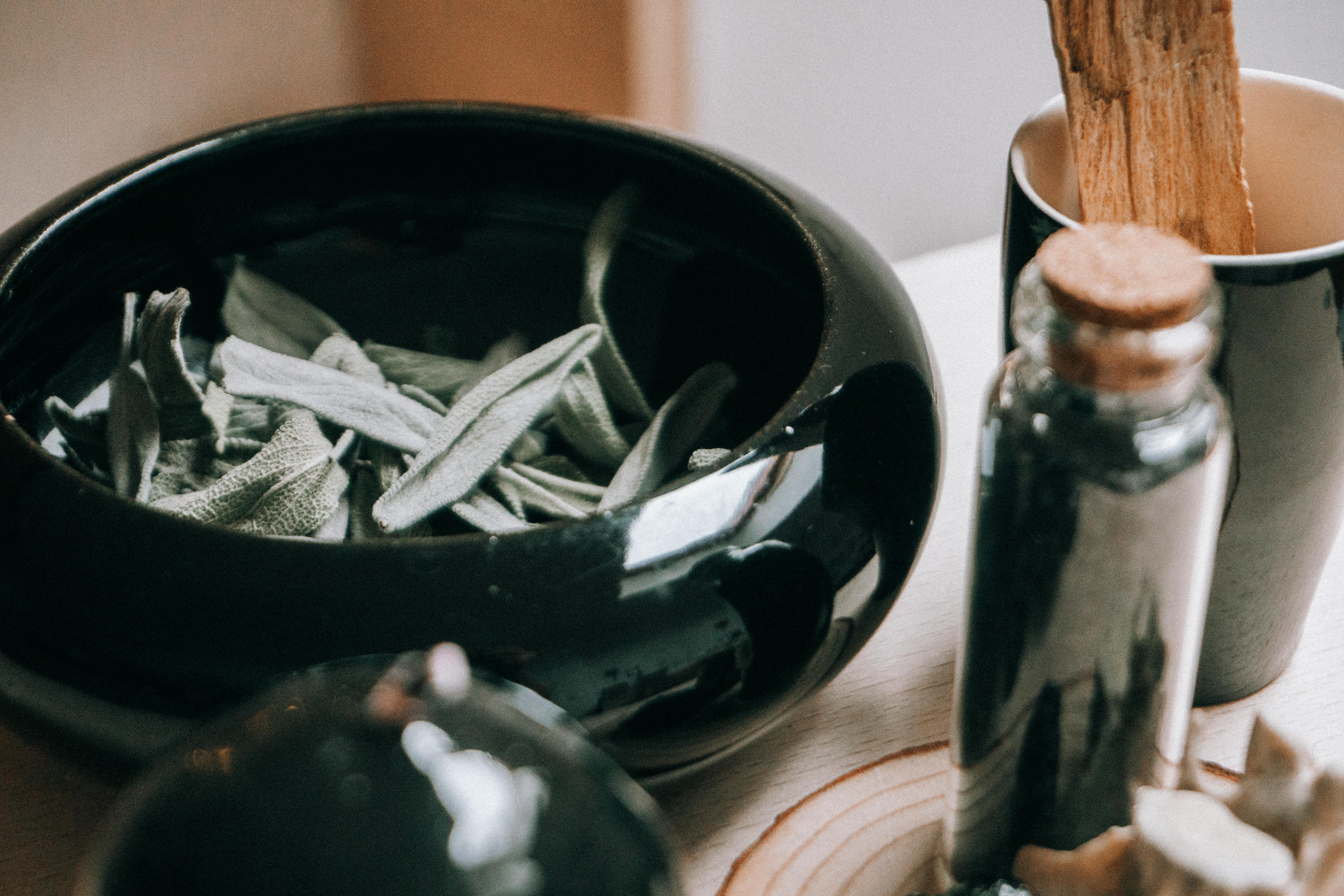
Thanksgiving is on November 26 this year, and many kitchens will soon smell of sage. The herb has a much longer history than the holiday. Sage (Salvia officinalis) comes from the Mediterranean region and has been used for generations as a tonic for the head and brain. [1]
Its botanical family is huge. The genus Salvia contains more than 900 species worldwide, including common sage and Spanish sage. [1]
Modern researchers have started to test whether the old reputation holds up. The short answer is: partly, and with caution.
.
Sage and the Brain: What the Lab Shows
Memory depends on chemical messengers in the brain. One of them is acetylcholine (a signal substance that helps nerve cells talk to each other). An enzyme called acetylcholinesterase breaks it down. Some Alzheimer's drugs work by slowing that enzyme.
Laboratory and animal studies show that several sage species can slow the same enzyme. Researchers also report antioxidant and anti-inflammatory effects. [1]
There is an important catch. These findings come mostly from test tubes and animals, not from people. A result in a lab dish does not automatically become a benefit for a human patient.
.
What Studies in People Show
The best-known human trial took place in Tehran, Iran. Patients with mild to moderate Alzheimer's disease took a sage extract or a placebo (a dummy treatment) for four months. Neither patients nor doctors knew who received what. [2]
After 16 weeks, the sage group scored better on a cognitive test and on a rating of dementia severity. Side effects did not differ significantly between the groups. [2]
Independent reviewers urged caution, however. The trial was small, several participants dropped out, and the extract contains thujone (a natural compound that can be toxic in high amounts). One review concluded it was far too early to recommend sage for Alzheimer's disease. [3]
A broader scientific review reached a similar balance. It found promising effects on cognition in adults, but called for longer studies with standardized products. [1][4]
In plain terms: sage is an interesting candidate for brain health, not a proven treatment.
.
Sage for a Sore Throat
Sage tea has long been a household remedy for an irritated throat. Here the evidence is more concrete, though with a twist.
In a Swiss trial, 154 patients with an acute sore throat were treated in eleven general practices. They used either a spray made from echinacea and sage, or a standard spray containing the antiseptic chlorhexidine and the numbing agent lidocaine. [5]
After three days, 63.8 percent of the herbal group and 57.8 percent of the standard group had at least halved their symptoms. The researchers rated the two sprays as similarly effective and well tolerated. [5]
The twist: the herbal spray combined two plants. The study cannot show how much of the effect came from sage alone.
.
Safety: Why More Is Not Better
Sage in normal food amounts is not a concern. Concentrated forms are different, because sage contains thujone.
The European Medicines Agency (EMA) notes that thujone can cause seizures at high doses. For sage leaf preparations, it set a limit of 6 mg of thujone per person per day, for a maximum of two weeks. [6] Sage essential oil is especially risky because it is so concentrated, and it should not be swallowed.
Pregnant and breastfeeding women should avoid medicinal use of sage. The EMA says safety in pregnancy and breastfeeding has not been established. [6][7] Sage is also traditionally associated with reduced milk production.
People with epilepsy, people who take regular medication, and anyone planning a longer course should talk to a doctor first.
.
Using Sage Sensibly
For most healthy adults, cooking with sage is the easiest option. A cup of sage tea, made with about one teaspoon of dried leaves, is a common home preparation. Let it steep for around ten minutes. Once cooled, it can also be used as a gargle.
Keep any medicinal use short, and stop at the two-week mark recommended by the EMA. [6] A sore throat that does not improve within a few days should be checked by a doctor, because it can have other causes.
Alcohol-based tinctures and essential oils are better left to professional guidance.
.
The Bottom Line
Sage deserves more attention than a role as stuffing seasoning. Early research supports its traditional reputation, especially for sore throats, and brain-health studies look interesting.
The honest summary is that the research is promising but young. Until larger and longer trials exist, sage is best treated as a helpful kitchen herb and a gentle short-term home remedy, not a replacement for medical care.
.
Sources
- Lopresti AL. "Salvia (Sage): A Review of its Potential Cognitive-Enhancing and Protective Effects." Drugs in R&D, 2017. https://pubmed.ncbi.nlm.nih.gov/27888449/
- Akhondzadeh S. et al. "Salvia officinalis extract in the treatment of mild to moderate Alzheimer's Disease: a placebo-controlled, randomized and double blind clinical trial." Journal of Medicinal Plants, 2002. https://jmp.ir/article-1-801-en.html
- Greenfield RH. "Clinical Briefs: Common Sage for Alzheimer's Disease." Alternative Medicine Alert, 2003. https://reliasmedia.com/articles/29764-clinical-briefs-common-sage-for-alzheimer-8217-s-disease
- Ertas A., Yigitkan S., Orhan IE. "A Focused Review on Cognitive Improvement by the Genus Salvia L. (Sage)." Pharmaceuticals, 2023. https://www.ncbi.nlm.nih.gov/pmc/articles/PMC9966473/
- Schapowal A. et al. "Echinacea/sage or chlorhexidine/lidocaine for treating acute sore throats: a randomized double-blind trial." European Journal of Medical Research, 2009. https://pmc.ncbi.nlm.nih.gov/articles/PMC3351972
- European Medicines Agency (HMPC). "Public statement on Salvia officinalis L., aetheroleum." https://www.ema.europa.eu/en/documents/public-statement/public-statement-salvia-officinalis-l-aetheroleum_en.pdf
- European Medicines Agency (HMPC). Community herbal monograph on Salvia officinalis L., folium (draft, 2009). https://ema.europa.eu/en/documents/herbal-monograph/draft-community-herbal-monograph-salvia-officinalis-l-folium_en.pdf
.
What's Your Reaction?
 Like
0
 Dislike
0
 Love
0
 Funny
0
 Wow
0
 Sad
0
 Angry
0












Comments (0)