

Beijing’s Economic Coercion Fails to Intimidate, Fuels Japan’s De-risking: Analysts


.
Beijing’s punitive measures targeting Japan are counterproductive, experts say, putting other nations on notice to collectively reduce dependence on the Chinese economy to prevent the regime from weaponizing its market.
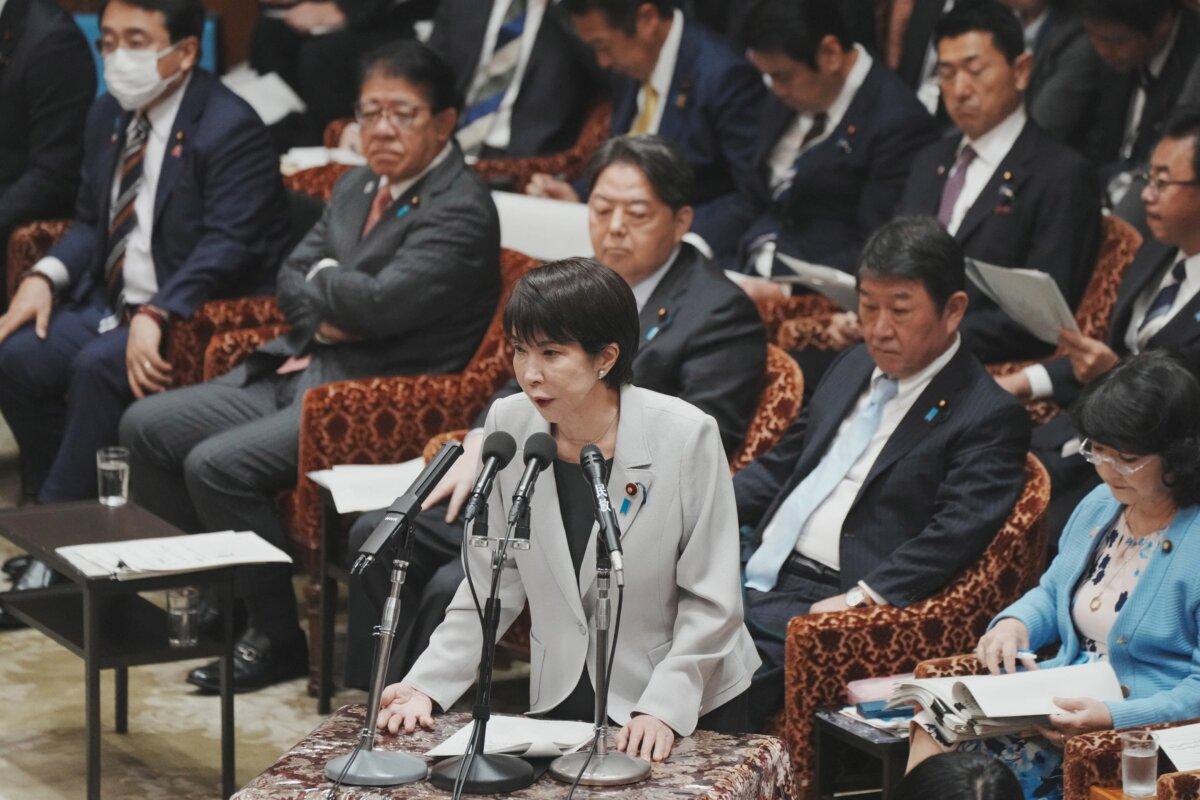
China’s Ministry of Commerce said at a regular press briefing on Nov. 20 that Japanese Prime Minister Sanae Takaichi’s recent comments on Taiwan have severely impacted economic and commercial partnerships between Beijing and Tokyo, marking the latest friction in the already strained relations between Asia’s two biggest economies.
Beyond the belligerent rhetoric, China’s Foreign Ministry confirmed on Nov. 19 that Beijing has suspended imports of Japanese aquatic products.
In an earlier retaliatory measure, China’s Ministry of Culture and Tourism on Nov. 16 advised its citizens to avoid traveling to Japan for security reasons.
Sanctions Fail to Intimidate
Edo Naito, a retired international business attorney and political analyst specializing in Japanese law and foreign relations, dismissed China’s response as merely performative and likely to have little to no effect.“Japan has been under the irrational and unscientific fish import ban from the Chinese Communist Party for over two years. During that time, Japan has found new customers for the fish, so the ban being reimposed is not going to have any measurable financial impact,” Naito told The Epoch Times.
Regarding the travel ban, Naito noted that Japan has already been dealing with tourism fatigue, so a drop in visitors from China is unlikely to cause any meaningful strain.
“Tourists from other countries who were tired of the crowds will fill the space, or those [Chinese tourists] who postpone their trips will reschedule them for next year,“ he said.
He further assessed that the financial damage would be insignificant, as the ban primarily impacts mass tour groups rather than the high-spending individuals who drive the industry’s profits.
“Either Japan will see a meaningless reduction in the number of group tourists or just a delay. And the tourists who spend the most are not in groups,” Naito said.
.

Stephen Nagy, professor at the Department of Politics and International Studies at International Christian University in Japan, said that as Takaichi—known for her hawkish stance toward China—continues to enjoy high favorability despite pressure from Beijing, she is likely to maintain her firm stance.
“From the Consul General’s very undiplomatic comments to the massive disinformation campaign and the sanctions against Japanese seafood products, these actions have clearly shown that China is an aggressive bully engaged in economic coercion against Japan,” Nagy told The Epoch Times.
Aggression Backfires on Beijing
Weighing in on the strategy behind these intimidation tactics, Kei Koga, an associate professor in the School of Social Sciences at Nanyang Technological University in Singapore, said that Beijing is intensifying pressure on the potentially strong conservative administration to shape its political behavior while paving the way for strategic escalation.“China may seek to instill caution, or even fear, within the Takaichi administration, encouraging it to moderate its statements and avoid bold positions against China,” Koga told The Epoch Times. “China may [also] use this issue as an opportunity or justification to expand its military and coast guard presence near Okinawa and Taiwan.”
Koga added that these reactions highlight how the Chinese Communist Party “remains highly sensitive” regarding the issue of Taiwan—a self-ruling democracy that Beijing claims as its territory and has not ruled out seizing it by force.
Echoing Koga’s view on the issue’s significance, Nagy suggested that these aggressive behaviors from China have ironically demonstrated the vital importance of Taiwan to many nations, a reality that runs counter to Beijing’s wishes.
.
“If coercion against Taiwan matters to many countries, they’re going to start to talk about Taiwan as an international public good and invest more diplomatic resources indirectly towards Taiwan,” said Nagy.
Nagy also indicated that while these actions are “clearly interfering in Japanese politics and domestic affairs,” they put other nations on notice that they could also be targets, prompting them to collectively diversify away from Beijing and ultimately causing these tactics to backfire on China’s own growth.
Coercion Accelerates Tokyo’s Shift
China’s apparent economic retaliation has drawn criticism from Japan’s Economic Security Minister Kimi Onoda, who warned on Nov. 18 that overdependence on a country that immediately resorts to “economic coercion“ if ”something displeases them” poses risks, according to The Asahi Shimbun, one of Japan’s major newspapers.Commenting on the risks raised by the minister, Naito observed that since the COVID outbreak, Japan has been moving to de-risk from the unpredictable policies of Beijing, a trend he expects to intensify following this series of bilateral tensions.
“Japan has been gradually reducing new direct investment into China and reducing the number of Japanese in China. ... That number will be significantly reduced going forward,” predicted Naito.
Nagy too shared a similar assessment, indicating that Tokyo realized years ago that the communist regime’s political system was becoming more opaque, prompting a calculation to selectively shift reliance elsewhere—a process he anticipated will now gain momentum.
“By doing that, that reduces China’s leverage [and ability] to use their market and the weaponization of its market to hurt other economies. So Japan has been working on this, and they’re going to accelerate,” Nagy said.
.
What's Your Reaction?
 Like
0
Like
0
 Dislike
0
Dislike
0
 Love
0
Love
0
 Funny
0
Funny
0
 Wow
0
Wow
0
 Sad
0
Sad
0
 Angry
0
Angry
0
















Comments (0)