

Australia Granting of Asylum to Ted Hui Means HK Now Another Abusive Regime: Lawyer

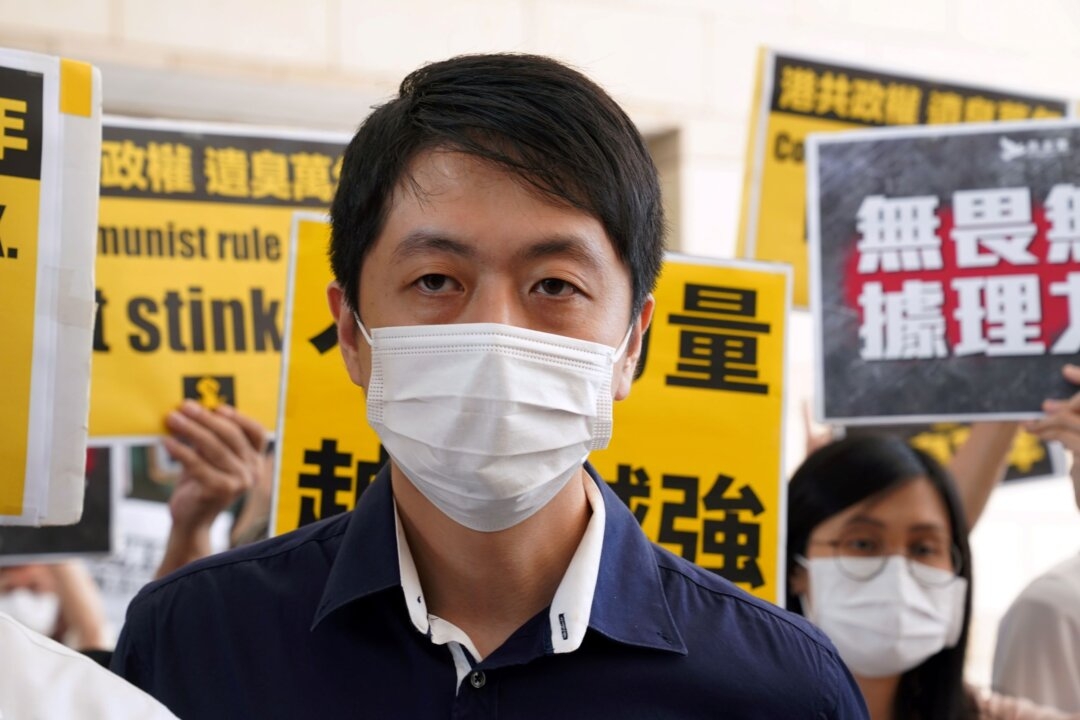
Former pro-democracy lawmaker Ted Hui Chi-fung appears outside West Kowloon Magistrates' Courts in Hong Kong on Nov. 19, 2020. Lam Yik/Reuters
.
Australia’s granting asylum to former Hong Kong legislator Ted Hui is a “slap in the face” for the Hong Kong authorities, said a Sydney attorney and documentary filmmaker.
“The Australian government’s decision to grant Ted Hui a protection visa is a slap in the face for the HK SAR [special administrative region] and its Chief Executive John Lee, who was sanctioned by the first Trump [administration] for serious human rights abuses in Hong Kong,” Mark Tarrant, who represented political activist Drew Pavlou during the anti-extradition bill movement in 2019, told The Epoch Times.
Hui, who is wanted by the Hong Kong authorities, was granted asylum in Australia on Aug. 15.
A high-profile critic of Hong Kong’s controversial National Security Law, which triggered widespread democracy protests in 2019-2020, Hui faces several charges and was the target of a Hong Kong police bounty of HK$1 million (AU$196,000) in 2023.
The National Security Law, passed by Beijing’s rubber-stamp legislature in 2020, received strong criticism for eroding the “one country, two systems” model, which was promised by the Chinese communist regime when Hong Kong was handed over in 1997.
Hui has since pursued a legal career in Adelaide and was admitted to the Supreme Court of South Australia in 2023.
Currently working as a solicitor in Adelaide, Hui made the announcement in a Facebook post, saying that the asylum also extends to his wife, children, and parents.
“I express my sincere gratitude to the government of Australia—both present and former—for recognising our need for asylum and granting us this protection,” he wrote.
“In thanking the government, I also thank the people of Australia, whom it represents. This decision reflects values of freedom, justice, and compassion that my family will never take for granted.”
Hui noted that the protection visa is not something to be taken for granted.
“We tried hard to explain to Australian society why and how we in Hong Kong lost our freedom—why we had to leave a homeland we love and where our most precious memories remain,” he wrote.
“That freedom was not surrendered, but taken by repression, even as we fought to defend it; and in standing for democracy, we were driven into exile.”
.
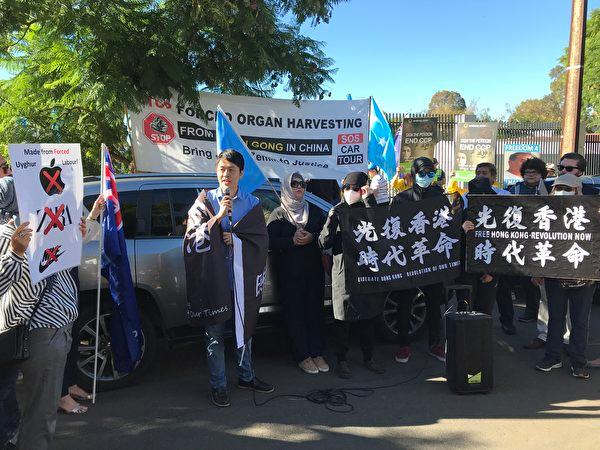
‘Hong Kong Joins Ranks of Abusive Regimes’
With the Australian government’s recognition of Hui as a political refugee, the HK authorities have “joined the ranks of abusive regimes, on par with North Korea and Iran,” Tarrant said.
“Before Australians travel to Hong Kong for business or leisure, they should remember that its Chief Executive John Lee, at his press conference on July 11, 2023, called Ted Hui, along with the other 7 pro-democracy activists with HK$1 million bounties on their heads, ‘street rats’ to be avoided ‘at all costs,’” said Tarrant.
“This is similar to Nazi propaganda calling Jews ‘sewer rats’ in their attempts to justify their crimes against humanity.”
“Using John Lee’s own words, Australians should avoid travelling to the HK SAR at all costs.”
.
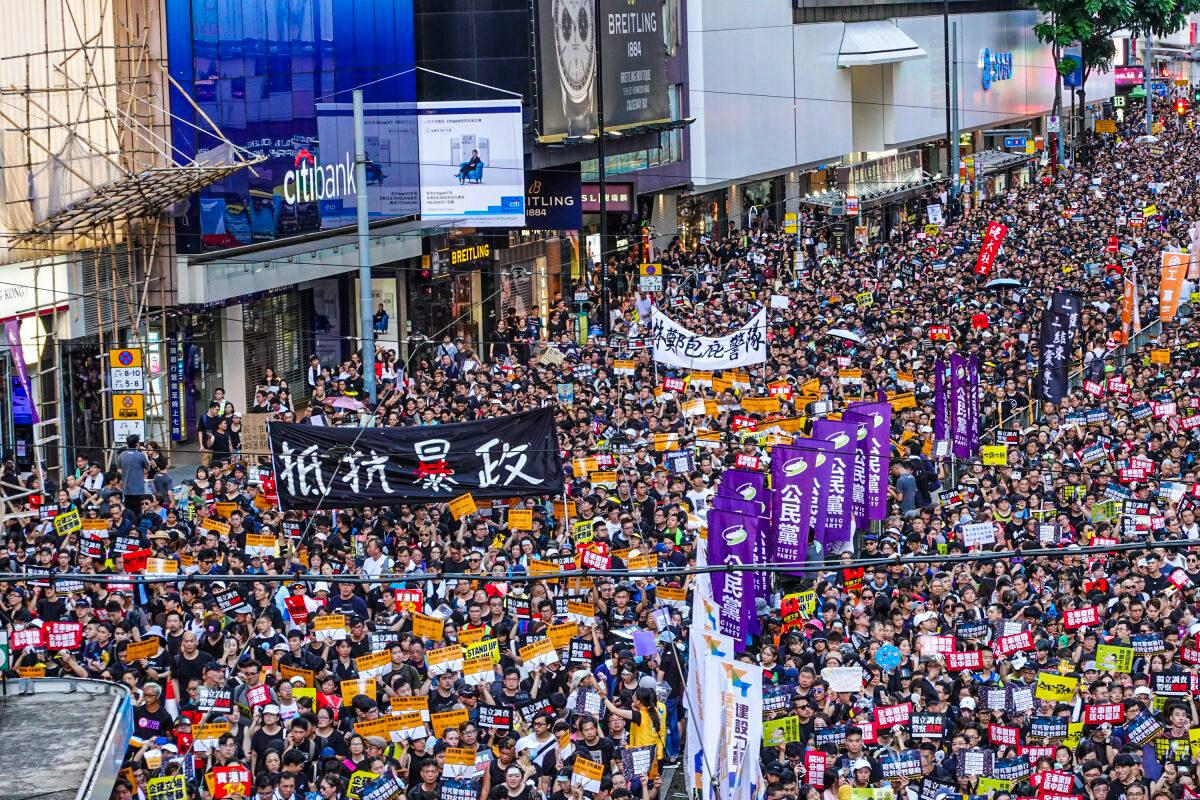
Calls for Australians to Do More
Hui promised to “give back to Australia in every way we can,” and called on the Australian Government not to forget those in Hong Kong who are still imprisoned.
“Men and women like Jimmy Lai, the defendants in the 47 democrats case, and the leaders of the Hong Kong Alliance, etc., face long sentences simply for defending basic democratic rights. Australia must do more to rescue them and to speak up for their humanity,” Hui wrote in the post.
“Its stance matters internationally, and its protection of Hongkongers sets a precedent for other democracies.”
Tarrant believes the Australian government’s granting of political asylum to Hui does not reflect well on the three Australian judges remaining at the Hong Kong Court of Final Appeal.
In Hong Kong, both local and overseas judges are appointed to its highest court—an arrangement established during the 1997 handover that sets it apart from the opaque legal system of mainland China.
Foreign judges—some of the most senior legal figures from Commonwealth countries like the UK, Canada, and Australia—have long been regarded as symbols of Hong Kong’s commitment to the rule of law, a principle vital to its reputation as a global financial hub.
However, since the National Security Law was imposed, foreign judges have been leaving one by one, bringing the total number of foreign justices down from 13 to five—a 25-year low.
The remaining Australian judges include James Allsop, Patrick Keane, and William Gummow.
“They should not be working for a regime that relentlessly persecutes political dissidents,” Tarrant said.
.
What's Your Reaction?
 Like
0
Like
0
 Dislike
0
Dislike
0
 Love
0
Love
0
 Funny
0
Funny
0
 Wow
0
Wow
0
 Sad
0
Sad
0
 Angry
0
Angry
0












Comments (0)