

Xi and Sharif Forge Closer Ties as Pakistan Steps Up as Global Peacemaker
China's President Xi Jinping and Pakistan's Prime Minister Shehbaz Sharif met in Beijing on Monday to reaffirm their countries' deep strategic partnership. Beyond trade and infrastructure, the talks spotlighted Pakistan's growing role as a key mediator in efforts to end the war involving the United States and Iran — a mission Xi explicitly praised.


.
A Show of Unity in Beijing
China and Pakistan are not ordinary allies. Beijing counts Islamabad among a small, select group of nations it describes as an "all-weather strategic partner" — a label that signals the closest tier of diplomatic friendship in China's foreign policy vocabulary.
On Monday, that bond was on full display. Chinese President Xi Jinping welcomed Pakistani Prime Minister Shehbaz Sharif at Beijing's Great Hall of the People, calling him an "old friend" and declaring the two countries' friendship "unbreakable." Sharif, in turn, described China and Pakistan as "iron brother" nations whose relationship is "next to none."
The visit, which ran from May 23 to 26, was arranged at the invitation of Chinese Premier Li Qiang and was described by Beijing as an important high-level exchange between the two countries. Sharif's delegation included senior ministers from planning, information and IT — a sign that the agenda went well beyond ceremonial diplomacy.
CPEC Phase II: Big Plans, Bigger Challenges
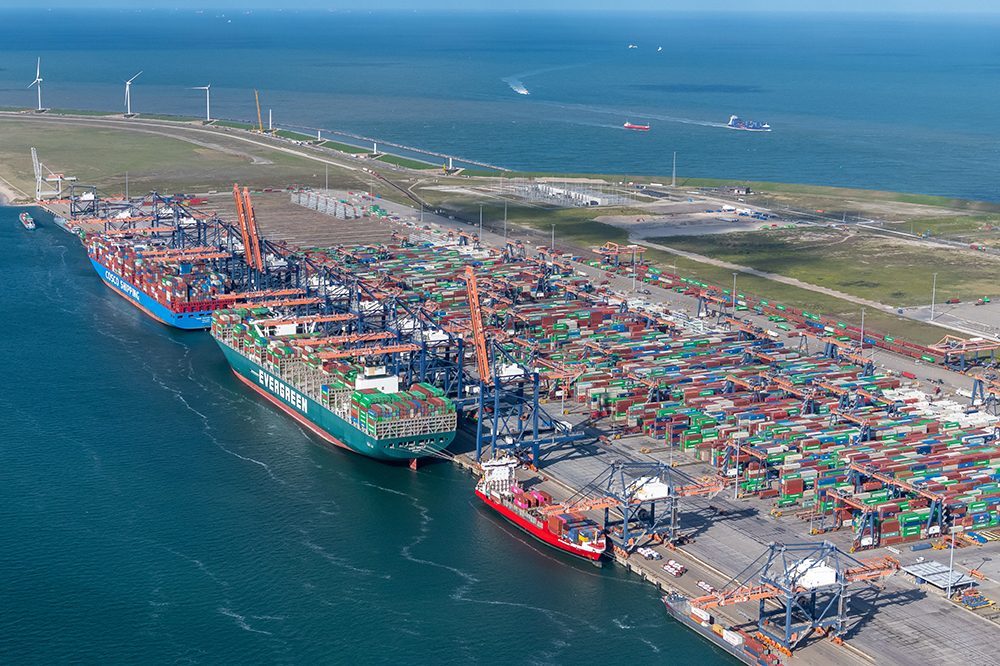
At the heart of the economic talks was the next phase of the China-Pakistan Economic Corridor, or CPEC — a massive network of roads, energy plants, ports and railways that links Pakistan's southern coastline to China's western Xinjiang region.
In Hangzhou, ahead of the Beijing summit, Pakistan secured $1.22 billion in Chinese investment deals at a business conference attended by around 500 Pakistani and Chinese companies. Prime Minister Sharif also set an ambitious trade target, saying Pakistan aimed to increase its agricultural exports to China by $10 billion over the next five to seven years.
Beijing, for its part, signaled willingness to deepen cooperation in agriculture, industry, artificial intelligence and talent development. The next phase of CPEC — dubbed "CPEC 2.0" — will focus on agriculture, information technology, artificial intelligence, special economic zones and natural resources.
But the partnership faces serious strains. Attacks on Chinese personnel in Pakistan have led to delays, while slow loan repayments and administrative inefficiencies have frustrated Chinese investors. At least 20 Chinese nationals have been killed and 34 injured in terrorist attacks in Pakistan since 2021, with much of the violence concentrated in Balochistan, where separatist militants have targeted CPEC infrastructure and personnel. Pakistan has promised tighter security measures, but Beijing's patience has been quietly tested.
Pakistan as Peacemaker: A New Global Role
The most politically significant dimension of Sharif's Beijing visit was not about money — it was about war and diplomacy.
Since the United States and Israel launched strikes against Iran in late February 2026, touching off a major Middle East conflict, Pakistan has positioned itself as a rare neutral messenger trusted by both Washington and Tehran.
Pakistan's army chief, Field Marshal Asim Munir, has emerged as the lead mediator between the two sides. He flew to Tehran on May 22 as part of ongoing mediation efforts, where he met with Iran's Foreign Minister Abbas Araghchi and other senior officials. According to Pakistani security sources, Munir's visit was part of an effort to reach a framework under which the US and Iran would agree to end the war and open negotiations for a broader agreement.
Munir accompanied Sharif to Beijing — a deliberate signal. Pakistani Prime Minister Shehbaz Sharif and Foreign Minister Ishaq Dar have both played a crucial role in mediation between the warring sides, and their visit to China — Iran's top trading partner — was expected to advance efforts to resolve the ongoing crisis.
Xi Jinping acknowledged the effort directly: "I know that you have just returned from Iran and made positive efforts for the current peace. We still appreciate the constructive role played by Pakistan," he told Sharif, according to Chinese state broadcaster CCTV.
Why China Needs Pakistan at the Negotiating Table
Beijing's endorsement of Pakistan's mediation role is no accident. China and Iran maintain close economic and political ties, making Beijing a natural stakeholder in any peace process. At the same time, China lacks a direct communication channel with Washington on this conflict — a gap that Pakistan, which enjoys confidence in both capitals, helps fill.
Islamabad has intensified its mediation process to try to secure a second round of direct talks between the two sides. Pakistan hosted senior leaders of both countries last month for peace talks — the first of their kind since 1979 — though the parties failed to reach a final agreement. The key sticking points remain Iran's nuclear program and control over the Strait of Hormuz, the vital waterway through which roughly one-fifth of global energy supplies normally flow.
Pakistan's army chief concluded what Pakistani officials called a "highly productive" visit to Tehran on May 23, with the military saying "encouraging progress" had been made toward a final understanding.
Xi also called for broader security cooperation between Beijing and Islamabad to advance regional peace and stability — language that signals China's intent to stay closely engaged in the diplomatic process, even from behind the scenes.
Balancing Act: Between Beijing and Washington
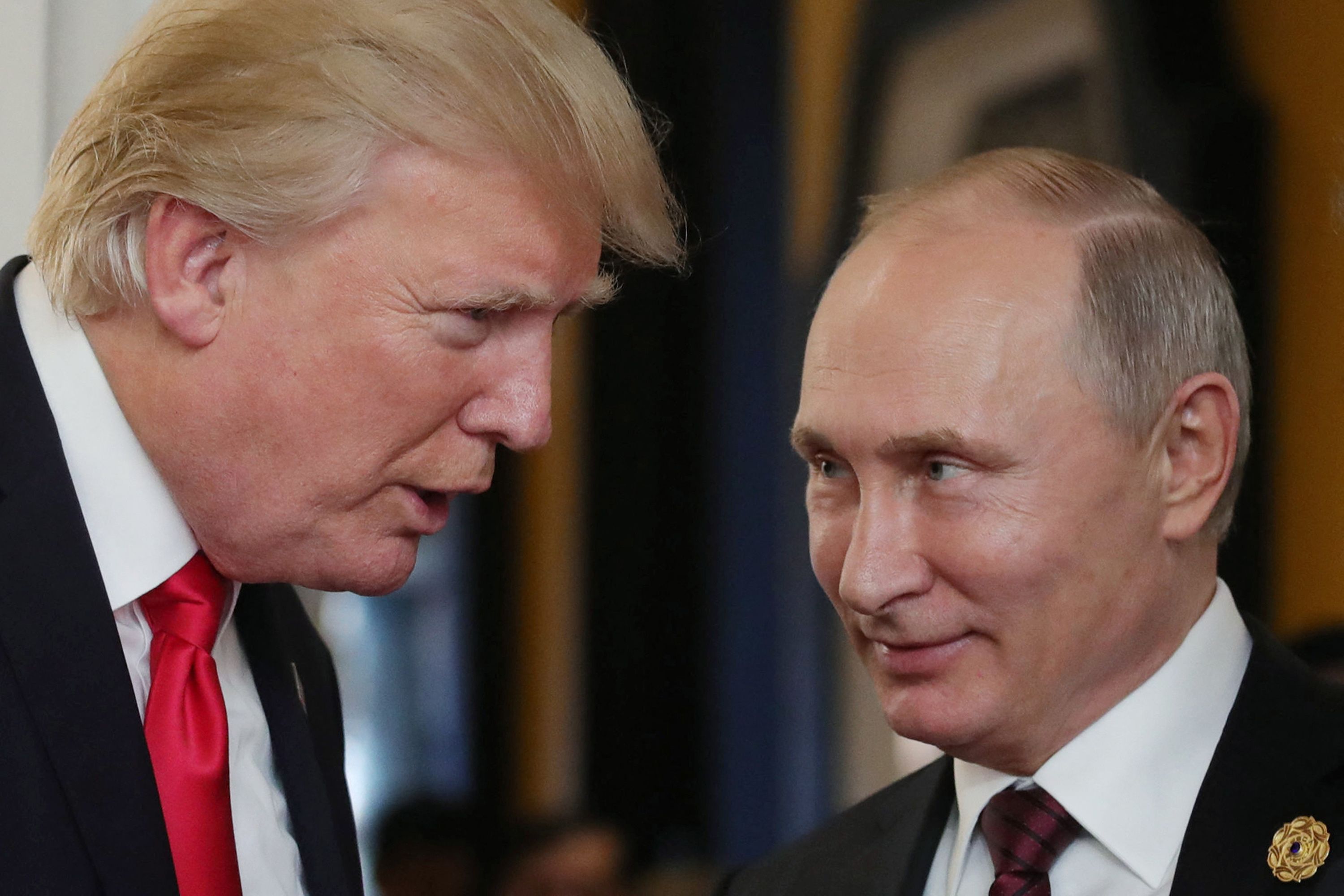
Pakistan's diplomatic balancing act is extraordinary by any measure. Islamabad is deepening its economic integration with China while simultaneously serving as Washington's go-between with Tehran — two powers locked in open rivalry. Sharif and Munir have both met with US President Donald Trump in recent months, underscoring Islamabad's unusual access to all major parties.
A ceasefire agreement since April 8 has halted hostilities, but Trump warned that the window for diplomacy was closing, suggesting he was willing to wait "a few days" for the right answers from Tehran — but no longer.
For Xi, the meeting with Sharif served a dual purpose: reaffirming China's most reliable South Asian partner while quietly using Pakistan as a diplomatic extension into the Middle East crisis. For Sharif, Beijing's public backing of Islamabad's mediation efforts adds international legitimacy to a role that has become central to Pakistan's global standing.
Whether that delicate balance can hold — and whether Pakistan can deliver a peace deal — remains the defining question of the weeks ahead.
.
Sources
- Reuters – China's Xi meets Pakistan PM Sharif in Beijing (May 25, 2026): https://www.reuters.com/world/asia-pacific/chinas-xi-meets-pakistan-pm-sharif-beijing-state-media-reports-2026-05-25/
- Al Jazeera – Munir, Rubio say 'progress' made in US-Iran talks (May 23, 2026): https://www.aljazeera.com/news/2026/5/23/iran-weighs-us-peace-proposal-despite-deep-and-significant-disagreements
- The Tribune India – Pakistan Army Chief Munir, Iran FM Araghchi hold talks in Tehran (May 22, 2026): https://www.tribuneindia.com/news/world/pakistan-army-chief-munir-iran-fm-araghchi-hold-talks-in-tehran-to-end-west-asia-conflict/amp/
- Axios – Pakistani field marshal in Tehran to try to seal US-Iran deal (May 22, 2026): https://www.axios.com/2026/05/22/pakistan-munir-iran-deal-trump
- Pakistan Today – PM Shehbaz Sharif meets Xi in Beijing on Iran talks (May 25, 2026): https://www.pakistantoday.com.pk/2026/05/25/pm-in-china
- Radio Free Europe/Radio Liberty – Pakistan creates special security unit to protect Chinese citizens (Jan. 2026): https://www.rferl.org/a/china-pakistan-cpec-police-terrorism-attack-worker-infrastructure/33643164.html
- East Asia Forum – CPEC relaunch exposes China–Pakistan interdependence (Oct. 2025): https://eastasiaforum.org/2025/10/16/cpec-relaunch-exposes-china-pakistan-interdependence/
- Arab News – Pakistan vows highest level of security for Chinese nationals (May 2026): https://www.arabnews.com/node/2644469/amp
.
What's Your Reaction?
 Like
0
Like
0
 Dislike
0
Dislike
0
 Love
0
Love
0
 Funny
0
Funny
0
 Wow
0
Wow
0
 Sad
0
Sad
0
 Angry
0
Angry
0















Comments (0)