

Analysts Anticipate Escalating Tensions as Beijing Imposes Rare Earth Controls, Washington Retaliates


.
China observers suggest that China’s move was intended to increase its bargaining leverage and pressure Trump into making concessions. But some analysts believe China overplayed its hand, underestimating how sharply the Trump administration would respond.
On Oct. 9, 2025, China’s Ministry of Commerce issued sweeping new regulations significantly expanding export controls—not only on raw rare earth elements, but also on magnets, alloys, batteries, semiconductor materials, related machinery, and any product containing even 0.1 percent Chinese-sourced rare earths. These rules apply not just to Chinese exports, but also to foreign-manufactured goods if they incorporate any Chinese-origin rare earths or technologies.
Under the new rules, exporters—both Chinese and foreign—must obtain specific permits, declare the content and origin of rare earth materials, and demonstrate full traceability throughout the global supply chain. Export licenses will be automatically denied for products or components tied to military applications or high-risk end-users.
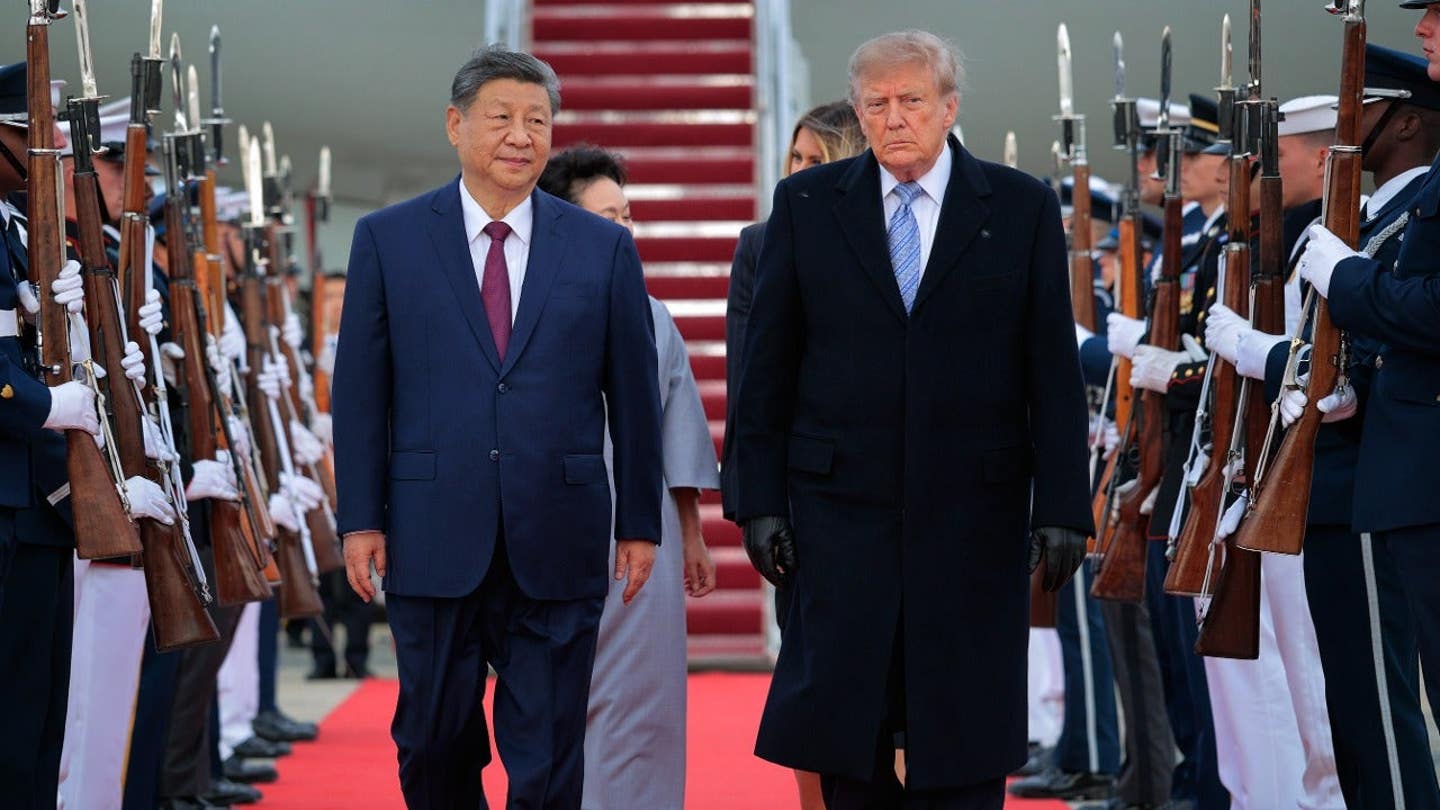
The U.S. president also suggested he may cancel an upcoming meeting with Chinese leader Xi Jinping, originally planned to take place during the Asia-Pacific Economic Cooperation (APEC) summit in South Korea later this month.
China controls about 70 percent of the rare earth mining production, over 90 percent of the separation and processing capacity, and over 90 percent of rare earth magnet manufacturing globally.
Chinese state media and political commentators have long floated the idea of using rare earth exports as a form of leverage in trade disputes or in retaliation against U.S. sanctions, especially the export controls on advanced chips to China.
Beijing’s Move Seen as Breach of Trust
The U.S. president expressed his astonishment at the Chinese regime’s turnabout.“Our relationship with China over the past six months has been a very good one, thereby making this move on Trade an even more surprising one,” Trump wrote in his Truth Social post.
In separate interviews with The Epoch Times, China experts Shen Ming-Shih and Yeh Yao-Yuan both said that Trump must be deeply irritated by China’s sudden reversal after signaling a desire to de-escalate. To Washington, it felt like a deliberate disruption of hard-won momentum.
“China’s current reaction mirrors the early phase of the U.S.–China tariff war,” said Shen, a defense researcher from Taiwan’s Institute for National Defense and Security Research. “Back then, the approach was tit-for-tat: if the U.S. imposed tariffs, China responded in kind. That escalation continued until China eventually said it would stop raising tariffs, though it still maintained countermeasures.”
“Later, during the London talks, the atmosphere seemed genuinely constructive,” Shen said. “Both sides appeared interested in resolving the dispute.”
During trade negotiations held in London on June 9–10, the United States and China made tangible progress toward easing tensions that had intensified earlier in 2025 due to escalating tariffs and export controls.
Yeh, a professor of political science and international studies at the University of St. Thomas, said that China’s announcement of rare earth export controls, just months after those talks, came across as a breach of trust.
“There was already a preliminary understanding,” he said. “And then, out of nowhere, Beijing announces a sweeping new restriction.
“From the U.S. perspective, it looks like a calculated provocation—an attempt to sabotage the talks.
“The American side would likely ask: ‘Didn’t you do this on purpose? You knew we were about to meet, and still chose to escalate. Clearly, you’re trying to pressure us into concessions. But why would we give in under pressure? If that’s the game, we might as well cancel the meeting.’”
Shen shared a similar view: “Of course Trump was furious. He’s already managing multiple high-stakes issues and seeing progress in some—like the cease-fire between Israel and Hamas. But now China’s abrupt reversal is adding unnecessary complexity.”
He also noted that this is a familiar pattern in the CCP’s playbook: creating tension or triggering a crisis before negotiations, forcing the other side to address the disruption before substantive talks can begin.
In his Oct. 10 post, Trump described Beijing’s move as “aggressive” and “extremely hostile.”
At a White House event, Trump told reporters that the United States has many things China needs, including airplanes.
“The U.S. has Monopoly positions also, much stronger and more far reaching than China’s,” he wrote.
Some analysts say the export control is a serious miscalculation on Beijing’s part. Yeh took it a step further, saying it is more a case of overconfidence—or, more bluntly, arrogance.
“China seems inflated in its self-perception, which blinds it to how other countries truly view and react to its behavior,” he said. “Sometimes, it just doesn’t seem to understand where the red lines are when dealing with Western nations.”
Shen added that Beijing’s behavior may reflect a growing internal consensus among Chinese leaders: that tariff relief from Washington is unlikely anytime soon.
CCP’s Internal Struggles May Also Be a Factor
Shen pointed out that internal political tensions within the Chinese Communist Party (CCP) may also be driving Beijing’s move to tighten export controls.“This new measure may be tied to power struggles within the party,” he said. “Alternatively, it could reflect a more aggressive stance from Xi Jinping himself, who may have regained some power.”
Shen noted that shortly before China’s upcoming Fourth Plenum, a key political meeting, the United States published a report on corruption among top Chinese officials.
In his view, Washington might be using this opportunity to influence the narrative before the Fourth Plenum.
Prolonged Hardline Standoff Expected
Davy Jun Huang, an economist and former columnist with China’s state media CNTV who is now based in the United States, told The Epoch Times that the most likely outcome is both countries maintaining a hardline stance while quietly allowing exemptions for certain companies.“In this scenario, negotiations will likely continue even as both sides maintain pressure,” he said.
Huang noted that the immediate impact would likely include rising costs in sectors such as electric vehicles, military equipment, and semiconductors. Multinational firms may be forced to adopt dual-platform strategies to comply with diverging regulatory environments. This will drive up compliance costs as companies try to mitigate risks stemming from export controls or technology bans.
A secondary possibility, Huang said, is that if financial markets experience excessive volatility or if inflationary pressure grows in the United States, both sides might temporarily ease restrictions on select goods in order to prevent further escalation.
According to Shen, the United States will inevitably need to find alternative sources of rare earth elements.
“This is precisely why Beijing has imposed strict export controls on rare earth refining technologies—to maintain its strategic edge,” said Shen, as it will take time for alternative global supply chains to take shape.
What's Your Reaction?
 Like
0
Like
0
 Dislike
0
Dislike
0
 Love
0
Love
0
 Funny
0
Funny
0
 Wow
0
Wow
0
 Sad
0
Sad
0
 Angry
0
Angry
0













Comments (0)