

Weaknesses in the China’s AI Plus and Civil-Military Fusion


.
China is attempting to build a total-war economy through AI Plus and Military-Civil Fusion, turning civilian innovation, universities, commercial chips, and national resource policy into an integrated engine threatening U.S. national security.
However, inflated reporting, lack of experience, limited innovation, and restricted information flows have already created serious gaps in the program.
The Chinese Communist Party (CCP) is accelerating its push for a “world-class military” by expanding AI, robotics, unmanned systems, and autonomous weapons under the AI Plus initiative, which links civilian technology directly to the modernization of the People’s Liberation Army (PLA).
Military-Civil Fusion integrates the PLA with state-owned conglomerates, universities, and major tech companies, producing dual-use technologies designed from the outset to serve both civilian and military needs.
Civilian companies such as Alibaba and Baidu now supply chips and artificial intelligence (AI) systems used for military intelligence processing, while Norinco and university labs develop autonomous vehicles and high-speed battlefield simulation tools.
Under CCP leader Xi Jinping’s “strategic endurance” directive, national security has overtaken economic growth as the central goal of planning, with state resources concentrated in high-tech sectors like semiconductors, aerospace, and AI. Beijing reinforces this system through two-tiered economic management and rare-earth export controls, using its dominance in critical minerals to shape global defense capabilities and strengthen Military-Civil Fusion.
While China’s whole-of-government approach can often solve problems or skip steps in development, it also has significant weaknesses that undermine AI Plus and Military-Civil Fusion, suggesting that the United States will be able to maintain the edge in new weapons development and retain options to counter China’s AI systems once they are fully operational.
.
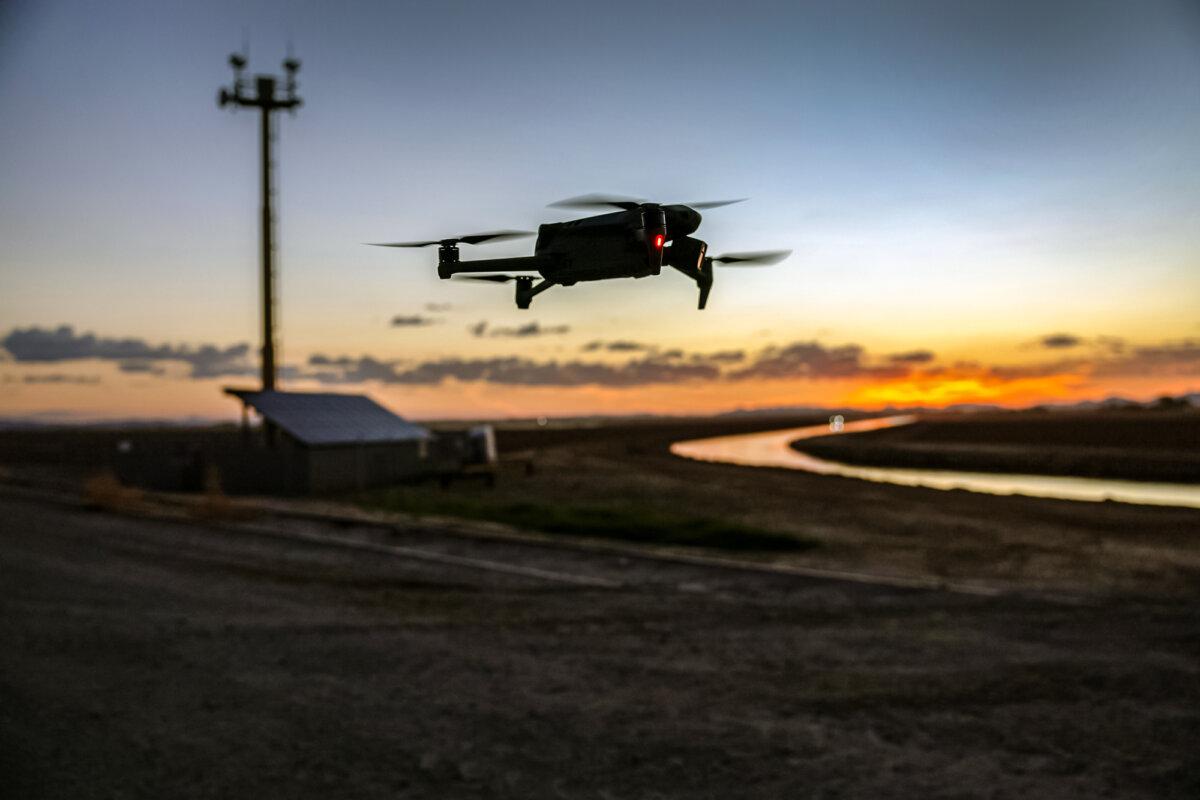
First, the PLA has no combat experience. Consequently, none of China’s technology has been tested in war, and its development and design are largely based on theoretical planning and computer simulations rather than real-world experience. These tabletop and digital models cannot replicate the unpredictability of human decision-making in actual combat, leaving China’s AI unprepared for the “human factor” that drives battlefield outcomes. Because AI relies on pattern recognition and predictable movements, the United States and its allies could exploit this weakness by behaving in irregular, unpredictable ways that force the system to fail.
Furthermore, there are trust issues in a totalitarian system. The CCP tightly controls information and limits what military leaders are allowed to know, often filtering or censoring reports before they reach commanders. This creates a structural weakness in weapons development and investment decisions, which can easily move in the wrong direction when based on incomplete or politically sanitized data. The same problem affects China’s tabletop simulations and AI-driven models, which are frequently trained on censored or distorted information that senior CCP officials prefer to withhold from the military.
The United States and its allies have several options to slow China’s weapons development. Generative AI depends on identifying statistical patterns in enormous datasets, which means China’s AI models can be degraded in two primary ways: by polluting their training data or by disrupting their prompt-engineering processes, both of which can cause the system to “hallucinate” or produce faulty outputs.
A historical parallel comes from World War II, when the Allies blinded German radar by flooding it with aluminum “chaff,” creating overwhelming ambiguity and rendering the system unreliable. The same logic applies to China’s AI-driven intelligence. Because AI relies on pattern recognition, the U.S. military and intelligence community can disrupt Chinese models by introducing misleading or ambiguous information about American weapons and tactics, including through intentionally confusing nomenclature.
Past examples like “Flying Prostitute” for the B-26 and “Goatsucker” for the F-117 show how ambiguous names can distort search results. Applying similar tactics today, such as giving future systems extremely common or misleading titles, would force China’s analysts and AI engines to sift through mountains of irrelevant material, weakening the reliability of their AI-driven intelligence processing.
At the same time, even if China’s weapons development related to AI Plus and Military-Civil Fusion is moving in the right direction and producing powerful systems, those weapons are dependent on uninterrupted, secure streams of information. Consequently, those weapons would be vulnerable to hacking, disruption, or jamming, which could paralyze the PLA’s ability to continue fighting.
What's Your Reaction?
 Like
0
Like
0
 Dislike
0
Dislike
0
 Love
0
Love
0
 Funny
0
Funny
0
 Wow
0
Wow
0
 Sad
0
Sad
0
 Angry
0
Angry
0












Comments (0)