

Vietnam's One-Man Rule: To Lam Becomes the Country's Most Powerful Leader in Decades
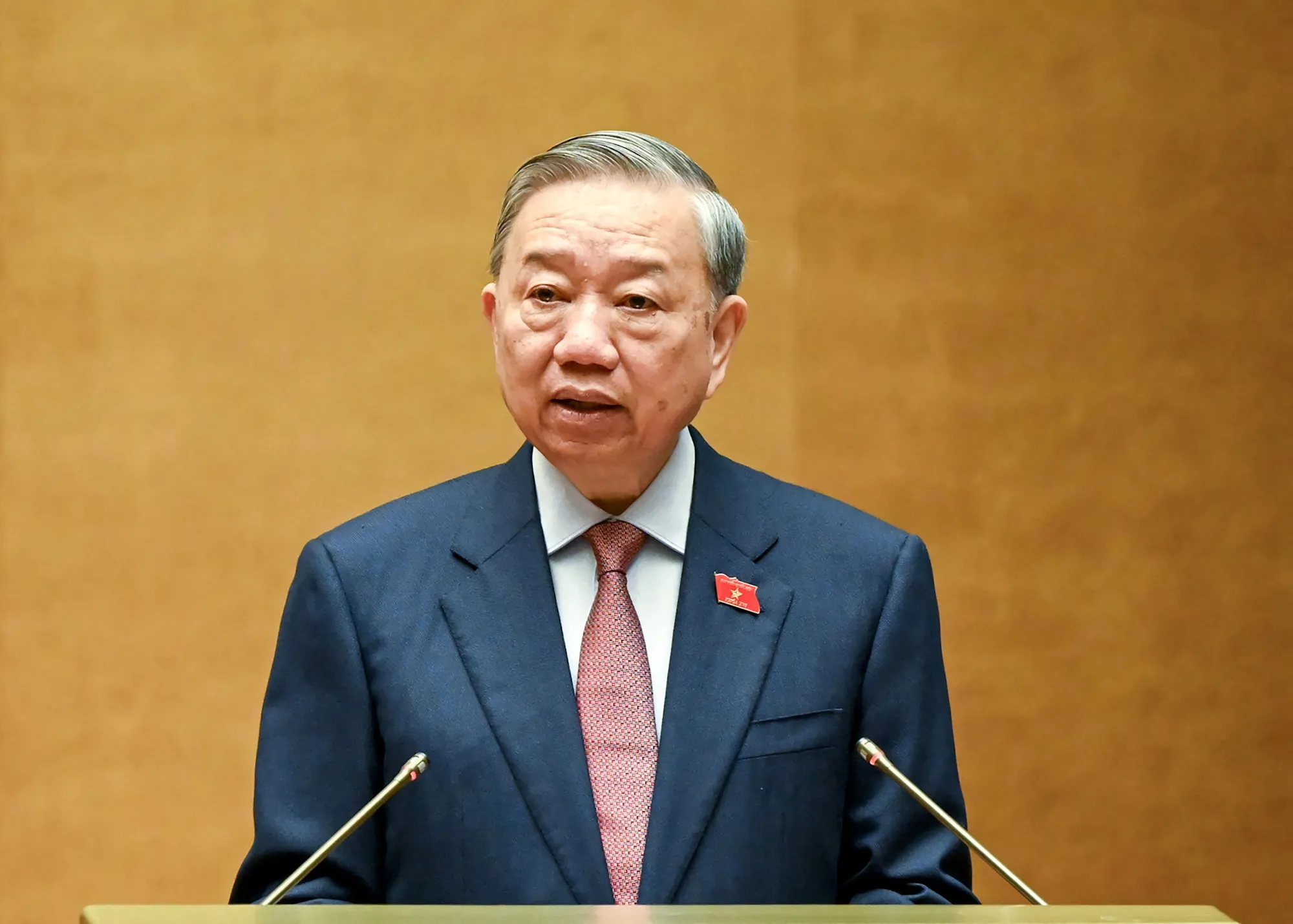
On the morning of April 7, 2026, Vietnam's newly elected National Assembly cast its votes for the country's next president. The result was striking: all 495 deputies present voted in favor of To Lam, the General Secretary of the Communist Party of Vietnam, electing him as State President for the 2026–2031 term. Lam was the sole nominee for the five-year post, with the assembly's approval largely a formality in the one-party state. There was no debate, no opposition candidate, no suspense. In Vietnam's political system, elections are less about choosing a leader than about formalizing decisions already made behind closed doors.

.
A Unanimous Vote — But No Real Choice
On the morning of April 7, 2026, Vietnam's newly elected National Assembly cast its votes for the country's next president. The result was striking: all 495 deputies present voted in favor of To Lam, the General Secretary of the Communist Party of Vietnam, electing him as State President for the 2026–2031 term.
Lam was the sole nominee for the five-year post, with the assembly's approval largely a formality in the one-party state. There was no debate, no opposition candidate, no suspense. In Vietnam's political system, elections are less about choosing a leader than about formalizing decisions already made behind closed doors.
Unprecedented Power in a Single Pair of Hands
The former head of public security now holds a double mandate to rule the country for the next five years, after he secured a second term as general secretary in January.
This combination of roles is significant. For decades, Vietnam was governed through a system of collective leadership — power was shared between four key figures: the party chief, the president, the prime minister, and the speaker of parliament. That model was designed to prevent any single person from gaining too much control.
To Lam has now broken that pattern. He is widely seen as unifying leadership of the party and the state in a way similar to what President Xi Jinping has done in neighboring China.
Analysts warn that this shift carries real consequences. Despite a leadership upheaval, Vietnam remains under the authoritarian rule of the Communist Party, which maintains a tight grip on power and suppresses political dissent.
Economic Ambitions — and the Risks Behind Them
To Lam has presented himself primarily as an economic reformer. He has pledged to move Vietnam away from its reliance on cheap manufacturing, aiming instead for technology-driven growth and a target of double-digit annual economic expansion.
Under Lam, Vietnam has restructured its political system, including reducing regulations, cutting 20% of public sector jobs, reducing the number of ministries from 22 to 14, and halving the number of Vietnamese provinces.
Foreign investors have generally welcomed these moves. But critics point to the risks: allegations of favoritism toward politically connected conglomerates, the potential for asset bubbles driven by breakneck growth targets, and the dangers of concentrating economic decision-making in one leader with little accountability.
Vietnam's anti-corruption campaign has inflicted economic harm, estimated at $2.5 billion in unclaimed foreign aid for the period from 2022 to 2024 — and functions partly as a tool for internal power struggles, while failing to address the systemic corruption inherent in Vietnam's authoritarian structure.
A Track Record That Troubles Rights Groups
Before becoming the country's top political figure, To Lam spent years as head of Vietnam's Ministry of Public Security — the country's powerful internal security apparatus. That record is deeply troubling to human rights organizations.
Under Lam, Vietnam's powerful security agency has nearly eradicated the country's nascent human rights movement. Its agents arrested virtually everyone who tried to promote democracy and human rights in the country, including members of independent journalism associations and pro-democracy groups.
Of Vietnam's 164 political prisoners still behind bars simply for exercising their basic civil and political rights, 147 were convicted and sentenced on Lam's watch as security minister — a statistic that organizations like Human Rights Watch have put at the center of their warnings about his presidency.
Religious freedom has also been a flashpoint. The United States Commission on International Religious Freedom recommended designating Vietnam as a "country of particular concern" for engaging in systematic, ongoing, and egregious violations of religious freedom. Spiritual communities operating outside state-sanctioned structures — including Falun Dafa practitioners and independent Buddhists — have faced harassment, surveillance, and in some cases imprisonment.
Civic space in Vietnam is rated "closed" by the CIVICUS Monitor, placing it among the most restrictive environments in the world for civil society.
"Bamboo Diplomacy" — Bending Without Breaking
On the international stage, To Lam has maintained what Vietnamese officials call "Bamboo Diplomacy" — a strategy of staying flexible while remaining rooted, balancing relationships with major powers rather than aligning firmly with any one.
Vietnam's foreign policy approach has included boosting its defense capabilities and expanding its security relationships with the United States, Australia, India, and Japan as a hedge against China. At the same time, Hanoi remains deeply cautious about provoking Beijing — its most important bilateral partner and a country with which it shares a long and complicated history.
Vietnam usually does not undertake large-scale diplomatic moves — especially with the United States — without first calculating China's likely reaction. Under To Lam's dual mandate, that balancing act is expected to continue.
What Comes Next
To Lam's consolidation of power raises fundamental questions about Vietnam's future. Can faster, more centralized decision-making produce the economic results he promises — without the guardrails of collective governance? And what happens to those who dissent?
Vietnam's progress is marked by economic growth but hampered by more repressive authoritarian governance, with a balance sheet that will continue to deteriorate amid worsening environmental destruction and human rights concerns, according to the Bertelsmann Transformation Index.
For now, To Lam holds the reins more firmly than any Vietnamese leader in a generation. Whether that power is used to build a more prosperous country — or simply to consolidate control — remains to be seen.
.
Sources
- AFP / BSS News – "Vietnam parliament elects party chief To Lam as president": https://www.bssnews.net/international/375182
- Bloomberg – "To Lam Secures Presidency, Tightening Grip on Power" (April 7, 2026): https://www.bloomberg.com/news/articles/2026-04-07/vietnam-s-to-lam-secures-presidency-tightening-grip-on-power
- VietnamPlus (VNA) – "Party General Secretary To Lam elected as State President for 2026–2031 term": https://en.vietnamplus.vn/party-general-secretary-to-lam-elected-as-state-president-for-20262031-term-post340605.vnp
- Human Rights Watch – "Beware of Vietnam's New Authoritarian President": https://www.hrw.org/news/2024/06/21/beware-vietnams-new-authoritarian-president
- CIVICUS – "Vietnam: Human rights conditions will likely worsen": https://civicus.org/index.php/media-resources/news/interviews/7241-vietnam-human-rights-conditions-will-likely-worsen-as-the-country-descends-into-a-police-state
- Bertelsmann Transformation Index – Vietnam Country Report 2026: https://bti-project.org/en/reports/country-report/VNM
- U.S. Congressional Research Service – Vietnam Political Structure and Policy Direction: https://www.congress.gov/crs_external_products/IF/HTML/IF10209.html
- U.S. Congress – Vietnam Human Rights Act (H.R.3122, 119th Congress): https://www.congress.gov/bill/119th-congress/house-bill/3122/text
.
What's Your Reaction?
 Like
2
Like
2
 Dislike
0
Dislike
0
 Love
0
Love
0
 Funny
0
Funny
0
 Wow
2
Wow
2
 Sad
0
Sad
0
 Angry
0
Angry
0













Comments (0)