

Trump–Xi Meeting Rescheduled for Late April

.
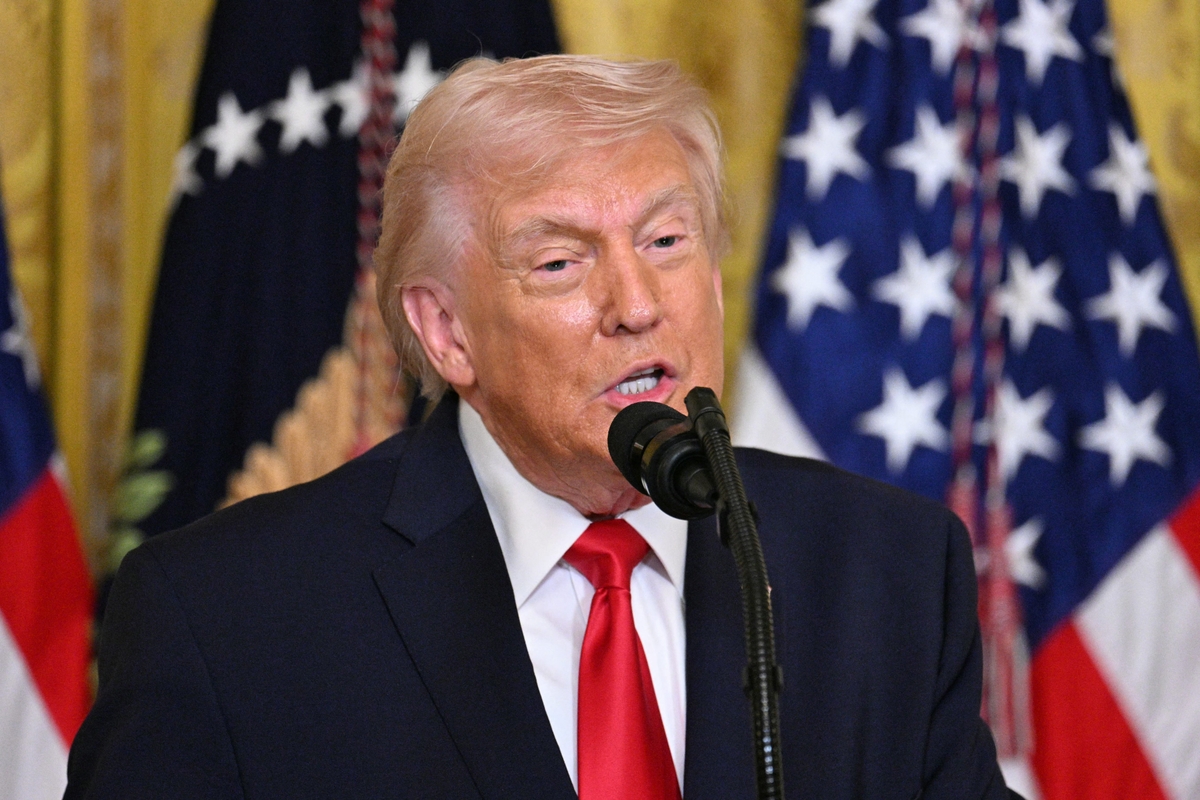
President Donald Trump said during a press briefing on March 17 that the postponed meeting between him and Chinese Communist Party (CCP) leader Xi Jinping will take place in “about five to six weeks.”
“They were fine with it,” Trump said of the rescheduling, which is still in progress. “I look forward to seeing President Xi. He looks forward to seeing me, I think.
“China actually has become, economically for us, very good, very good. As you know, it’s much different than it was in the past, and we have a very good working relationship with China.”
“I have to be here, I feel. And so we’ve requested that we delay it a month or so,” Trump told reporters on March 16.
Trump and Xi last met in October 2025 in South Korea for a bilateral meeting, striking a trade truce scheduled to last for one year.
The U.S. president implemented tariffs on trade partners shortly after taking office, mainly aiming to balance trade deficits, which led to negotiated trade deals that often capped tariffs at 15 percent and included major investments in U.S. industries to allow foreign countries to buy down the deficits.
Those deals have remained in place since the Supreme Court invalidated Trump’s use of emergency powers to impose tariffs, and the United States has launched several investigations into unfair trade practices that could allow similar tariffs to be imposed.
China did not reach a trade deal with the United States; instead, it reached a more piecemeal, temporary agreement during the October 2025 meeting.
The United States had imposed several tariffs on China beyond addressing the trade deficit, including for its role in the fentanyl crisis. Beijing retaliated with its own trade measures and boycotts, and tariffs on both sides exceeded 100 percent at one point.
The United States and China resumed trade talks on March 15 in Paris, the first since the Supreme Court ruling necessitated new frameworks for the tariffs, which were a topic of discussion. The trade negotiators indicated both countries would maintain the deal reached last October.
Greer said they discussed compliance with what China had agreed to, such as the flow of critical minerals and the increase in energy and agricultural exports to China.
“We talked about potentially having even a mechanism ... a U.S.–China board of trade, just a way to formalize a little bit, identify what kinds of things should we be importing from China, what kinds of things should we be exporting to China to really make sure that we can focus on areas of mutual benefit,” Greer said. “That’s what we expect the leaders to be talking about when they meet.”
.
What's Your Reaction?
 Like
0
Like
0
 Dislike
0
Dislike
0
 Love
0
Love
0
 Funny
0
Funny
0
 Wow
0
Wow
0
 Sad
0
Sad
0
 Angry
0
Angry
0













Comments (0)