

Taiwan Stands Firm on U.S. Arms: "This Is About Law — and Regional Security"
After President Trump signaled uncertainty over a pending $14 billion weapons package for Taiwan following his Beijing summit with Xi Jinping, Taiwan's government is pushing back — firmly but diplomatically. Taipei argues that U.S. arms sales are not a political favor, but a legal obligation rooted in American law.

.
Trump's Hesitation Sends Shockwaves Across the Taiwan Strait
When President Donald Trump landed back in the United States after his two-day summit with Chinese leader Xi Jinping in Beijing, he left Taiwan with more questions than answers. Asked about a pending $14 billion arms package for the island, Trump told reporters he had not yet decided whether to approve it. "The last thing we need right now is a war that's 9,500 miles away," he said.
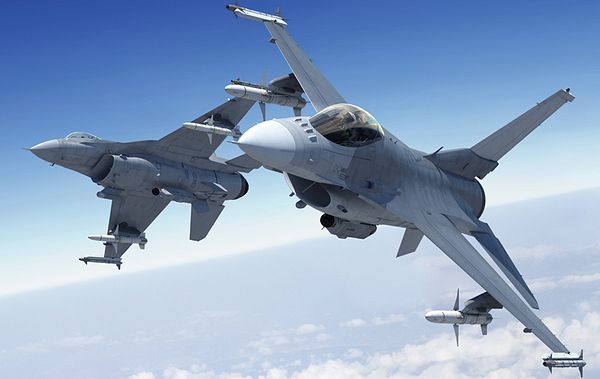
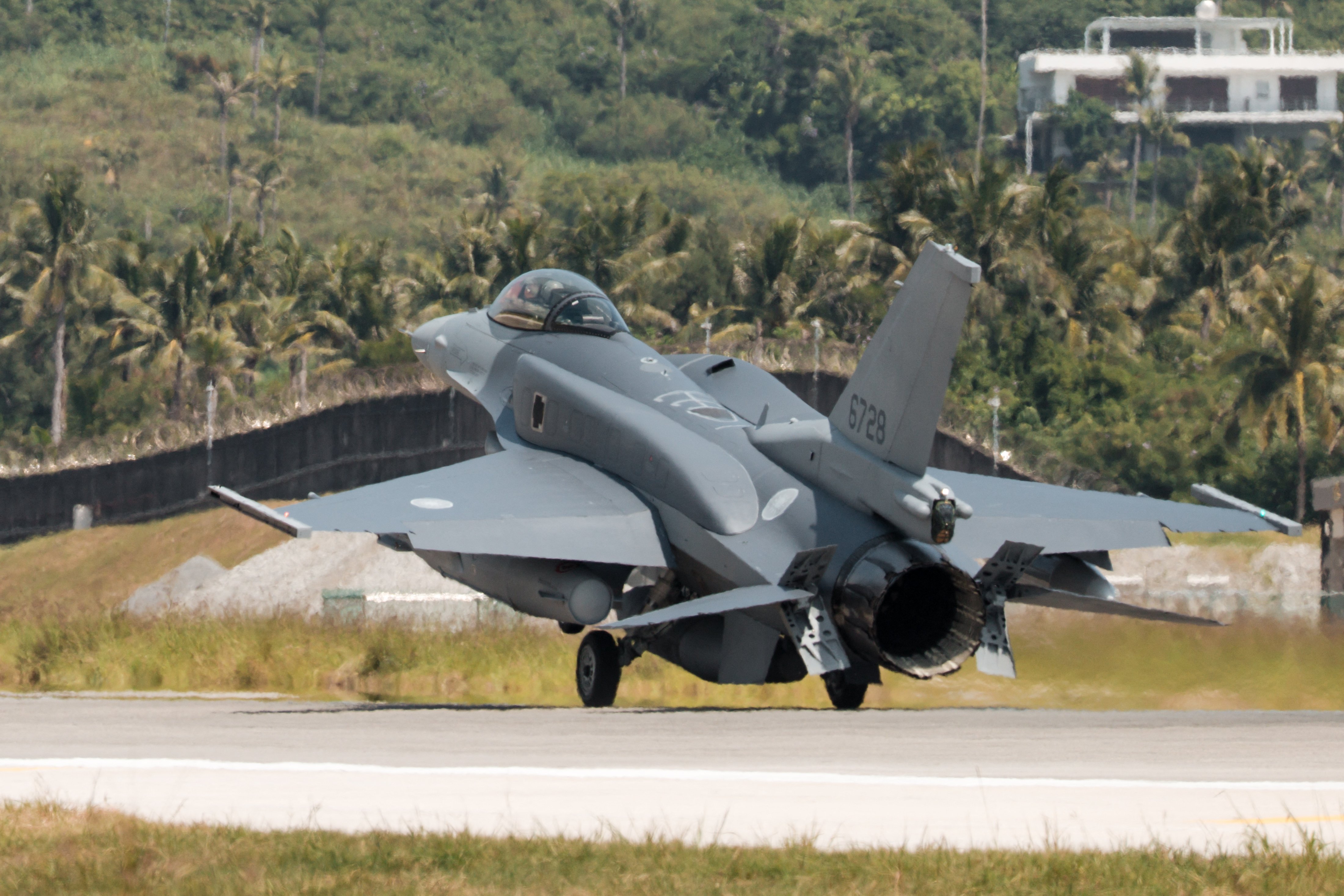
The remark immediately sparked concern in Taipei — and around the region. Taiwan has been waiting for months for the White House to greenlight the package, which reportedly includes missiles and advanced air defense interceptors. The Trump administration had already approved a record $11 billion arms deal for Taiwan in December 2024. The second package has remained in limbo ever since.
Taipei's Response: Measured, but Unmistakable
Taiwan's government did not stay silent. A spokesperson for President Lai Ching-te, Karen Kuo, issued a clear and firm statement on Saturday, May 16.
"China's escalating military threat is the sole destabilizing factor in the Indo-Pacific region, including the Taiwan Strait," Kuo said. She added that arms sales between Taiwan and the United States reflect a legal commitment under the Taiwan Relations Act — and serve as a mutual deterrent against regional aggression.
Taiwan also expressed appreciation for Trump's "long-standing and continued support" for security in the Taiwan Strait. But the underlying message was unmistakable: the arms relationship is not a political bargaining chip — it is grounded in U.S. law.
What the Taiwan Relations Act Actually Says
The Taiwan Relations Act (TRA) has governed U.S. defense ties with Taiwan since 1979, when Washington shifted its formal diplomatic recognition from Taipei to Beijing. The law directs the United States to make available to Taiwan defense articles and services sufficient for the island to maintain a capable self-defense. It was passed by bipartisan majorities in Congress — and it remains in force today.
Legal experts note, however, that the TRA gives the president significant discretion in determining what to sell and when. While it establishes a strong political and legal framework for arms transfers, it does not automatically compel specific sales on a fixed timeline. That nuance has left room for the current uncertainty.
Both Republican and Democratic members of Congress have called on the Trump administration to move forward with the weapons package without delay.
What Was Said — and What Wasn't — in Beijing
At the heart of Taiwan's concern is what Trump may have discussed with Xi behind closed doors. According to reports, Xi warned Trump that continued arms sales to Taiwan risked "clashes and even conflicts" between the two superpowers. Trump, for his part, appeared to leave the door open to a delay — at least until after September, when he has reportedly invited Xi to visit the United States.
Trump also surprised observers by suggesting he would need to speak directly with the "person running Taiwan" before making a final decision — an apparent reference to President Lai Ching-te. Any direct Trump-Lai call would infuriate Beijing, which regards Lai as a "separatist" and has repeatedly refused to engage with him.
Taiwan's Deputy Foreign Minister Chen Ming-chi said Taipei was still working to understand the "true intent" of Trump's remarks. A senior Taiwan security official was more direct: "The party with whom arms sales are to be discussed is Taiwan, not Beijing."
Beijing Keeps Up the Military Pressure
China's military did not pause its provocations during the summit. The People's Liberation Army continued its near-daily operations around Taiwan while Trump and Xi were meeting in the Chinese capital. Beijing has never renounced the use of force against Taiwan and has dismissed all offers of dialogue from President Lai.
Taiwan's Mainland Affairs Council has consistently described China's strategy as a two-track approach: military pressure to push toward so-called "unification," and political pressure to force Taiwan to the negotiating table on Beijing's terms. "That has always been the basic tone of its Taiwan policy," Deputy Minister Shen Yu-chung said this week.
Taiwan, for its part, rejects the premise entirely. Its government officially calls itself the Republic of China — a sovereign, independently governed democratic state. "Beijing's claims are therefore without merit," Kuo said.
A Fragile Moment — With High Stakes
Taiwan's parliament recently approved $25 billion in special defense funding — well short of the $40 billion the Lai government had sought. The opposition-controlled legislature earmarked the funds specifically for U.S. arms purchases, underscoring how central the American defense relationship is to Taiwan's security strategy.
Analysts warn that any ambiguity from Washington — even rhetorical softening — could embolden Beijing to test Taiwan's resolve and erode international confidence in U.S. commitments across the Indo-Pacific. The question now is whether Trump's hesitation is a negotiating tactic, a genuine policy shift, or something in between.
Taiwan is watching — and waiting.
.
Sources:
- Reuters – Taiwan says U.S. arms sales are cornerstone of regional peace (May 16, 2026): https://www.reuters.com/world/china/taiwan-says-us-arms-sales-are-cornerstone-regional-peace-2026-05-16/
- Axios – Trump waffles on $14 billion arms sale to Taiwan after talking to China's Xi (May 15, 2026): https://www.axios.com/2026/05/15/trump-taiwan-arms-sale-xi-summit
- CNN – Taiwan anxiously eyes Trump's summit in China, with $14 billion in U.S. arms sales up in the air (May 13, 2026): https://www.cnn.com/2026/05/13/politics/taiwan-anxiously-eyes-trumps-summit-in-china-with-usd14-billion-in-us-arms-sales-up-in-the-air
- NBC News – Xi warns Trump of possible conflict over Taiwan at grand Beijing summit: https://www.nbcnews.com/world/china/xi-warns-trump-taiwan-conflict-summit-beijing-china-us-rcna345069
- U.S. Congress – Taiwan Relations Act (Public Law 96-8, official text): https://www.congress.gov/bill/96th-congress/house-bill/2479
- American Institute in Taiwan – Taiwan Relations Act (official full text): https://www.ait.org.tw/taiwan-relations-act-public-law-96-8-22-u-s-c-3301-et-seq/
.
What's Your Reaction?
 Like
0
Like
0
 Dislike
0
Dislike
0
 Love
0
Love
0
 Funny
0
Funny
0
 Wow
0
Wow
0
 Sad
0
Sad
0
 Angry
0
Angry
0













Comments (0)