

The Hidden Blueprint for Turning a House Into a Home
A house becomes a home not through expensive renovations, but through small, deliberate habits. Researchers who study our living spaces have found that light, clutter, scent, and the people we invite in all shape how safe and happy we feel indoors. Here are six evidence-backed ways to make any house feel like a true home.

.
Most people spend far more money on a new car or a vacation than on the place where they actually spend most of their lives: their own home. Yet a growing body of research suggests that small, low-cost changes to a living space can have an outsized effect on daily happiness and even physical stress levels.
The idea is simple. A home does not need to be large or expensive to feel welcoming. It needs to be intentional. Below are six practical, research-supported habits that can turn an ordinary house into a place people actually want to be.
1. Make Comfort Visible, Not Just Decorative
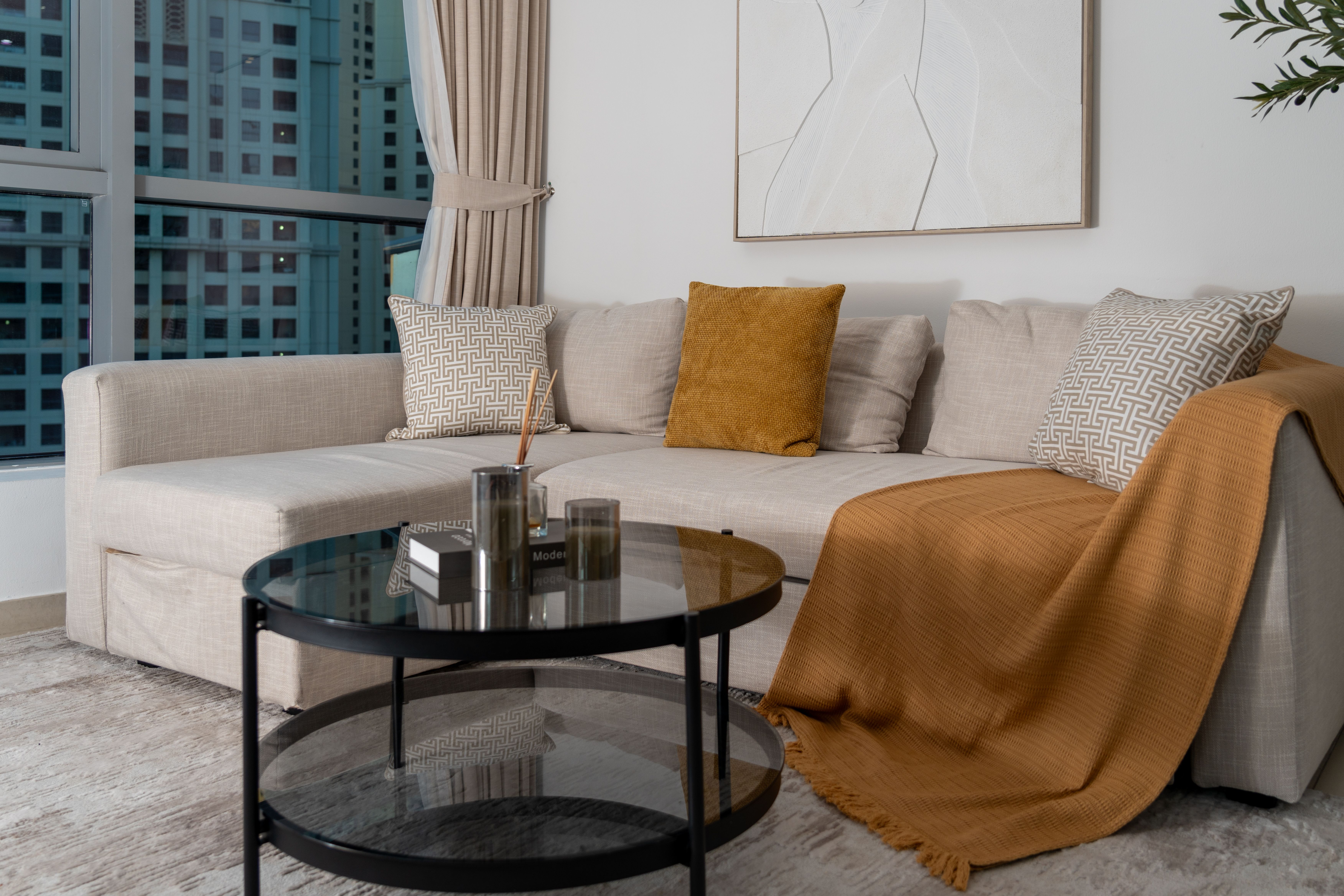
Soft blankets, pillows, and throws left out in the open send an unspoken invitation to relax. Interior psychologists note that coziness works on two levels: physical comfort, meaning the objects themselves, and the emotional feeling of security and belonging that those objects create together. Homes that mix "for-show" decor with genuinely usable comfort items tend to feel warmer than those styled purely for appearance.
2. Cook to Create Atmosphere, Not Just Meals
Cooking does more than fill the kitchen with a pleasant smell. Scent researchers have found that familiar, warm aromas such as fresh bread or baked goods are strongly linked to feelings of calm. A home that regularly smells like cooking signals activity and life, which is one reason the kitchen is so often the emotional center of a house.
3. Prioritize Daylight Before Anything Else
Lighting is one of the most researched aspects of home wellbeing, and the science is clear: natural daylight matters more than any lamp. A controlled study published in the International Journal of Environmental Research and Public Health found that residents who received more daylight through their windows fell asleep faster, had steadier melatonin patterns, and reported better mood throughout the day than those relying mainly on artificial light and blinds. The study found that participants exhibited consistent melatonin onset, an earlier sleep onset, and higher sleep regularity when their homes let in more circadian-effective daylight, while relying on blinds instead led to delayed melatonin onset and lower positive mood.
The practical takeaway: open the curtains before switching on a lamp, and add secondary light sources at the sides of a room rather than relying only on the ceiling light.
4. Let Fresh Air Move Through the House
Stale indoor air, especially in winter, can quietly work against the feeling of a "fresh start" every morning. Simply opening windows for a short period, even briefly in cold weather, allows air to circulate and removes lingering household odors. This habit costs nothing and takes only a few minutes a day.
5. Decorate With Memory, Not With Catalogs
There is a measurable difference between a home filled with generic, matching decor and one filled with personal objects: books being read, travel photos, or items collected over the years. Psychologists describe this as "symbolic self-completion," meaning that personal objects act as visual reminders that a space truly belongs to the people living in it. Homes styled this way tend to feel more authentic than those that closely resemble a furniture showroom.
Clutter, however, is the flip side of personalization. A well-known study by UCLA's Center on Everyday Lives of Families tracked stress hormones in dual-income households and found a clear link between visible household clutter and elevated cortisol levels, particularly among mothers managing the household. The lesson is not to remove personality from a home, but to keep meaningful items visible while clearing out genuine mess.
6. Fill the House With People
The single most powerful way to turn a house into a home may be the simplest: invite people into it regularly. According to reporting distributed by the Associated Press, a social psychology professor at the University of Georgia found that the quality of company matters far more to a successful gathering than food, decor, or the size of a home. A psychology professor at Brigham Young University, who led the 2023 U.S. Surgeon General's report on the health risks of loneliness, has similarly pointed out that most people wait for someone else to reach out first, which is exactly why so few informal gatherings happen at all.
Regularly hosting family meals, game nights, or simply having an open door for friends does more to build a "lived-in" feeling than any amount of decorating.
The Bigger Picture
None of these six habits requires a large budget or a home renovation. What they have in common is intentionality: choosing comfort over appearance, daylight over convenience, and people over perfection. Research across psychology, sleep science, and hospitality studies increasingly points to the same conclusion: a house becomes a home through consistent small choices, not through what it costs.
.
Sources
- Nagare, R. et al., "Access to Daylight at Home Improves Circadian Alignment, Sleep, and Mental Health in Healthy Adults: A Crossover Study," International Journal of Environmental Research and Public Health, National Institutes of Health (PMC): https://www.ncbi.nlm.nih.gov/pmc/articles/PMC8507741/
- "The Clutter Culture," UCLA Newsroom (UCLA Center on Everyday Lives of Families study): https://newsroom.ucla.edu/magazine/center-everyday-lives-families-suburban-america
- Associated Press, "To make hosting less stressful, strive for connection and not perfection": https://www.abc4.com/news/health/ap-health/ap-to-make-hosting-less-stressful-strive-for-connection-and-not-perfection/
.
What's Your Reaction?
 Like
0
Like
0
 Dislike
0
Dislike
0
 Love
0
Love
0
 Funny
0
Funny
0
 Wow
0
Wow
0
 Sad
0
Sad
0
 Angry
0
Angry
0















Comments (0)