

Squeezed from Both Sides: Beijing Locks the Exit Door as Washington Shuts the Chip Pipeline
China’s tech sector is under pressure from two directions at once. The US has closed a major loophole that let Chinese firms rent advanced AI chips abroad, while Beijing is making it harder for young companies to raise money overseas. The shock has also unsettled global markets, and even gold has been dragged down in the turmoil.

.
A Bad Week for China's Tech Ambitions
China's tech industry had a rough week, and the blows came from opposite sides. Washington tightened the screws on the chips that power artificial intelligence (AI). Beijing, for its part, moved to rein in its own companies.
Investors noticed. Shares of leading Chinese tech firms slid, and the smaller AI start-ups took some of the hardest hits.
.
Washington Closes the "Cloud Loophole"
For years, American export rules barred Chinese companies from buying the most advanced AI chips. But there was a workaround. Chinese firms simply rented computing power from data centres in third countries, mainly in Southeast Asia, and trained their AI models there.
On November 16, the US Commerce Department's Bureau of Industry and Security issued an interim rule to shut that door. Suppliers now need a US licence to ship advanced chips to data centres that serve large amounts of computing power to companies in China and other restricted countries. Chips headed to Indonesia, Malaysia, Singapore, Thailand and Brazil also require licences, because the department sees a higher risk that they are passed on to restricted buyers. Data centres already serving such customers have 90 days to get a licence.
The rule landed after weeks of scrutiny over whether earlier enforcement had been tough enough. Lawmakers had pressed the Commerce Department on the issue, and the Trump administration's new measure is meant to show that sensitive American technology will not leak out through the back door.
.
The Nvidia Shock Behind the Scenes
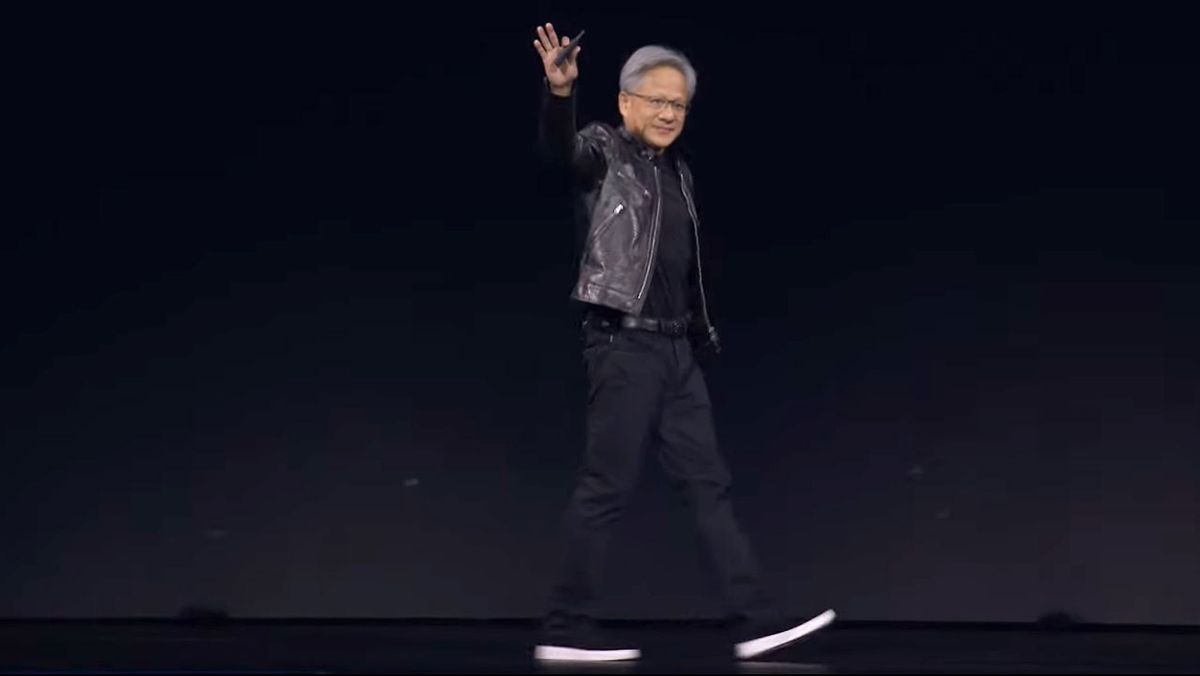
The timing is no accident. Earlier this month, Nvidia CEO Jensen Huang resigned after reports of affairs, one of them with a Singapore-based executive whom US intelligence reportedly suspects of working for China's Ministry of State Security. (These are allegations reported by major media. No court has ruled on them.)
Huang had been one of the loudest voices for keeping the Chinese market open to Nvidia. His exit removed a powerful advocate for the old, softer approach. This week, Nvidia also paused some chip shipments to China, and Taiwan's TSMC reportedly suspended some previously approved chip orders from Chinese customers.
.
What Chinese Tech Giants Say
Executives at Tencent and Alibaba tried to stay calm on their earnings calls, but they did not hide the damage.
Tencent says most of its cloud services only need "inference" (running an already-trained AI model), which can work on Chinese-made chips. Still, it admits that building its next-generation model will slow down. Alibaba warned that its cloud growth could fall to between 30 and 45 percent next year, down from 53 percent in the latest quarter. It may also have to scale back its long-term computing targets.
Both companies say they will lean more on home-grown chips. The catch is that China still cannot make the most advanced chips in large numbers, partly because it lacks access to key Dutch chipmaking machines. Analysts quoted by Reuters expect the start-ups that train new AI models from scratch to suffer more than the big cloud providers.
.
Beijing Tightens Its Own Grip
While Washington restricts what goes into China, Beijing is restricting what flows out. According to Reuters, citing sources, China's securities regulator has told law firms that so-called "red-chip" companies founded after 2023 must move their legal home back to China before listing abroad.
What is a red-chip company? It is a business that is registered offshore, often on a tax-haven island, but runs its operations and assets inside China. The structure is popular with tech start-ups because it makes it easier to tap foreign investors in Hong Kong or New York.
The regulator has not commented. But earlier reporting by the South China Morning Post pointed to the motive: authorities want to stop firms from moving assets offshore once they have listed. In plain terms, Beijing wants its most valuable companies, and their money, firmly under its own control.
.
What It Means for Hong Kong
Hong Kong has enjoyed a boom as the top destination for Chinese stock listings. The rule change could slow that. The regulator has already approved only a handful of red-chip listings in Hong Kong this year, compared with around fifty last year, and nearly 600 applications were waiting at the end of October.
The Hong Kong exchange said it welcomes companies with all kinds of ownership structures, as long as they meet the rules. Analysts expect a dent, not a collapse. Firms that must move their legal home to China face delays and extra costs. AI company StepFun is reportedly already doing exactly that.
.
Even Gold Feels the Shock
The turbulence spread well beyond tech. Stock markets fell around the world on Friday, and Asian shares were heading for their worst week since 2020. Anthropic's stock market debut failed to calm investors' nerves about AI.
Gold, normally a safe haven, fell too. It dropped to about $3,570 an ounce, its lowest level in 14 months, and lost roughly 8 percent in a single week. Traders say some investors are selling gold to cover losses elsewhere. Markets also expect the US Federal Reserve to raise interest rates again in December, which makes gold less attractive because it pays no interest. Some analysts think the sell-off may be close to a bottom, but nobody is sure.
.
Outlook
The message of the week is clear: the contest between the US and China over AI is no longer only about chips. It now covers cloud computing, corporate disclosure and who controls the flow of capital.
Washington is betting that tighter rules will slow China's AI progress. Beijing is betting that it can ride out the pressure by building its own chip industry and keeping its companies on a shorter leash. Both bets will be tested in the coming months, and investors will be watching closely.
.
Sources
- Reuters, "Beijing to bar young 'red-chip' firms from listing outside mainland China, sources say" (Nov 20, 2026): https://www.reuters.com/world/beijing-bar-young-red-chip-firms-listing-outside-mainland-china-sources-say-2026-11-20/
- Reuters, "US AI chip curbs hit China tech stocks, spur self-sufficiency push" (Nov 20, 2026): https://www.reuters.com/business/retail-consumer/us-ai-chip-curbs-hit-china-tech-stocks-spur-self-sufficiency-push-2026-11-20/
- Reuters, "Gold set for worst week in eight months as firm dollar, Fed hike bets weigh" (Nov 20, 2026): https://www.reuters.com/world/india/gold-set-worst-week-eight-months-firm-dollar-fed-hike-bets-weigh-2026-11-20/
- SCMP, "US tightens AI chip export curbs to close China's overseas data centre loophole": https://www.scmp.com/tech/article/3374639/us-tightens-ai-chip-export-curbs-close-chinas-overseas-data-centre-loophole
- SCMP, "China's tightened listing rules for some 'red chips' in Hong Kong raise concerns": https://www.scmp.com/business/banking-finance/article/3346903/chinas-tightened-listing-rules-some-red-chips-hong-kong-raise-concerns
- NVIDIA Form 8-K (official filing), "NVIDIA Announces CEO Transition" (Nov 12, 2026): https://www.sec.gov/Archives/edgar/data/0001045810/000104581026000082/nvidiaannouncesceotransiti.htm
- Katten (law firm analysis), "Commerce Department Releases New Export Rules for Advanced AI Chips and Data Centers": https://katten.com/insights/advisories/commerce-department-releases-new-export-rules-for-advanced-ai-chips-and-data-centers
- The Korea Times, "US to curb China's access to AI chips as Trump heads to Asia" (Nov 17, 2026): https://www.koreatimes.co.kr/world/20261117/us-to-curb-chinas-access-to-ai-chips-as-trump-heads-to-asia
.
What's Your Reaction?
 Like
0
 Dislike
0
 Love
0
 Funny
0
 Wow
0
 Sad
0
 Angry
0











Comments (0)