

The Forgotten Organ That May Predict How Long You Live
The Forgotten Organ That May Predict How Long You Live - For decades, medicine wrote off the thymus as a relic of childhood. Two landmark studies published in March 2026 say that was a serious mistake — and that this overlooked gland could be one of the most powerful predictors of how well you age, whether you survive cancer, and how long you live.

.
For decades, medicine wrote off the thymus as a relic of childhood. Two landmark studies published in March 2026 say that was a serious mistake — and that this overlooked gland could be one of the most powerful predictors of how well you age, whether you survive cancer, and how long you live.
.
The Organ Nobody Talked About
.
Ask most people to name the organs that keep them alive, and they will say the heart, the lungs, the brain, the liver. Very few will mention the thymus — and until recently, most doctors would have quietly agreed that it barely matters after childhood.
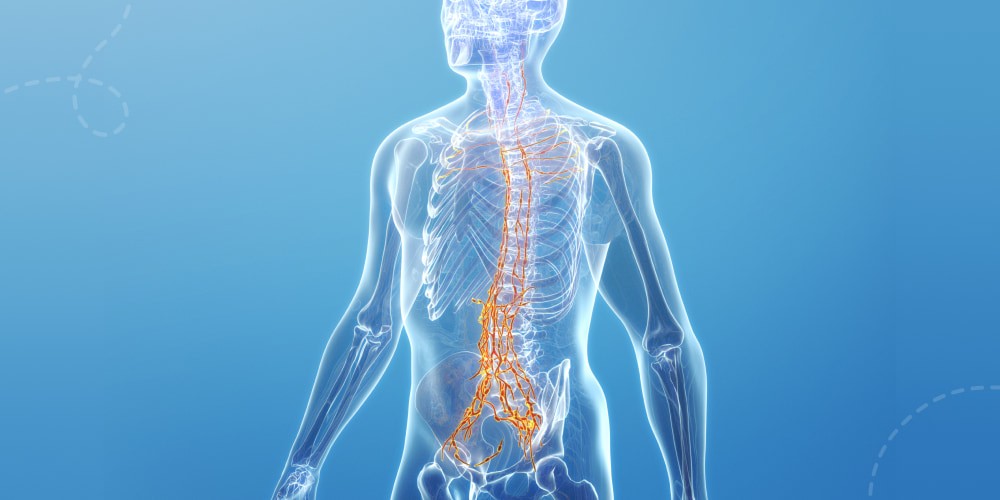
The thymus is a small organ in the chest that helps train T cells, the elite soldiers of the immune system that identify and destroy infections and rogue cancer cells. For decades, doctors believed the organ was mostly inactive after puberty because it shrinks with age and produces fewer new T cells. As a result, its role in adult health has rarely been examined in large populations.
That consensus has now been overturned — dramatically, and with data from more than 50,000 people.
Two Studies, One Stunning Finding
.
On March 18, 2026, two landmark studies appeared simultaneously in the same issue of the journal Nature — both led by researchers at Harvard-affiliated institutions and both reaching the same conclusion: the thymus remains critically active in adults, and its health is one of the strongest predictors of how long a person will live.
Researchers developed a deep learning framework — an artificial intelligence system — to analyze more than 27,000 CT scans collected as part of two major U.S. long-term studies: the National Lung Screening Trial and the Framingham Heart Study, one of the most enduring cardiovascular studies in history. The AI analyzed the size and composition of the thymus in each scan, generating a "thymic health score" for each participant.
The results were striking. People with high, healthy thymic scores showed a 50 percent lower risk of dying prematurely from any cause, a 63 percent lower risk of death from heart-related issues, and a 36 percent lower risk of developing lung cancer — compared to those with poor thymic health. These associations held even after researchers controlled for age, sex, smoking history, and other health factors.
The AI analysis found "enormous variation" in thymic health between individuals. "In some people, it stayed very active until a very old age. And in other people, it actually declined very rapidly at a younger age," said lead researcher Hugo Aerts, Harvard Medical School professor and director of the Artificial Intelligence in Medicine Program at Mass General Brigham.
A Game-Changer for Cancer Treatment
.
The second study extended these findings into one of the most important frontiers of modern oncology: immunotherapy — the technique that enlists a patient's own immune system to attack tumors.
Researchers analyzed CT scans and outcomes from more than 1,200 immunotherapy-treated patients. Those with stronger thymic health had approximately a 37 percent lower risk of cancer progression and a 44 percent lower risk of death, even after accounting for other patient, tumor, and treatment factors. The benefit was observed across multiple cancer types, including lung, melanoma, breast, and kidney cancers.
The mechanism is becoming clearer. When thymic health and T cell diversity decline, the immune system becomes less able to respond to new threats. A healthier thymus generates more "naive" T cells — fresh, untrained immune cells capable of recognizing threats the body has never encountered before. This diversity is precisely what immunotherapy depends on.
"The thymus has been overlooked for decades and may be a missing piece in explaining why people age differently, and why cancer treatments fail in some patients," said Aerts. "Our findings suggest thymic health deserves much more attention and may open new avenues for understanding how to protect the immune system as we age."
Your Thymus Is Not Just Getting Older — It Is Responding to How You Live
.
Perhaps the most empowering finding in both studies is this: thymic health is not simply a function of age. It varies enormously between individuals of the same age — and a significant part of that variation appears to be driven by lifestyle choices within our control.
The researchers found that chronic inflammation, smoking, and high body weight were all associated with poorer thymic health. Women generally had healthier thymuses than men. Higher body mass index was consistently linked to faster thymic decline. Smoking, obesity, physical inactivity, and chronic stress were all tied to accelerated deterioration.
The gradual decline in thymic function with age — known as thymic involution — leads to reduced T cell production, increasing the risk of infections, cancer susceptibility, and poor vaccine responses. But the rate of that decline is not fixed. It appears to be malleable, shaped by the chronic conditions we expose our bodies to over a lifetime.
Dr. Joao Pedro Matias Lopes, an immunologist and assistant professor of pediatrics at Case Western University, offered an important note of caution: thymic involution itself cannot be reversed, as it is a natural biological process. But the key question is whether changes in health patterns can slow the rate of decline — and how much that could matter. "I would reinforce that a healthy diet, regular exercise, and absence of smoking are always a good thing," he said. "But it's still up for full discussion how much they impact thymic function."
Can the Thymus Be Regenerated?
.
Alongside these population studies, a parallel line of research is exploring something even more ambitious: whether the aging thymus can actually be rejuvenated.
Researchers at MIT and the Broad Institute have found a way to temporarily program cells in the liver to improve T cell function — compensating for the age-related decline of the thymus. Using mRNA to deliver three key factors that normally promote T cell survival, they were able to rejuvenate the immune systems of aged mice. The treated mice showed much larger and more diverse T cell populations in response to vaccination and responded better to cancer immunotherapy treatments.
Separately, researchers at Australia's Walter and Eliza Hall Institute discovered two previously unknown cell types that drive the aging process inside the thymus, forming internal "scars" that prevent the organ from restoring itself after damage. Understanding these cells could one day unlock a way to stop thymic aging at its source — and restore immune function in people whose immunity has been depleted by cancer treatment, stem cell transplants, or aging itself.
Neither approach is ready for clinical use. But the direction of travel is clear: the thymus, long ignored, is now one of the most exciting frontiers in the science of aging and immunity.
What This Means for You — Right Now
.
The AI-based thymic health scoring system developed in these studies is not yet available in routine clinical settings. The researchers themselves caution that their findings, while robust, will need to be confirmed in further studies before they can guide clinical decisions.
But the practical implications are already visible. If it becomes possible to analyze thymic health early and reliably from routine CT scans, individual disease risks could be identified much earlier and addressed in a targeted way — long before clinical symptoms appear.
In the meantime, the lifestyle message is consistent and familiar — but now backed by a new layer of biological reasoning. Chronic inflammation accelerates thymic decline. Smoking damages it. Obesity strains it. Regular exercise, a healthy diet, and the avoidance of smoking are not just good for the heart and lungs — they may be quietly protecting the organ that trains your immune system to fight everything else.
"What these two studies show is that almost this forgotten organ, the thymus, may actually play a very central role in our health throughout life," Aerts said. "It's like — hey, this organ, we should not forget about it."
Medicine just remembered. And the implications could be profound.
.
Sources:
- Nature – "Thymic Health Consequences in Adults" (March 18, 2026): https://www.nature.com/articles/s41586-026-10242-y
- Nature – "Thymic Health and Immunotherapy Outcomes in Patients With Cancer" (March 18, 2026): https://www.nature.com/articles/s41586-026-10243-x
- Harvard Gazette – "Thymus May Be Critical to Adult Health" (March 2026): https://news.harvard.edu/gazette/story/2026/03/thymus-may-be-critical-to-adult-health/
- Mass General Brigham – Official Press Release (March 18, 2026): https://www.massgeneralbrigham.org/en/about/newsroom/press-releases/thymus-critical-to-longevity-and-cancer-treatment
- Scientific American – "This Overlooked Organ May Be More Vital for Longevity Than Scientists Realized" (March 2026): https://www.scientificamerican.com/article/this-overlooked-organ-may-be-more-vital-for-longevity-than-scientists/
- U.S. News & World Report / HealthDay – "Thymus Gland Health May Be Key to Long Life and Fighting Cancer" (March 19, 2026): https://www.usnews.com/news/health-news/articles/2026-03-19/thymus-gland-health-may-be-key-to-long-life-and-fighting-cancer
- Broad Institute / MIT – "New Study Suggests a Way to Rejuvenate the Immune System" (December 2025): https://www.broadinstitute.org/news/new-study-suggests-way-rejuvenate-immune-system
- WEHI – "New Clue Into the Curious Case of Our Ageing Immune System": https://www.wehi.edu.au/news/new-clue-into-the-curious-case-of-our-ageing-immune-system/
- News-Medical.net – "Healthy Thymus Gland Linked to Longer Life and Immune Stability" (March 26, 2026): https://www.news-medical.net/news/20260326/Healthy-thymus-gland-linked-to-longer-life-and-immune-stability.aspx
.
What's Your Reaction?
 Like
0
Like
0
 Dislike
0
Dislike
0
 Love
0
Love
0
 Funny
0
Funny
0
 Wow
0
Wow
0
 Sad
0
Sad
0
 Angry
0
Angry
0















Comments (0)