

Britain Jails Two Men for Spying on Hong Kong Dissidents — A Historic First in UK-China Espionage
A London court has sentenced two men to prison for conducting covert surveillance on pro-democracy activists living in the United Kingdom on behalf of Hong Kong and, ultimately, China's Communist Party. The case is the first successful prosecution for Chinese espionage in British legal history — and it has sent shockwaves through both the UK security establishment and the Hong Kong diaspora.

.
"Shadow Police" Operated in the Heart of Britain
On Thursday, June 18, 2026, London's Old Bailey court handed down prison sentences to two men found guilty of running surveillance operations against Hong Kong dissidents on British soil.
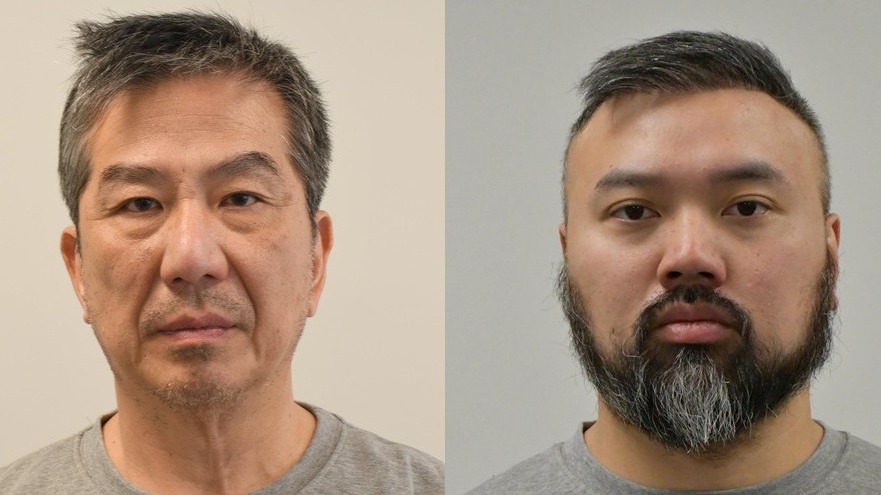
Chung Biu Yuen, 66, known as "Bill," was sentenced to eight years in prison. Chi Leung Wai, 41, known as "Peter," received ten years. Both hold dual Chinese and British nationality and had denied all charges throughout the trial.
Prosecutors described their activities as "shadow policing operations" — a covert network designed to monitor, track, and gather intelligence on individuals who had fled Hong Kong and were living under the protection of British law.
Who Were the Men and Who Did They Target?
The backgrounds of the two convicted men made their roles particularly alarming for British authorities.
Yuen was a retired Hong Kong police officer who had been working as an office manager at the Hong Kong Economic and Trade Office in London — an official government-linked institution. Wai served as a UK Border Force officer and also volunteered with the City of London Police, giving him access to sensitive government systems.
Their targets included prominent pro-democracy activists such as Nathan Law, a well-known Hong Kong dissident for whom the Hong Kong government had issued a bounty of HK$1 million (approximately £100,000) to anyone providing information leading to his capture. Internal messages between the two men revealed that targets were referred to as "cockroaches" — language that reflects Beijing's longstanding hostility toward those who challenge its authority.
Former British Conservative Party leader Iain Duncan Smith was also among those placed under surveillance, illustrating that the operation extended beyond the exile community to include senior British political figures.
Border Force Access Used to Hunt Dissidents
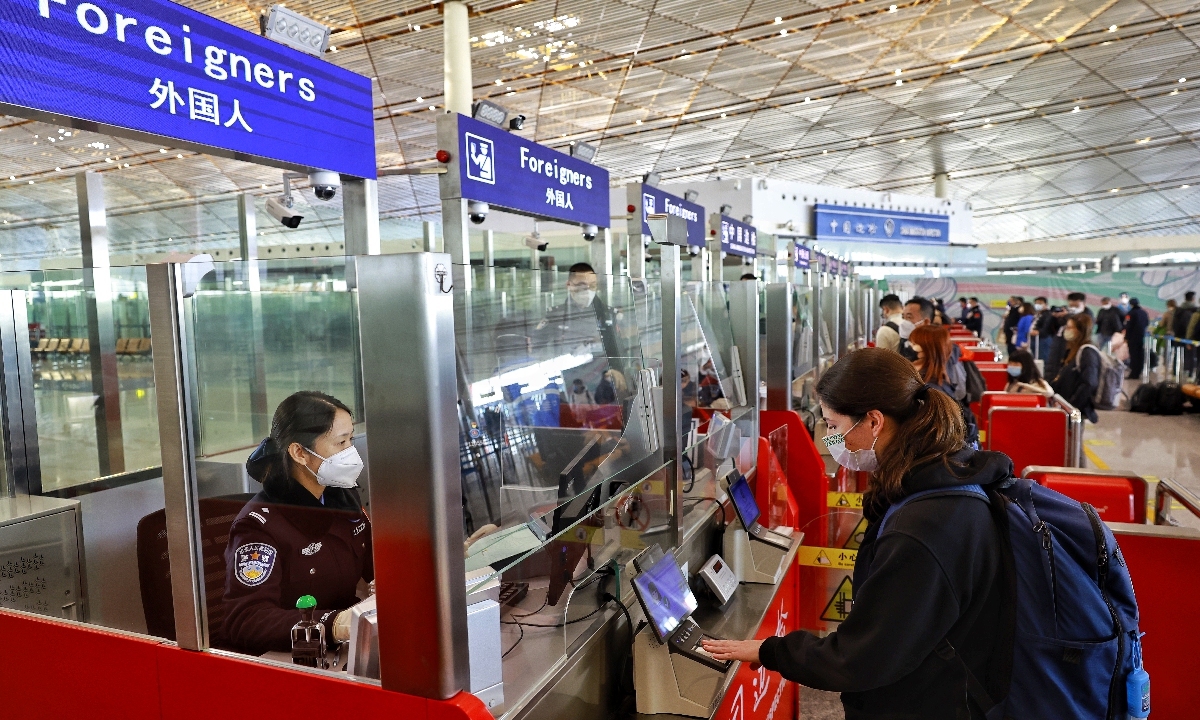
One of the most troubling elements of the case involves Wai's abuse of his official position. He was separately convicted of misconduct in a public office after using his Border Force access to search the UK Home Office's internal immigration database — looking up the personal details of targeted individuals.
This means that a man trusted to protect Britain's borders was, at the same time, feeding intelligence about foreign nationals to a hostile state.
A Historic Verdict — and a Personal One for the Diaspora
The convictions, delivered at trial in May 2026, are believed to be the first ever in the United Kingdom for espionage carried out on behalf of China. The sentences handed down on Thursday confirmed that the British justice system regards such activity with the utmost seriousness.
Judge Bobbie Cheema-Grubb made clear that modern espionage is no longer confined to stealing military secrets. "It may take the form of surveillance, information gathering, intimidation, and targeting of dissidents and those who have sought the protection of this country's laws," she told the court.
For the Hong Kong diaspora in the UK, the verdict was deeply personal. Finn Lau, one of the activists who had been targeted, described years of justified fear. The conviction, he said, confirmed that the fear experienced by Hong Kong exiles was not paranoia — it was a documented, state-directed reality.
Commander Helen Flanagan, head of counter-terrorism policing in London, called the behavior of the two men "truly chilling" and emphasized that their victims were people who had done nothing more than speak out against authoritarian rule.
Third Accused Found Dead Before Trial
A third man originally charged alongside Yuen and Wai — Matthew Trickett, 37, a former British Royal Marine who had worked as an immigration officer and later as a private investigator — was found dead shortly after the charges were announced. His death was not treated as suspicious, but it added an additional layer of gravity to a case that was already deeply troubling.
Beijing Rejects the Verdicts
China's response was predictably dismissive. The Chinese embassy in London described the case as "nothing but a political move of abusing the law." Beijing's Foreign Ministry spokesman Lin Jian called the convictions "groundless smears" and accused Britain of endorsing those seeking to destabilize Hong Kong.
The response follows an established pattern: whenever China is confronted with documented evidence of transnational repression, its officials deny the facts and reframe the issue as foreign interference in Chinese domestic affairs.
A Warning Signal for UK-China Relations
The case arrives at a sensitive moment in Britain's relationship with Beijing. Prime Minister Keir Starmer visited China in January 2026 in an effort to strengthen economic ties. That same month, his government approved plans for Beijing to construct its largest embassy in Europe on a prominent London site — a decision that drew sharp criticism from security experts and human rights advocates.
Britain's Security Minister Dan Jarvis welcomed the sentencing and stated that the Chinese ambassador had been summoned over the espionage activities. He described them as "an infringement of our sovereignty" and made clear that such conduct would not be tolerated on British soil.
The broader picture is troubling. Britain's domestic intelligence service MI5 warned lawmakers as recently as November 2025 that Chinese agents were actively trying to collect information and influence political activity at Westminster. On the very day Yuen and Wai's trial began in March 2026, three more men were arrested on suspicion of assisting Chinese intelligence — including the partner of a sitting member of parliament.
Outlook: More Cases May Follow
The sentencing of Yuen and Wai is a landmark moment, but it is almost certainly not an endpoint. British security services have signaled that Chinese interference operations in the UK are persistent, adaptive, and expanding in scope. The Old Bailey verdict sends a message: Britain is watching, and it will prosecute.
For the tens of thousands of Hong Kong exiles who came to Britain hoping for safety, the case is a reminder that the reach of the Chinese Communist Party does not stop at its own borders. It extends into democracies, into government offices, and — as this case showed — into the ranks of those entrusted with protecting those very borders.
.
Sources:
- Reuters — "Two men jailed in Britain for spying for China" (June 18, 2026): https://www.reuters.com/world/uk/two-men-jailed-britain-spying-china-2026-06-18/
- South China Morning Post — "UK court jails 2 Hongkongers tied to trade office for up to 10 years for spying" (June 18, 2026): https://www.scmp.com/news/hong-kong/law-and-crime/article/3357604/uk-court-jails-2-hongkongers-tied-trade-office-10-years-spying
- CNN — "Two men found guilty of spying on Hong Kong dissidents in UK for China" (May 7–8, 2026): https://edition.cnn.com/2026/05/07/europe/uk-china-hong-kong-spying-hnk-intl
- Foreign Policy Journal — "UK Spy Convictions Are 'Groundless' and a 'Political Stunt'" (May 9, 2026): https://www.foreignpolicyjournal.com/2026/05/08/china-calls-uk-spy-convictions-groundless-and-a-political-stunt-with-no-factual-basis/
.
What's Your Reaction?
 Like
0
Like
0
 Dislike
0
Dislike
0
 Love
0
Love
0
 Funny
0
Funny
0
 Wow
0
Wow
0
 Sad
0
Sad
0
 Angry
0
Angry
0












Comments (0)