

Putin's Defense Minister Personally Signed Off on Secret Military Training in China, Documents Show
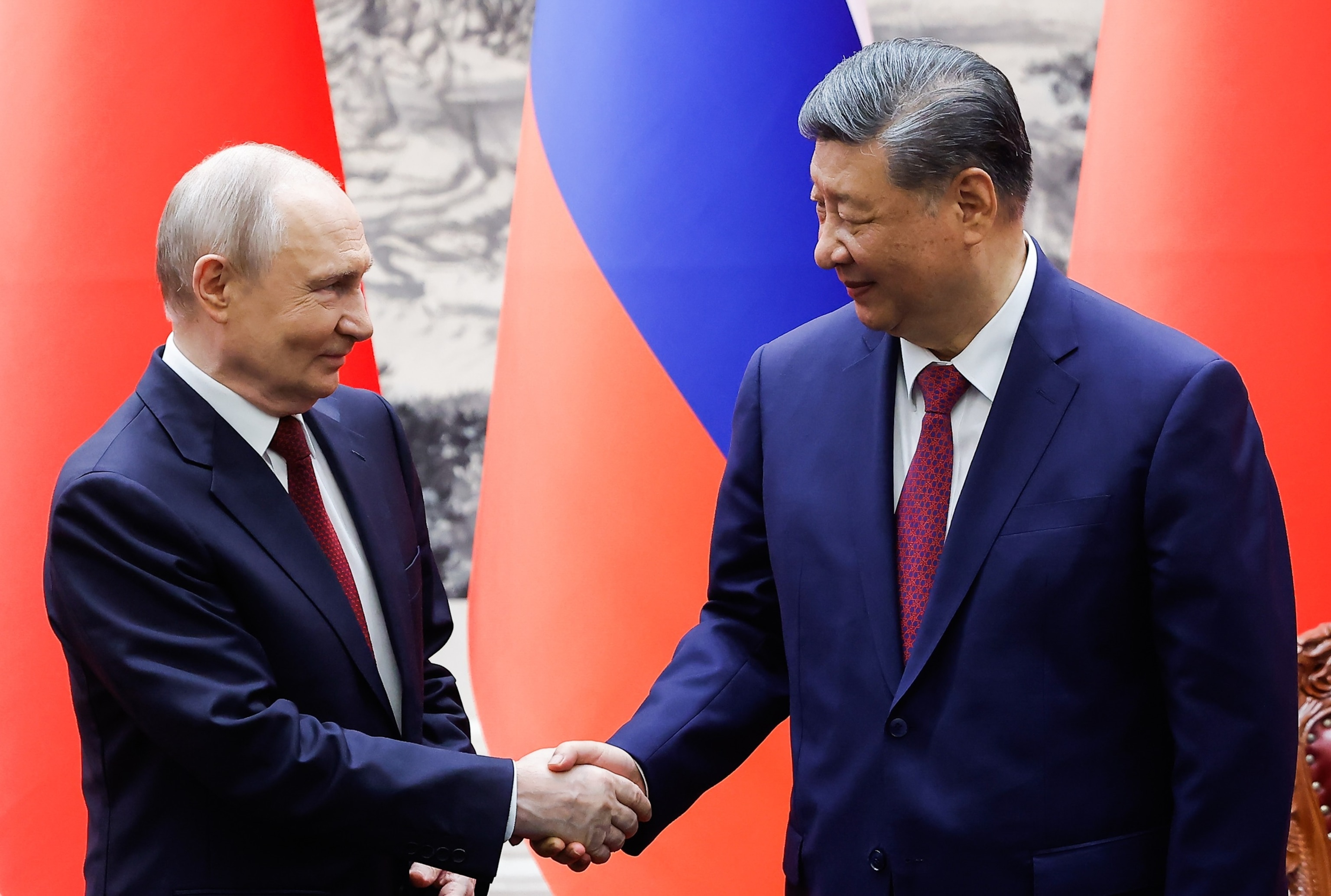
Russia's top military leadership directly approved covert training exercises for its soldiers on Chinese soil, according to newly reviewed documents and European officials. At least four generals from both countries were involved, and the curriculum reportedly included training in chemical, biological and radiological warfare — details that are likely to intensify Western concerns about how closely Beijing is tied to Moscow's war in Ukraine.

.
A Decision From the Top
Russian Defense Minister Andrei Belousov personally authorized a program that sent Russian troops to Chinese military facilities for specialized training last year, according to internal Russian documents and two European officials who reviewed them. The scale of the officials involved — up to four generals from Russia and China combined — suggests this was no minor logistical arrangement, but a deliberate, high-level decision on both sides.
One of the documents ties the program to a formal internal decree Belousov issued in August 2025. It describes a Russian military delegation traveling to China specifically to take part in exercises at People's Liberation Army (PLA) facilities, under an agreement that European officials say was signed on July 2, 2025, by Russian Major General Rustam Khusainov and Chinese Senior Colonel Sun Dayun.
.
What the Training Covered
Among the sessions described in the documents is a three-week course held in Beijing in November, focused on protection against radiological, chemical and biological threats. Photographs reviewed as part of the reporting reportedly show Russian soldiers being briefed by Chinese instructors near a model nuclear reactor and being trained in tasks such as detecting chemical contamination and shielding ventilation systems from radioactive fallout.
That such sensitive subject matter was part of the curriculum stood out to one of the European officials, who noted that this type of training is treated as highly guarded material by militaries in general. Other sessions, described in earlier reporting, focused on drone warfare, counter-drone defense, demining and armored infantry tactics, delivered at PLA sites in cities including Nanjing, Shijiazhuang and Yibin.
The documents reportedly go further, listing names, ranks, birth dates and security-clearance levels for participants. Colonel General Rustam Muradov, deputy commander of Russia's land forces, is named as having led the Russian delegation. On the Chinese side, Major General Li Jinsun — head of the PLA's academy for radiological, chemical and biological defense — reportedly took part in opening one of the courses.
.
Beijing's Denials, and a Widening Paper Trail
China's foreign ministry has dismissed the allegations as baseless, insisting its position on the Ukraine war has remained neutral throughout. A Russian lawmaker who chairs the parliament's defense committee similarly rejected the account, arguing Russia's military had nothing meaningful to gain from Chinese instruction.
Those denials sit awkwardly next to a growing body of evidence assembled by Western officials over the past several weeks. In mid-June, EU foreign policy chief Kaja Kallas told reporters in Luxembourg that the bloc had independently verified that Chinese forces trained Russian personnel for use in Ukraine, a claim she made shortly before EU ministers agreed to sanction additional Chinese entities accused of supplying Russia's defense industry — including electronics and lubricant suppliers linked to drone and weapons production. China's foreign ministry called her remarks slander.
The reporting also builds on earlier findings that roughly 200 Russian personnel, including some serving as military instructors capable of passing on tactics to entire units, went through Chinese training programs before some later turned up in combat roles in occupied parts of Ukraine.
.
Why This Matters for Europe
For a European Union that has spent years treating Beijing primarily as a trading partner, the accumulating documentation is forcing an uncomfortable reassessment. One Brussels-based official argued the bloc needs to stop viewing China mainly through an economic lens and instead reckon with what Kallas has bluntly called China's role as a "decisive enabler" of Russia's war effort.
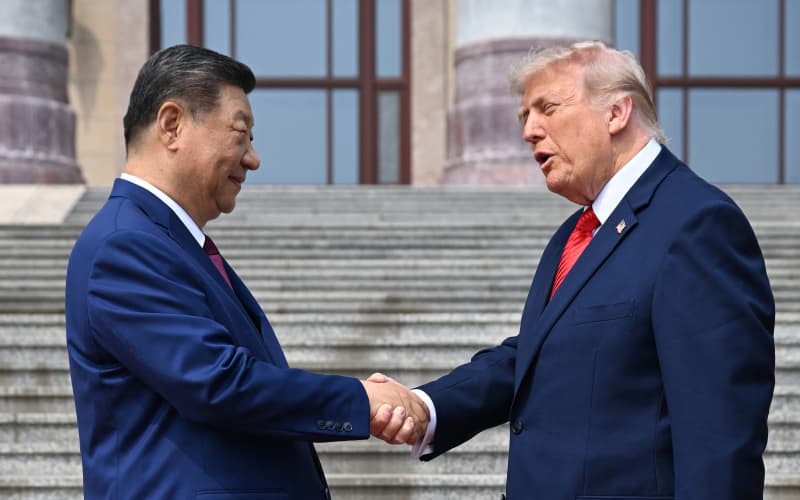
That reassessment is complicated by the EU's deep economic dependence on China, and by Washington's own approach, which under President Trump has focused heavily on direct dealmaking with Beijing on trade while continuing to sanction firms and networks that materially sustain Russia's war machine. The gap between Brussels' harder line and Washington's more transactional posture is likely to remain a point of friction among Western allies going forward.
.
What Comes Next
Neither Moscow nor Beijing has agreed to independently verify the documents, and both governments continue to describe their cooperation as falling short of a formal military alliance. But the specificity of the paper trail — down to individual names, dates and training locations — leaves Western governments with less room to treat these ties as speculative. Whether the EU moves beyond targeted sanctions to a broader recalibration of its China policy is likely to be one of the defining questions of the bloc's foreign policy debate in the coming months.
.
Sources
- Reuters — https://www.reuters.com/business/aerospace-defense/russia-approved-secret-china-military-training-top-level-sources-say-2026-07-01/
- South China Morning Post — https://www.scmp.com/news/world/europe/article/3357208/eu-says-china-trained-russian-troops-bloc-weighs-tougher-stance-beijing
- Newsweek — https://www.newsweek.com/china-denies-eu-claim-it-trained-russian-troops-12077463
- Kyiv Independent — https://kyivindependent.com/reuters-china-secretly-trained-russian-soldiers-later-sent-to-fight-in-ukraine/
.
What's Your Reaction?
 Like
0
Like
0
 Dislike
0
Dislike
0
 Love
0
Love
0
 Funny
0
Funny
0
 Wow
0
Wow
0
 Sad
0
Sad
0
 Angry
0
Angry
0













Comments (0)