

Nvidia CEO Hopes to Sell Blackwell Chips to China, Lawmakers Urge Restrictions


.
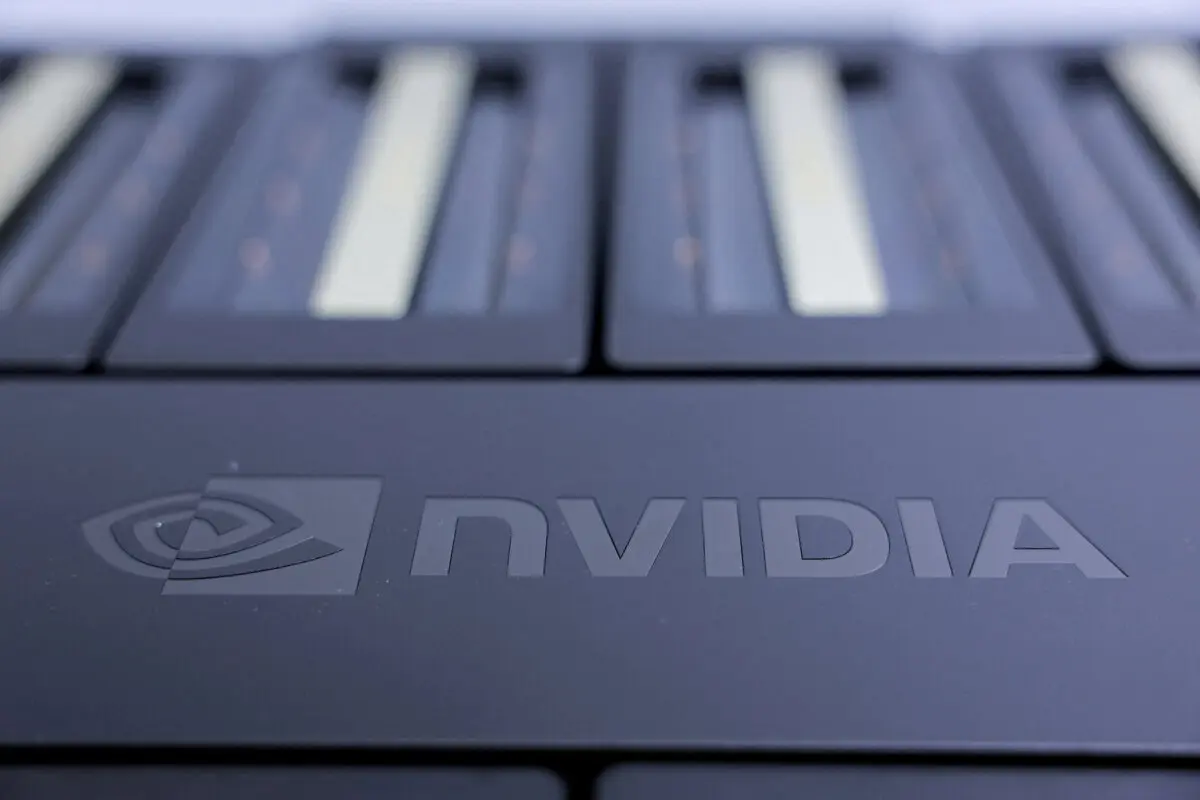
Nvidia CEO Jensen Huang said on Oct. 31 that he is hopeful the company will be able to sell its flagship Blackwell chips in China at some point, though there are no plans to do so at the moment.
The United States has put export controls on sales of Nvidia’s most advanced AI chips to China, seeking to limit its tech progress, particularly in applications that could help its military.
Huang’s position is that China is advancing in AI, whether it has Nvidia chips or not.
“Remember, China makes plenty of AI chips themselves, and the Chinese military surely has plenty of access to chips that are created in China,” Huang said. “The fact is that China has blocked H20, and so, in a lot of ways, China is saying that, ‘Listen, we have plenty of AI technology ourselves.’ So the national security concern, from that perspective, I think, is really answered by the fact that China doesn’t want H20 or any American chips.”
Earlier this week, Huang told reporters that China has made it clear it doesn’t want Nvidia in the market, and Nvidia hasn’t applied for new export licenses as a result.
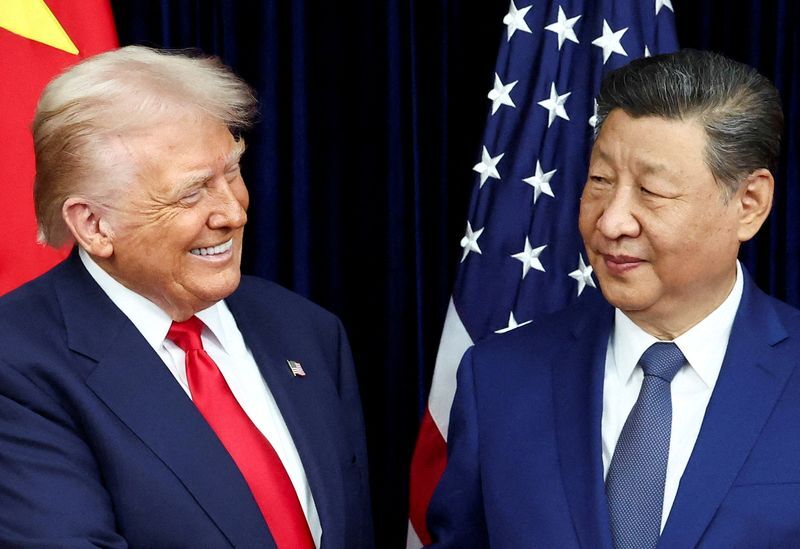
Trump’s mention of Blackwell chips on Air Force One earlier this week had prompted lawmakers on both sides of the aisle to urge caution.
On Oct. 30, Moolenaar and committee co-chair Rep. Raja Krishnamoorthi (D-Ill.) introduced a bill that would require American companies to sell advanced AI chips to American companies before doing business with select foreign countries such as China.
Separately, Senate Minority Leader Chuck Schumer (D-N.Y.) led a group of Democratic senators in writing to the Trump administration not to lift AI chip restrictions on China.
According to the paper, China could essentially buy twice as many B30A chips and get the same result as the B300, likely at the same price. A spokesperson for Nvidia declined to comment on the details about the chip.
The analysis looked at nine different export control scenarios and found that if no advanced chips are exported to China in the next year, the United States would have 31 times the AI computing power of China in 2026. This scenario also assumes there would be no smuggling of these advanced chips.
If B30As are approved for export, the paper found that the United States would only have four times the AI computing power of China in 2026.
“In the most aggressive export scenarios involving sales of the B30A chip and comparable AI chips from all other US AI chip companies, this advantage would flip, with China gaining a 1.1x advantage over the United States,” the report said.
What's Your Reaction?
 Like
0
Like
0
 Dislike
0
Dislike
0
 Love
0
Love
0
 Funny
0
Funny
0
 Wow
0
Wow
0
 Sad
0
Sad
0
 Angry
0
Angry
0
















Comments (0)