

Mongolia's Third Prime Minister in Nine Months: A Reform Rookie Between Beijing, Moscow, and Washington
Mongolia's parliament confirmed Uchral Nyam-Osor as the nation's third prime minister in nine months on March 31, 2026. A total of 88 out of 107 lawmakers voted in favor of his appointment, giving him a clear mandate to lead the country out of a prolonged political deadlock. Before entering politics, Uchral was a popular hip-hop artist known by the stage name "Timon." The 39-year-old lawmaker has since positioned himself as a reform-minded leader focused on modernizing Mongolia's regulatory environment. His first address to parliament left little room for optimism: Uchral warned that Mongolia is entering a period of three overlapping crises — rising global fuel prices, volatile commodity markets, and deepening domestic political divisions.

.
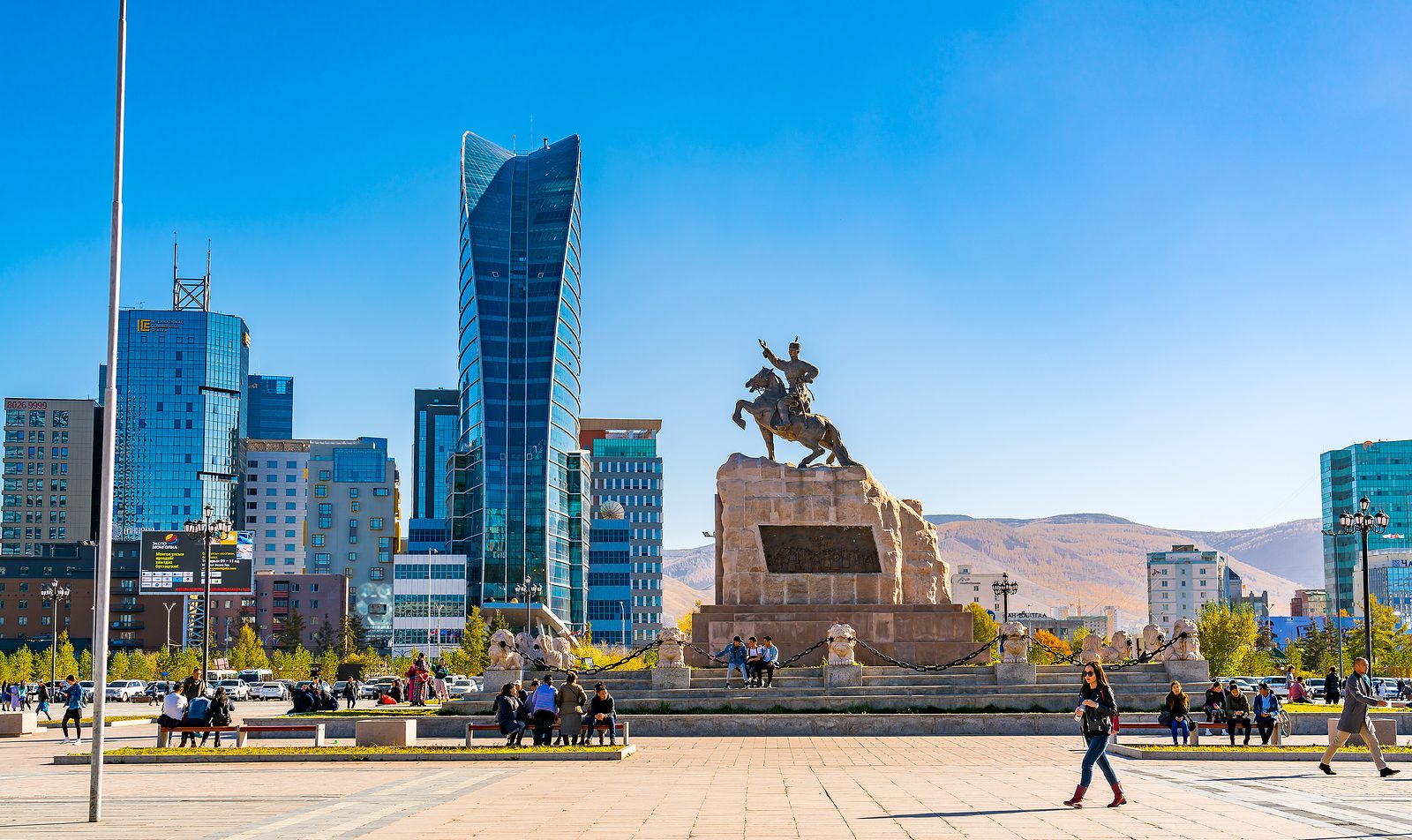
A former hip-hop artist is now tasked with stabilizing one of Asia's most democratic — and most economically vulnerable — nations.
.
New Face, Old Problems
Mongolia's parliament confirmed Uchral Nyam-Osor as the nation's third prime minister in nine months on March 31, 2026. A total of 88 out of 107 lawmakers voted in favor of his appointment, giving him a clear mandate to lead the country out of a prolonged political deadlock.
Before entering politics, Uchral was a popular hip-hop artist known by the stage name "Timon." The 39-year-old lawmaker has since positioned himself as a reform-minded leader focused on modernizing Mongolia's regulatory environment. His first address to parliament left little room for optimism: Uchral warned that Mongolia is entering a period of three overlapping crises — rising global fuel prices, volatile commodity markets, and deepening domestic political divisions.
.
Why the Last Two Prime Ministers Failed
The outgoing prime minister, Zandanshatar Gombojav, submitted his resignation to resolve a crisis triggered by a boycott of parliamentary sessions by the opposition Democratic Party and a faction within the ruling Mongolian People's Party (MPP). He was also under pressure because one of his senior ministers faced corruption allegations. Zandanshatar had replaced Oyun-Erdene Luvsannamsrai, who was prime minister for four years before resigning last June after losing a vote of confidence in parliament. All three prime ministers come from the same party.
Uchral was seen as a compromise figure between rival factions inside the MPP — a bridge between those loyal to the president and those aligned with his predecessor. Whether that balancing act is enough to hold the government together remains an open question.
.
A Country Rich in Resources, Poor in Stability
Mongolia sits on vast reserves of coal, copper, and gold. Yet its citizens have not broadly benefited from that wealth. About 84% of Mongolia's exports — mostly minerals — are destined for China, leaving the country deeply exposed to fluctuations in Chinese demand and Beijing's economic policies.
The government is also in a tense renegotiation with mining giant Rio Tinto over the Oyu Tolgoi copper and gold mine, demanding a greater share of the financial benefits. Meanwhile, Mongolia is entirely dependent on imported fuel and has asked Russia to keep fuel prices stable — a request Moscow indicated it would favorably consider in the near term.
Corruption remains a deep-rooted problem. Uchral's appointment has renewed concern among foreign investors over Mongolia's political instability, frequent policy changes, and reputation for regulatory unpredictability.
.
Squeezed Between Two Giants
Mongolia's geopolitical situation is unique — and precarious. The country holds disproportionate strategic importance for both China and Russia. Although Beijing and Moscow maintain a close partnership, neither fully trusts the other, and both prefer Mongolia to remain a buffer state separating their territories rather than falling under the other's control.
Since the early 1990s, Mongolia has pursued what it calls a "third neighbor" policy — actively building ties with democratic nations like the United States, Japan, and South Korea to reduce dependence on its two authoritarian neighbors. The U.S. and Mongolia upgraded their relationship to a Strategic Partnership in 2019, and Mongolia actively cooperates with NATO through an Individual Partnership and Cooperation Programme.
But experts caution against overestimating how much room for maneuver Ulaanbaatar actually has. "There's no way for Mongolia to escape Chinese influence due to economic dependence," says Professor Julian Dierkes, a Mongolia expert at the University of British Columbia.
.
Beijing's Cultural Pressure — and Mongolia's Pushback
The tensions with China are not only economic. The Chinese Communist Party (CCP) has pursued a campaign to remove Mongolian language instruction from core school curricula in Inner Mongolia — the region of China with a large ethnic Mongolian population — replacing it with Mandarin. Human rights groups and Mongolian observers have described the move as an attempt to erase cultural identity.
Mongolia has responded on a symbolic level: in 2020, the government announced it would restore the traditional Mongolian script for official documents by 2025, stepping back from the Russian-era Cyrillic alphabet adopted during the Soviet period. The move was seen as a quiet but firm assertion of national identity.
Some analysts note that Mongolia's economic dependence on China already constrains its foreign policy choices. When the Dalai Lama visited Mongolia in 2016, Beijing criticized the government, cancelled high-level meetings, and introduced tariffs on Mongolian commodity exports. The Dalai Lama has not been invited back since.
.
Can Mongolia Stay Democratic?
Despite the political turbulence, Mongolia remains one of Asia's most democratic nations. According to Freedom House's 2025 rankings, Mongolia scored 84 out of 100 — ahead of South Korea and behind only Japan and Taiwan among Asian countries. That is a remarkable achievement for a landlocked nation sandwiched between two authoritarian powers.
On January 22, 2026, Mongolia's then-Prime Minister Zandanshatar signed the Charter of the Board of Peace in Davos — formalizing the country's status as a founding member of the body — marking the most significant update to Mongolia's "third neighbor" strategy in years.
In February 2026, Chinese Vice Foreign Minister Sun Weidong visited Ulaanbaatar to reaffirm Beijing's policy priorities, while the incoming parliament speaker Uchral simultaneously traveled to Moscow focused on energy cooperation — a snapshot of just how intricate Mongolia's diplomatic balancing act has become.
.
What the New Prime Minister Must Deliver
Uchral takes office with a clear set of pledges: cutting bureaucracy, stabilizing prices, and attracting foreign investment. He previously played a role in securing a uranium-related agreement with France's Orano Group in early 2025 — a signal that Mongolia is actively looking to diversify its economic partnerships beyond China.
Foreign Affairs magazine has argued that the United States cannot expect Mongolia to simply decouple from China and Russia, but that Washington's active engagement — through economic involvement, educational exchange, and investment — would increase Ulaanbaatar's options over time.
For Uchral, the math is daunting: keep the ruling party together, fight corruption, grow the economy, and maintain Mongolia's democratic identity — all while navigating between Beijing, Moscow, and Washington. His predecessors couldn't manage it. The question is whether a former rapper-turned-politician can.
.
Sources
- Reuters / MarketScreener — Mongolia names new prime minister: https://www.marketscreener.com/news/mongolia-names-new-prime-minister-following-stalemate-in-parliament-ce7e51dedc8ef62c
- Associated Press / ABC News — Mongolia's third prime minister in a year: https://abcnews.com/International/wireStory/mongolia-names-new-prime-minister-bid-end-legislative-131564552
- The Diplomat — Beyond the Third Neighbor: Mongolia-US Ties in 2026: https://thediplomat.com/2026/02/beyond-the-third-neighbor-mongolia-us-ties-in-an-era-of-great-power-competition/
- Geopolitical Monitor — Mongolia's "Third Neighbor": Balancing China, Russia, and the U.S.: https://www.geopoliticalmonitor.com/mongolias-third-neighbor-finding-balance-between-china-russia-and-the-u-s/
- Foreign Affairs — Mongolia's Search for a Third Way: https://www.foreignaffairs.com/mongolia/mongolias-search-third-way
- TIME Magazine — 'Fighting for Survival.' Mongolia's China Problem: https://time.com/5953518/mongolia-china-russia-problems/
- Congressional Research Service (via everycrsreport.com) — Mongolia country overview: https://www.everycrsreport.com/files/2025-02-12_IF10926_ec6374a0a1dec1eb1dc79d1f4b0a98345772ab84.html
.
What's Your Reaction?
 Like
0
Like
0
 Dislike
0
Dislike
0
 Love
0
Love
0
 Funny
0
Funny
0
 Wow
0
Wow
0
 Sad
0
Sad
0
 Angry
0
Angry
0












Comments (0)