

India and China Back at the Table: Two Giants Take Steps Toward a New Normal
India's National Security Adviser Ajit Doval and Chinese Foreign Minister Wang Yi held bilateral talks in New Delhi on Monday, on the sidelines of a major BRICS security summit. The meeting marks the latest step in a carefully managed diplomatic thaw between Asia's two most populous nations — after years of deep mistrust following a deadly border clash in 2020.


.
High-Level Talks at BRICS Summit in Delhi
India is hosting the 16th Meeting of BRICS National Security Advisers in New Delhi on June 22 and 23, 2026. As this year's chair of the BRICS group, India — through National Security Adviser Ajit Doval — invited senior officials from all member states, including China's top foreign policy figure, Wang Yi.
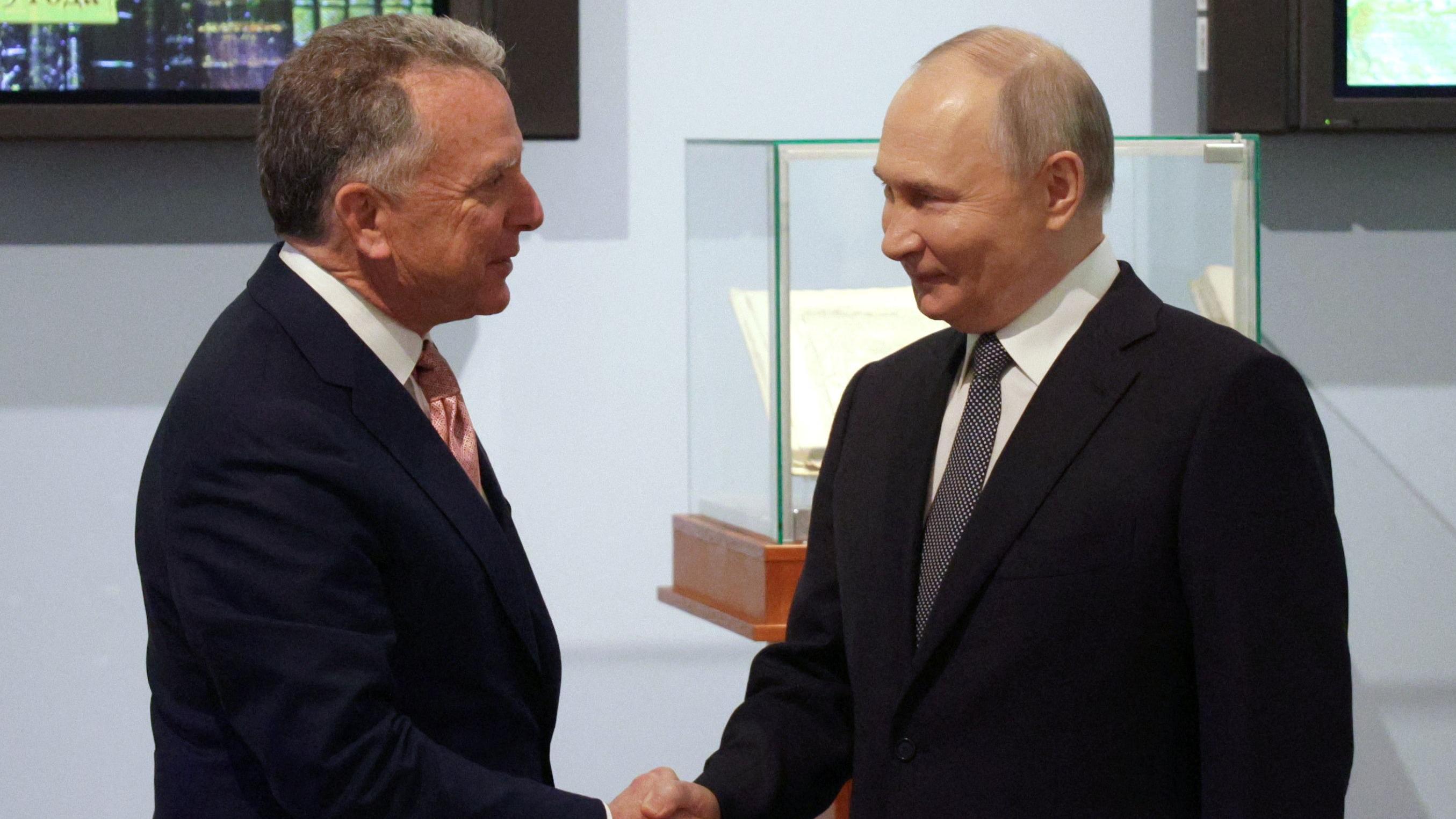
On the sidelines of the summit, Doval and Wang held a dedicated bilateral meeting. India's Ministry of External Affairs described the exchange as "constructive and forward-looking." The two sides reviewed recent developments in the relationship and acknowledged steady progress toward what officials are calling "gradual normalisation."
It is Wang Yi's second visit to New Delhi since the landmark border agreement of October 2024 — and a clear signal that both governments want to keep momentum going.
From Deadly Clash to Cautious Diplomacy
To understand why this meeting matters, it helps to look back six years.
In June 2020, soldiers from India and China clashed violently in the Galwan Valley in the western Himalayas — a remote and disputed area along the Line of Actual Control (LAC), the de facto border between the two countries. Twenty Indian soldiers and four Chinese troops were killed in brutal hand-to-hand fighting involving clubs and metal rods — the deadliest clash between the two nations in nearly 45 years.
The incident sent bilateral relations into a deep freeze. Trade restrictions tightened, flights were suspended, and tens of thousands of additional troops were deployed on both sides of the border.
Over the following four years, negotiations moved through several difficult phases. China signaled unwillingness to fully withdraw from key areas such as Depsang and Demchok, while India insisted on complete troop disengagement before broader relations could improve.
The Breakthrough of 2024
The logjam finally broke in October 2024. India and China reached a significant patrolling agreement that resolved the last remaining friction points from the 2020 standoff. Both sides agreed to restore patrolling arrangements at the Depsang Plains and Demchok to their pre-2020 status — meaning Indian troops could once again access areas along the LAC that Chinese forces had blocked since April 2020.
Trade between the two countries had surged from around $65 billion in 2020 to over $118 billion in 2024 — even during the height of the standoff — underlining the economic pressure on both sides to stabilize the relationship.
Shortly after the patrolling agreement, Indian Prime Minister Narendra Modi and Chinese President Xi Jinping met on the sidelines of the BRICS Summit in Kazan, Russia — their first formal bilateral encounter in years.
Normalisation Steps Since Then
Since late 2024, both governments have taken a series of practical steps to rebuild the relationship. These include resuming direct flights between the two countries, reviving the Kailash Mansarovar Yatra pilgrimage route to Tibet, easing Indian visa rules for Chinese citizens, and relaxing Chinese export restrictions on heavy machinery, rare earth magnets, and fertiliser.
The progress, while real, remains fragile. China's close military ties with Pakistan — including the supply of Chinese weapons used in Pakistan's confrontation with India during Operation Sindoor in 2025 — have deepened suspicion on the Indian side.
Analysts also point out that the underlying territorial dispute is far from resolved. The two countries share a 2,100-mile-long rugged border, with roughly 50,000 square miles of territory — an area approximately the size of Greece — still disputed between them.
BRICS as a Platform — and a Context
Monday's meeting also reflects the broader role that BRICS is playing in reshaping diplomatic dynamics in Asia. The bloc — which originally grouped Brazil, Russia, India, China, and South Africa — has expanded significantly in recent years to include a number of additional member states, making it one of the most significant multilateral forums outside the Western-led institutions.
India's role as BRICS chair in 2026 gives New Delhi a degree of diplomatic leverage. Hosting Wang Yi — a senior figure in China's Communist Party leadership — in Delhi for security-level talks is itself a symbolic statement: India is managing its relationship with Beijing on its own terms, without outside pressure, and without abandoning its strategic independence.
Analysts at the London School of Economics note that both Beijing and New Delhi now appear to see stability as a mutual interest, particularly given a more unpredictable global environment. Both sides have shown a growing ability to separate economic cooperation from unresolved security issues — a pragmatic approach that appears likely to define the relationship for some time to come.
What Comes Next
The current phase of diplomatic engagement will face its next test at the 18th BRICS Summit, expected later in 2026, where Modi and Xi are widely anticipated to hold another bilateral meeting.
For now, the Delhi talks represent a measured but meaningful milestone. Two nuclear-armed neighbors, with a long history of mutual distrust and a recent history of military confrontation, are choosing dialogue over confrontation — step by cautious step.
.
Sources
- Reuters – India says ties with China normalising as top officials meet in Delhi (June 22, 2026): https://www.reuters.com/world/china/india-says-ties-with-china-normalising-top-officials-meet-delhi-2026-06-22/
- Outlook India – Chinese FM Wang Yi to visit India for BRICS Security Talks (June 2026): https://www.outlookindia.com/international/chinese-foreign-minister-wang-yi-to-visit-india-next-week-for-brics-security-talks
- Al Jazeera – How India and China pulled back from a border war (October 2024): https://www.aljazeera.com/news/2024/10/22/how-india-and-china-pulled-back-from-a-border-war-and-why
- Carnegie Endowment for International Peace – Negotiating the India-China Standoff 2020–2024: https://carnegieendowment.org/research/2024/12/negotiating-the-india-china-standoff-2020-2024
- Stimson Center – India-China Disengagement: Bilateral and Regional Implications: https://www.stimson.org/2024/india-china-disengagement-bilateral-and-regional-implications/
- China-Global South Project / LSE IDEAS – In 2026 China-India Ties Will Primarily Be Shaped at Home: https://chinaglobalsouth.com/analysis/india-china-relations-normalization/
- China US Focus – Can China and India Find Common Ground in 2026?: https://www.chinausfocus.com/foreign-policy/can-china-and-india-break-new-and-find-common-ground-in-2026
.
What's Your Reaction?
 Like
0
Like
0
 Dislike
0
Dislike
0
 Love
0
Love
0
 Funny
0
Funny
0
 Wow
0
Wow
0
 Sad
0
Sad
0
 Angry
0
Angry
0












Comments (0)