

If Chinese Regime Seizes Taiwan, It Could Trigger ‘Domino Effect,’ Taiwanese Minister Warns


.
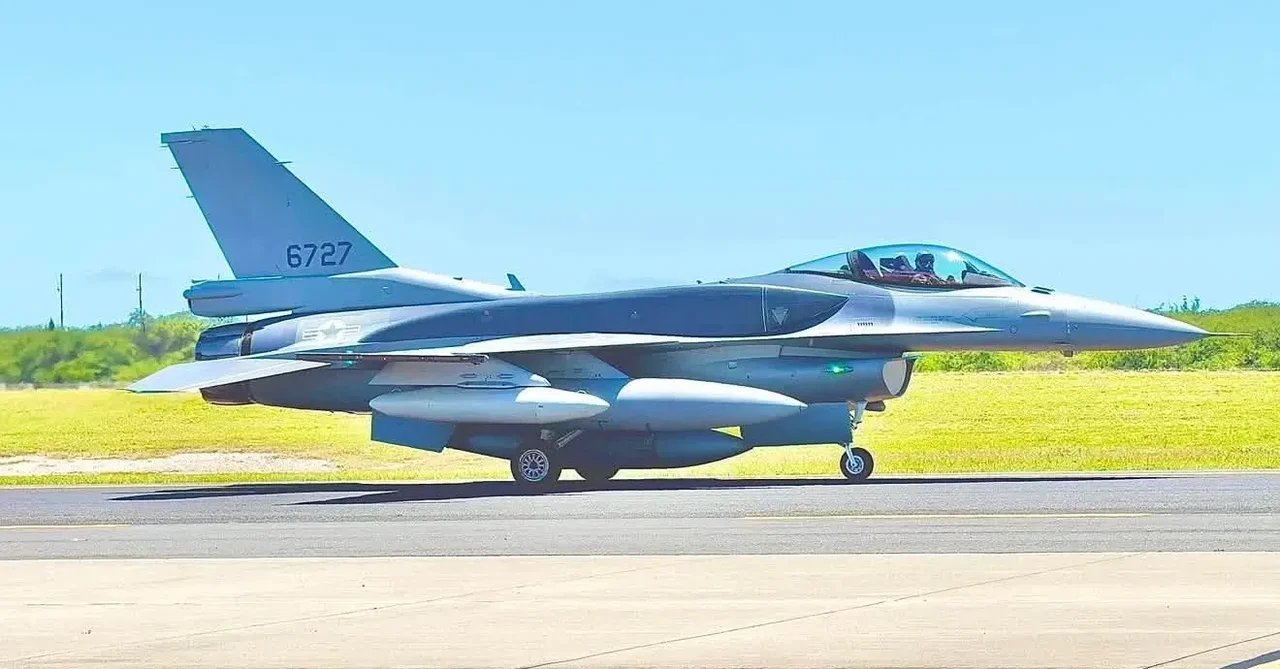
China’s communist regime has been “actively preparing” for war to seize Taiwan, a Taiwanese official said recently, warning that the consequence of a Chinese takeover could trigger a regional “domino effect” and directly threaten U.S. security.
In seeking “unification with Taiwan,” the Chinese Communist Party (CCP) aims to “exclude U.S. influence from the Asia-Pacific region [and] ultimately replace the United States as the global leader in order to restore national glory and realize the so-called China Dream,” according to Chiu.
“If Taiwan were to be taken over by China by force, it will trigger a domino effect, undermine the regional balance of power, and [directly threaten] the security and the prosperity of the United States,” Chiu said.
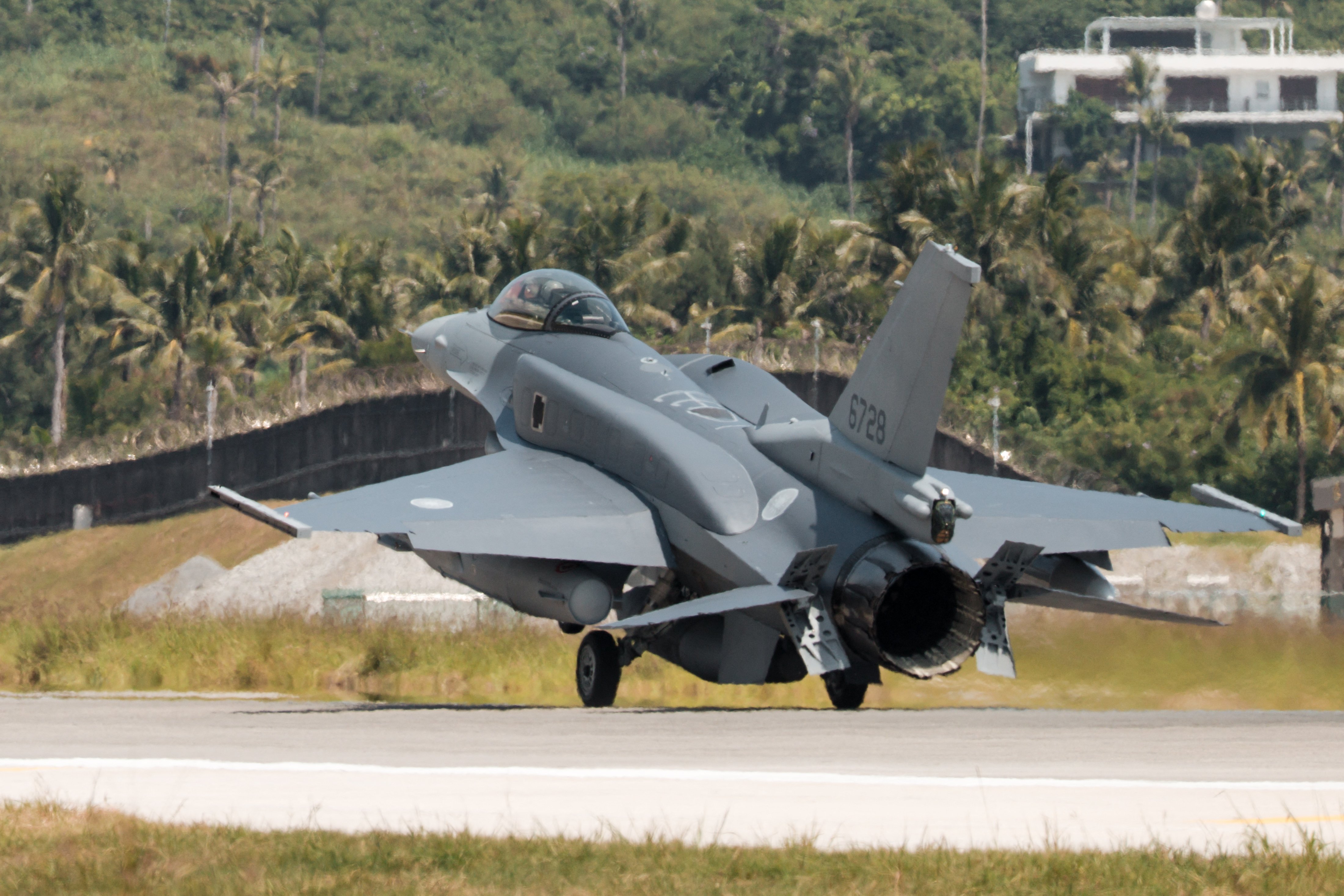
The CCP sees Taiwan as a renegade province that must be united with the mainland, even though Beijing has never ruled the island. Meanwhile, the United States has been providing Taiwan with military equipment for its self-defense under the Taiwan Relations Act, which was enacted in 1979, the same year Washington shifted diplomatic recognition from Taipei to Beijing.
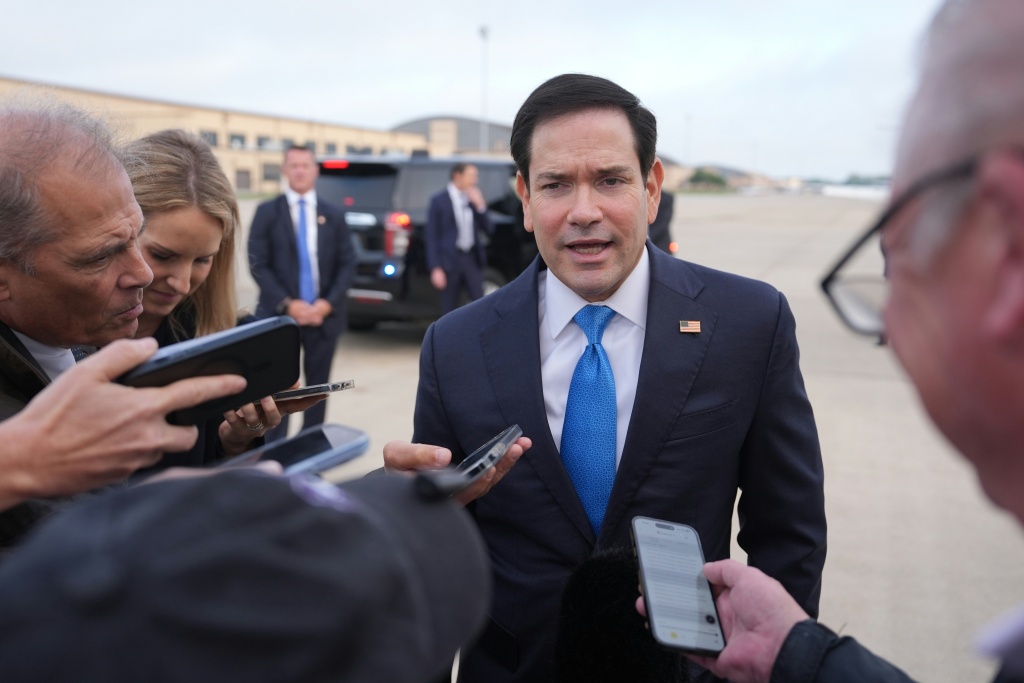
Chiu said that Taiwan is grateful for U.S. President Donald Trump and U.S. Secretary of State Marco Rubio reaffirming their commitment to Taiwan.
During a congressional hearing in May, Rubio was asked about the possibility of a Chinese attack occurring in 2027. In response, he said that deterring such an attack required making “the cost more than it’s worth” for China.
Coercion
Chiu said that Taiwan aims to increase its defense budget to 3.32 percent of its gross domestic product (GDP) next year, and to 5 percent by 2030.In explaining Taiwan’s strategic importance, Chiu highlighted the island’s semiconductor industry, noting that 90 percent of the world’s most advanced semiconductor chips are manufactured there.
“If Taiwan’s role in this [were] to be compromised, it would be a huge loss to the international community, especially the U.S. and its technology industry,” Chiu said.
Peace in the region is also important because 50 percent of the container ships in the world pass through the Taiwan Strait, Chiu said. The narrow body of water is also of “great strategic importance” to both South Korea and Japan, he added.
Currently, the CCP has been intensifying its pressure on Taiwan, according to Chiu.
“The Xi regime has used the economic interdependence of the two sides as a tool for economic coercion against Taiwan,” he said.
The Chinese regime’s military incursions, involving fighter jets and warships near Taiwan, have also become more frequent, Chiu noted. In 2024, Taiwan detected more than 5,000 sorties by Chinese fighter jets, with more than 3,000 crossing the median line of the Taiwan Strait, he said.
In the first seven months of this year, there had been 3,302 sorties by Chinese fighter jets, exceeding the number recorded during the same period in 2024, Chiu added.
‘Test Case’
In late August, Sen. Roger Wicker (R-Miss.), chairman of the Senate Armed Services Committee, and Sen. Deb Fischer (R-Neb.), who serves on the panel, visited Taiwan and met with Taiwanese President Lai Ching-te.“A stronger Taiwan means a stronger United States—and vice versa. That is why both our nations must continue working deliberately and decisively to deepen cooperation,” the senator stated.
Fischer criticized the CCP’s continued efforts to threaten, pressure, and isolate Taiwan as unacceptable.
“Taiwan is the test case for U.S. credibility in upholding a free and open rules-based order,” she said.
“If Taiwan were to fall under coercion, the consequences would reverberate far beyond the Taiwan Strait—shaking the confidence of our allies and emboldening adversaries worldwide.”
.
What's Your Reaction?
 Like
0
Like
0
 Dislike
0
Dislike
0
 Love
0
Love
0
 Funny
0
Funny
0
 Wow
0
Wow
0
 Sad
0
Sad
0
 Angry
0
Angry
0












Comments (0)