

How CCP-Backed Money Launderers Exploit Canada’s Loopholes for Cartel Operations

.
“Chinese underground bankers provide the circulatory system and our weak anti-money laundering posture supplies the oxygen,” McGregor said in an interview.
“The Chinese and the cartels all conduct operations together, also by themselves and with other entities,” he said, adding that Iranian groups also play a role in the fentanyl trafficking network.
He describes Canada as the “centre of gravity” for transnational organized crime in North America, where major criminal networks, including Chinese regime-backed money laundering groups, concentrate their operations by exploiting loopholes in the country’s legal and judicial systems.
The Aug. 28 Treasury Department advisory says that major cartels prefer Chinese money laundering networks because of their speed, effectiveness, and willingness to absorb financial losses or assume risks for the cartels and other clients.
Two factors make the Chinese key actors in money laundering operations, says McGregor. One is that China acts as a “black hole” for information traceability, with financial movements and related operations often concealed through tactics like document falsification.
The second factor is the Chinese regime’s war against the West, with its aim of undermining Western societies driving its involvement in the fentanyl crisis beyond mere profit, McGregor says.
.

“The Chinese are known within the illicit world as the gatekeepers in terms of money movement and trade-based and service-based money laundering because of how affordable they make it for everyone else, and so they become the dominant factor,” he said.
‘The Vancouver Model’
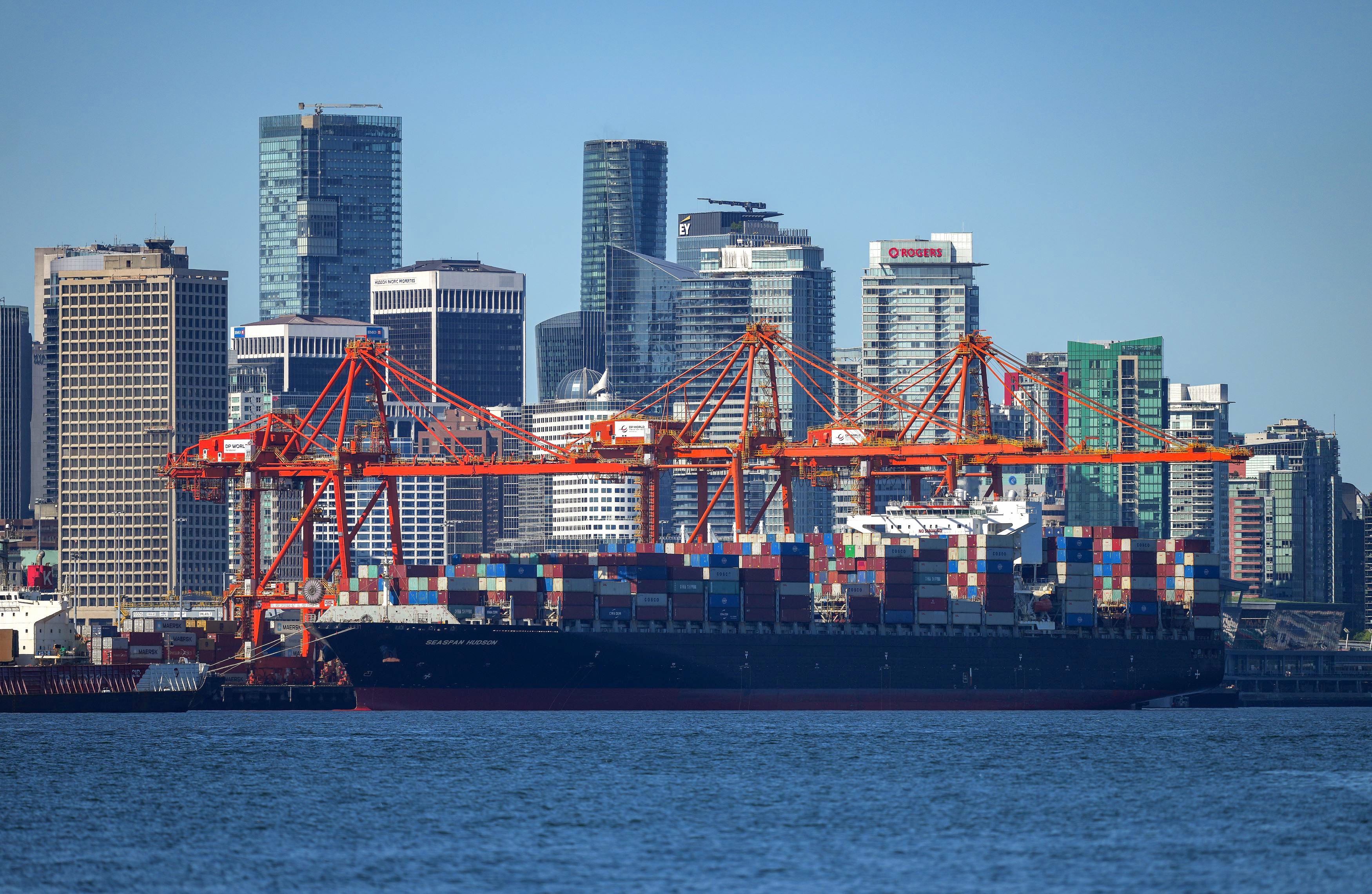
Garry Clement, former national director for the RCMP’s Proceeds of Crime program and a money laundering expert, describes Vancouver as “ground zero” for drug-related crime, serving as a key transshipment point for narcotics from China into North America.The Chinese criminal groups involved in fentanyl trafficking and money laundering are the Chinese triads, which work in partnership with cartels and with the support of the People’s Republic of China (PRC), Clement says.
.

“When it comes to fentanyl, I think what people have to realize is that this is really a disruptive war tactic by China,” Clement told The Epoch Times. “I firmly believe that China could shut down their precursors that go into the manufacturing of fentanyl if they wanted to.”
It added that while drug seizures at the Canadian border are much smaller in scale than those caught at the U.S.-Mexico border, the Canadian operations “have the potential to expand and fill any supply void created by disruptions to Mexico-sourced fentanyl production and trafficking.”
The report also noted the difficulty in detecting precursor chemical shipments, saying they arrive in mislabelled packages to avoid detection and mask the country of origin.
.
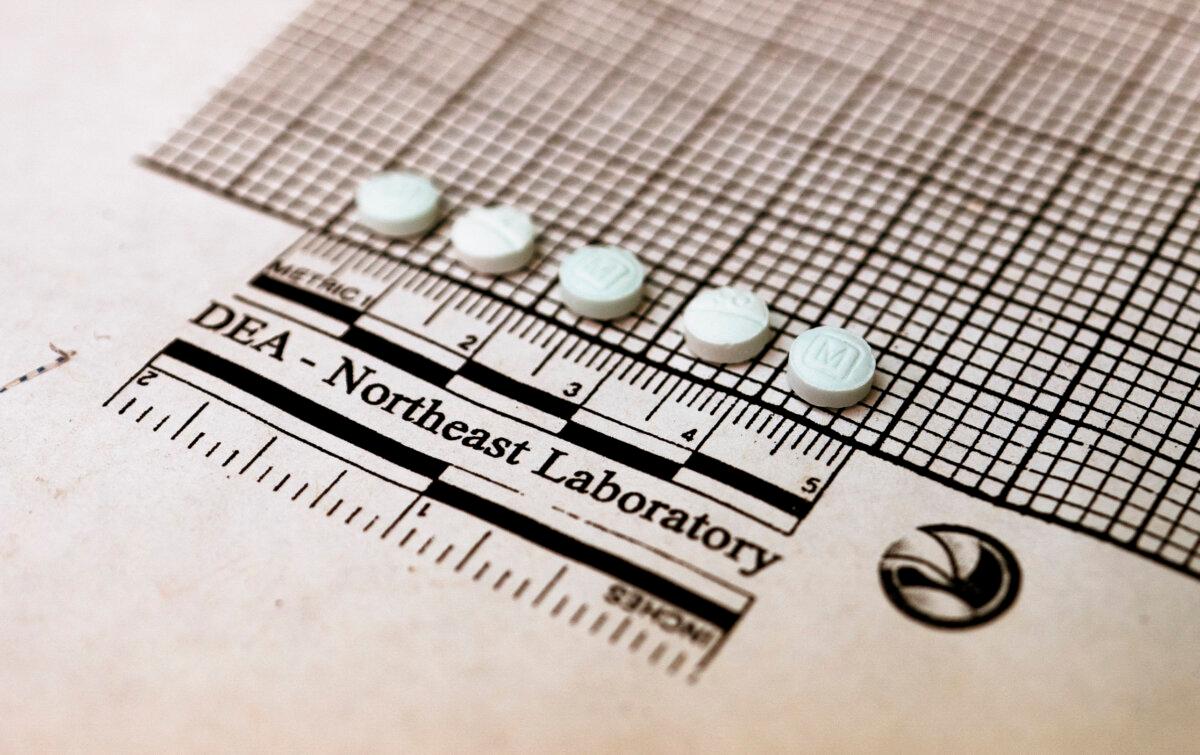
Tablets suspected to be fentanyl are placed on a graph to measure their size at the DEA Northeast Regional, in New York, on Oct. 8, 2019. (Don Emmert/AFP via Getty Images)
.
One of the primary money laundering methods used by Chinese criminal groups is the so-called Vancouver Model, in which illicit money, often from drug sales, is gambled and cashed out of casinos as clean cash. That money is then used to purchase assets like real estate.
The model drew significant attention in 2022 when the Cullen Commission revealed an “unprecedented volume” of illicit cash laundered through B.C. casinos. The public inquiry, ordered by the provincial government, was launched in response to concerns about money laundering and its impact on B.C.’s drug crisis and housing market.
The report notes that the operation often involves Chinese casino patrons with significant wealth in China but limited access to it in Canada due to Chinese currency export restrictions. Criminally affiliated “cash facilitators” provide them with large sums of illicit cash, which they use to gamble, thereby laundering the money for the criminal groups.
According to the report, B.C. casinos accepted nearly $1.2 billion in cash transactions of $10,000 or more in 2014 alone.
Clement says Canada has admitted “many” known Chinese triad members through immigration, many of whom are well-established, sophisticated, and exert influence over the diaspora community.
.

In addition, Canada has “fallen behind” from a legislative point of view, as its laws are “inadequate” to tackle transnational organized crime, he said.
“Canada is a fairly integral part of what’s occurring in the fentanyl trade,” Clement said.
McGregor says Canada can adopt several measures to address criminal activity on its soil, including money laundering.
“Ottawa must treat laundering as a national security threat, build a unified financial crimes agency, and deliver visible prosecutions of cartel [transnational narcoterrorism] proxies and PRC linked networks,” he said.
What's Your Reaction?
 Like
0
Like
0
 Dislike
0
Dislike
0
 Love
0
Love
0
 Funny
0
Funny
0
 Wow
0
Wow
0
 Sad
0
Sad
0
 Angry
0
Angry
0














Comments (0)