.
News Analysis
Prime Minister
Pierre Trudeau’s effort to forge diplomatic ties with the Chinese Communist Party (CCP) in 1970 proved highly consequential, opening the floodgates for other Western Bloc nations to follow suit and bringing the regime out of isolation. But another move made by Canada years earlier has continued to entangle its relationship with the communist regime.
In 1958, as millions were starving to death in China due to the famine caused by CCP leader Mao Zedong’s disastrous Great Leap Forward, China bought a small amount of grain from Canada, which Ottawa took note of as a sign of an emerging market. And after two Chinese agents who visited Canada in 1960 struck a deal for wheat worth $60 million, the government of John Diefenbaker, a self-declared staunch anti-communist, seized the opportunity to forge a $420 million deal for wheat and barley exports to China.
To be sure, there were dissenting voices in cabinet amid concerns about U.S. sanctions against the CCP, but ultimately the prospects of a lucrative new trade channel prevailed.
And as Canada’s agricultural and agri-food/fish exports to China have since grown to an annual
$11.5 billion, so has China’s lever over Canada each time Beijing wants to steer Ottawa in a certain direction. Very often, during heightened Beijing-Ottawa tensions, sectors and regions most impacted by potential revenue loss, should China block imports, act as local champions urging Ottawa to follow Beijing’s wishes.
“By targeting key sectors in select jurisdictions, Beijing creates localized economic pain, encouraging provincial leaders to advocate for pro-China positions in Ottawa,” Scott McGregor, an author and a former Canadian Armed Forces intelligence operator and intelligence adviser to the RCMP, told The Epoch Times.
He notes that Canada’s agricultural sector, and particularly canola, pork, and soy, is “highly exposed to CCP influence” due to the sector’s high dependence on exports to China.
The latest example of this is China slapping 100 percent tariffs on Canadian canola products at a time when Canada is mired in trade tensions with the United States and China is sending signals for Ottawa to move to its front rather than Washington’s. Against this backdrop, some premiers, such as Saskatchewan’s
Scott Moe, whose province is a heavy canola exporter, are asking for closer trade ties with China.
But this CCP tactic of using imports as leverage has been seen before on multiple occasions, including when Canada arrested Huawei executive Meng Wanzhou on a U.S. extradition request in late 2018 and China blocked Canadian agricultural imports shortly after, in addition to detaining Canadian citizens Michael Kovrig and Michael Spavor in retaliation.
China vs US
Jonathan Manthrope, journalist and author of the 2019 seminal book on China’s influence operations in Canada, “Claws of the Panda,” says Canada’s forging of the grains deal with China about a decade before Pierre Trudeau’s formal recognition of the CCP was a turning point.
“Indeed, it can be argued that this wheat and barley agreement was the moment when Ottawa formally accepted the CCP as the legitimate government of China, though the legal niceties and exchanges of diplomats were yet to come,” Manthrope wrote in his book, which chronicles how the CCP recognized key Canadian figures involved in the deal as “friends of China,” a
title given to those who help the Chinese communist regime in its objectives.
Such was the recognition given by then-Chinese Premier Zhou Enlai to Diefenbaker’s Agriculture Minister Alvin Hamilton, who championed the grain deal with China. According to Manthrope, Zhou even said that the agriculture minister had surpassed Norman Bethune as the “quintessential Canadian in the eyes of the Chinese people.” Bethune was a Canadian doctor who supported the CCP forces during the second Sino-Japanese war starting in the late 1930s. Hamilton remained a “friend of China” after leaving office.
“After leaving government, [Hamilton] became a promoter within Canada of business with China, contacting Canadian companies and urging them to take advantage of the opening Chinese market created by the wheat sales,” Manthrope wrote.
Canada’s trade pursuit at the time with communist China, which the United States and allies including Canada had fought against only years earlier in the Korean War, came in the face of “sustained US opposition,” wrote Greg Donaghy, former head of the Historical Section of Canada’s Department of Foreign Affairs and International Trade, and Michael Stevenson, history professor at York University, in their 2009
paper in the journal “Agricultural History.”
“Clearly, as was so often the case in postwar Canadian foreign economic policy, a narrowly defined national interest easily trumped the ideological pressures of western solidarity,” the two wrote.
.
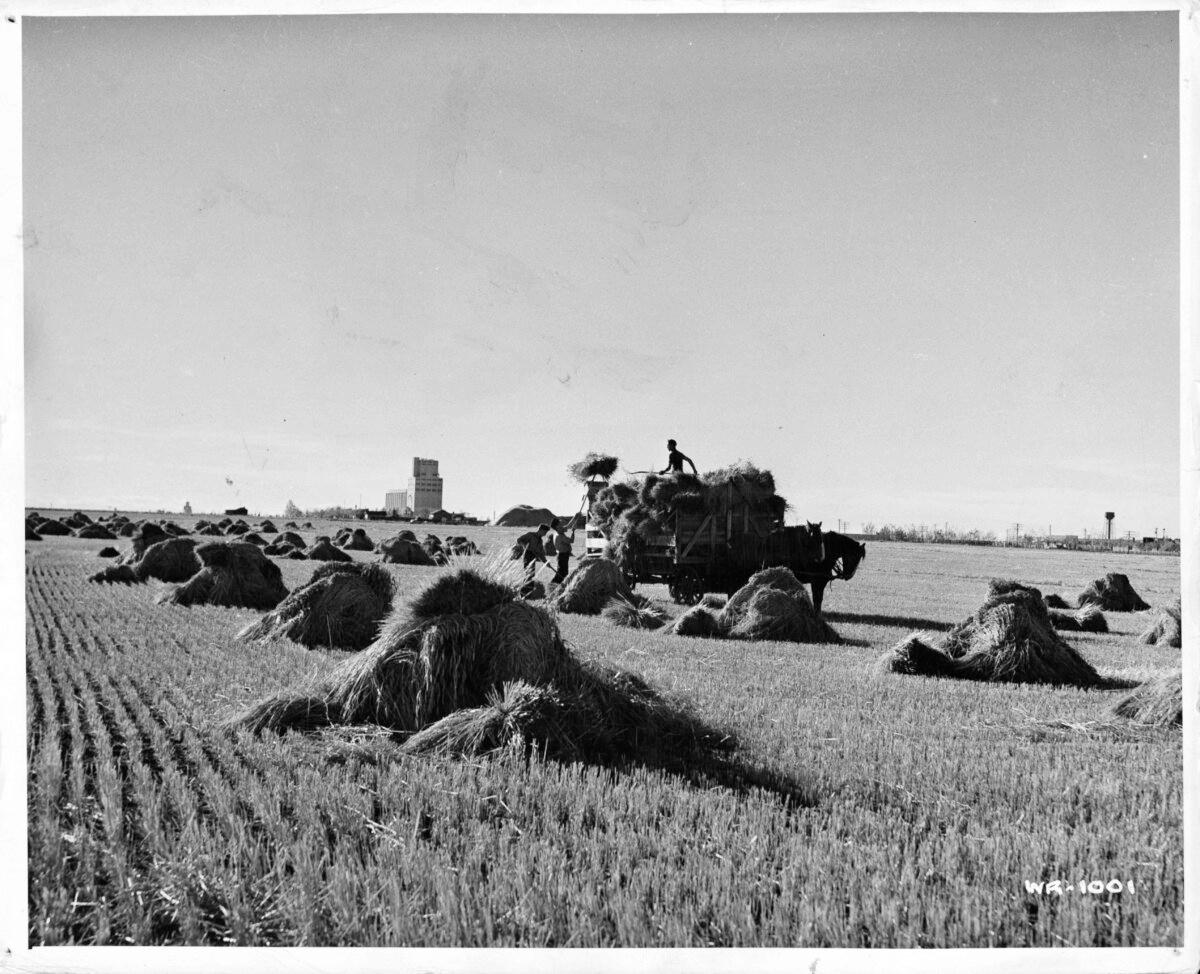
Wheat Harvest in a farm in Saskatchewan, 1955. R. Gates/Archive Photos/Getty Images
.
This trade with China in the earlier days of the communist regime helped give it international legitimacy, the two wrote, and “ensured that Canada’s approach to Asia would in future tilt increasingly towards Beijing.”
Even in those earlier days of China’s courtship of Western decision-makers, Chinese officials emphasized the role of soft power. As Canada faced challenges to transport its grains using shipping companies that could face penalties due to violating U.S. embargoes on China, Chinese Foreign Minister Chen Yi in 1961 attempted to reassure Canadian officials of China’s intention to continue mass wheat purchases each year, while emphasizing the need to also use opportunities such as the Peking Opera “in establishing good relations,” as recounted in a 2023
paper by China-based Xi’an Jiaotong-Liverpool University associate professor
Yun Liu.
China’s Levers
David Mulroney, a former Canadian ambassador to China, recounts in his 2015 book “Middle Power, Middle Kingdom” how Beijing used such excuses as finding pests to solve “more mundane trade problems,” such as when Chinese officials wanted to block Canadian canola shipments to support Chinese producers of rapeseed, the competing product, in the late 2000s.
But the Chinese regime’s use of its economic levers has been getting more frequent, along with its aggressive postures on the world stage.
During the latter stages of China’s “hide your strength, bide your time” era, as per long-time de facto leader Deng Xiaoping’s advice, this posturing may have been done more behind closed doors with special interest and business groups.
But as Xi Jinping’s CCP became ever more aggressive, it started publicly touting its economic leverages on a larger scale.
Famous cases include China’s move to ban or restrict Australian wine, barley, and other exports in 2020 after Canberra called for an inquiry into the origins of COVID-19. Australia’s initial steps to diversify away from the Chinese market to keep its own industry going won praise by
various think tanks and China watchers, but as the tariffs were lifted, the country has more or less gone back to the same
dependence on China.
In 2020, a Chinese trader
cancelled a $23 million purchase from a Czech company after that country’s Senate speaker visited Taiwan.
Leaked communication from the Chinese Embassy to the Czech government showed that the threat to cancel the deal had come from the embassy.
In the case of Canada, recent high-profile cases include China blocking canola shipments from major Canadian companies and imposing other restrictions on agricultural exports in 2019. On the surface, the trade action was due to alleged detection of pests in export shipments, but the timing aligned with China’s retaliatory threats for Canada’s arrest of Huawei’s Meng due to the United States’ extradition request.
Most recently, in March, China followed through on an anti-dumping probe it had launched last year by
imposing 100 percent tariffs on canola oil, oil cakes, and pea imports, and 25 percent on aquatic and pork products. China
launched the probe in September 2024, days after Canada, in alignment with U.S. measures, announced it intended to impose 100 percent tariffs on Chinese-made EVs and 25 percent tariffs on Chinese aluminum and steel products.
.
After Beijing announced tariffs in March, Chinese state-run media published
commentaries suggesting that China’s decision to impose restrictions on Canadian canola imports now—rather than last year—was intended to signal to Canada not to side with Washington. Days before this, Canada’s foreign affairs minister at the time, Mélanie Joly,
said Ottawa was open to a suggestion by U.S. Treasury Secretary Scott Bessent that Canada should match U.S. tariffs on China.
.
But, as Chinese tariffs on Canada have continued and trade tensions with the United States persist, some premiers have been
asking Ottawa to seek closer ties with China. Ontario Premier Doug Ford said earlier in July that the “enemy of our enemy is our friend,” adding that while he doesn’t view Americans as the enemy, U.S. President Donald Trump is “acting like the enemy.” Saskatchewan’s Premier Moe noted the toll Chinese tariffs are taking on his province’s agricultural exports, saying Canada needs “a broader relationship” with China.
McGregor, who co-wrote the 2023 book “The Mosaic Effect: How the Chinese Communist Party Started a Hybrid War in America’s Backyard,” says politicians are often heavily lobbied to get closer to China by business stakeholders and exporters with vested interest in the Chinese market.
Former Prime Minister Stephen Harper famously shunned going to the 2008 Beijing Olympics as the Chinese regime continued its rights abuses. But in subsequent years his government softened its approach on China, with some cabinet members touting more trade ties and Harper visiting Beijing in December 2009. But the real attempts to get closer to China came during the tenure of his successor, Justin Trudeau, who at one point even pursued a free trade deal with Beijing—plans that were ultimately derailed when Ottawa sought to include progressive values in the discussions.
In the case of premiers, over the years, key organizations within their jurisdictions have been promoting the importance of China as a destination for Canadian trade.
China’s state-owned Global Times
noted in a 2010 article that then-COO of the Canadian Wheat Board (CWB), Ward Weisensel, said Harper’s 2009 China visit further promoted trade opportunities, adding, “our intention is to do everything we can to continue to grow that [Canada-China] relationship.” The article also said the CWB was a “key driving force for that (the establishment of diplomatic ties) in 1970.”
The minister responsible for the CWB in the 1970s reportedly quipped that the “wheat board recognized China before Canada did,” according to the
Western Producer.
.
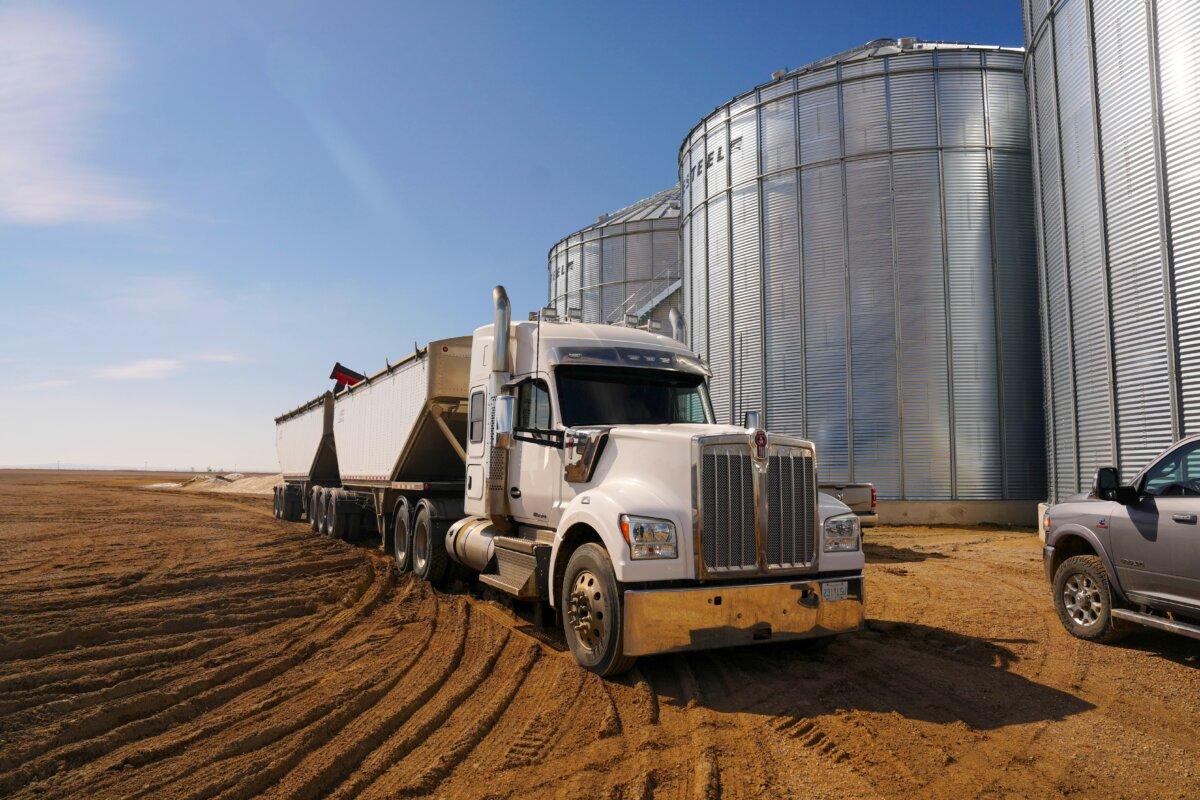
Canola is loaded on to a truck on a farm outside of Moose Jaw, Sask., on April 7, 2025. The Canadian Press/Chris Young
.
The same position urging closer trade ties with China has also been repeated by some influential regional research centres and think tanks. In 2020, amid rising awareness in Canada of China’s aggressions after the regime detained Kovrig and Spavor over the Meng affair and as Parliament held special Canada-China relations committee meetings, representatives for the Canada West Foundation
told parliamentarians that “Canada’s relation with China flows through the west.” Carlo Dade, a director with the think tank, added that “agriculture is a key part of this relationship.”
“China has become an important trading partner for Canada and for Western Canada,” added Sharon Shengyang Sun, trade policy economist with the organization. “This is why a poor relationship with China is detrimental to Canadian trade, particularly in the West.”
In the same meeting, Charles Burton, senior fellow with the Macdonald-Laurier Institute, gave a contrasting view,
warning of consequences for Canada if it fails to take the right approach to China.
“The PRC regime’s flouting of the standards of international diplomacy is without question becoming more and more blatant as the years go by,” Burton said.
“Canada has lost the respect of the Chinese regime through our non-action in response to their outrages against us. It is high time for us to kick back by retaliating, especially on China’s persistent illegal imports into Canada of the noxious drug fentanyl.”
‘Induce Dependency, Then Weaponize It’
One of the earliest intelligence leaks of 2022–23 about China’s extensive interference in Canada, which eventually led to a public inquiry into the issue, outlined the intricacy with which Chinese agents study and take tactical approaches to compel politicians to advance Beijing’s interests.
A Nov. 7, 2022,
article by Global News based on the intelligence leaks from the Canadian Security Intelligence Service noted that Chinese agents study MPs’ ridings to learn which companies and industries have business ties with China. The goal is to see if they could use these local economies to force the hand of the targeted MPs to China’s advantage.
“Beijing identifies political, regional, and economic fault lines and uses them to create fragmentation,” says McGregor.
“Through the United Front Work Department and Ministry of State Security-linked proxies, the CCP builds elite capture by offering access, investment, or trade benefits to provincial leaders or political figures.
“These figures are then elevated as ‘voices of reason’ within national discourse. Simultaneously, China marginalizes critics by cutting off market access or excluding them from bilateral forums.”
In the case of Saskatchewan, McGregor says China is creating “localized economic pain” and in effect encouraging provincial leaders to advocate for pro-China positions in Ottawa.
“This ‘induce dependency, then weaponize it’ strategy is a hallmark of hybrid economic warfare,” he says.
But in Alberta, another agriculture export power house, the messaging from Alberta Premier
Danielle Smith has been markedly different compared to that of some of her peers, with her saying that China seeks to exploit the “divisions” to create political pressure.
“The Chinese understand the divisions in our country. They understand that if you’re going to retaliate and create maximum pressure, you do it by pitting one region against the other,” Smith
said earlier this year in response to China targeting agricultural products—which mainly impact Western Canada—in retaliation for Canada’s tariffs on Chinese EVs, which benefit Central Canada.
“I think the Chinese have been very targeted and direct in how they’re trying to split our country up.”
McGregor notes that Premier Smith’s political messaging hints at emphasizing “economic sovereignty and national security.” In contrast, he says, Premier Moe’s push for broader relations appears to be prioritizing “short-term market access over long-term strategic considerations.”
“[This is] something Beijing counts on when crafting influence operations at the subnational level,” he says.
.



 Like
0
Like
0
 Dislike
0
Dislike
0
 Love
0
Love
0
 Funny
0
Funny
0
 Wow
0
Wow
0
 Sad
0
Sad
0
 Angry
0
Angry
0












Comments (0)