

Dutch Seizure of Nexperia Signals Europe’s Shift on Chinese Tech Investments


.
The intervention, which cited a Cold War-era law, has become a defining moment in Europe’s effort to protect its technological sovereignty from China.
A Chipmaker Caught in the Crossfire
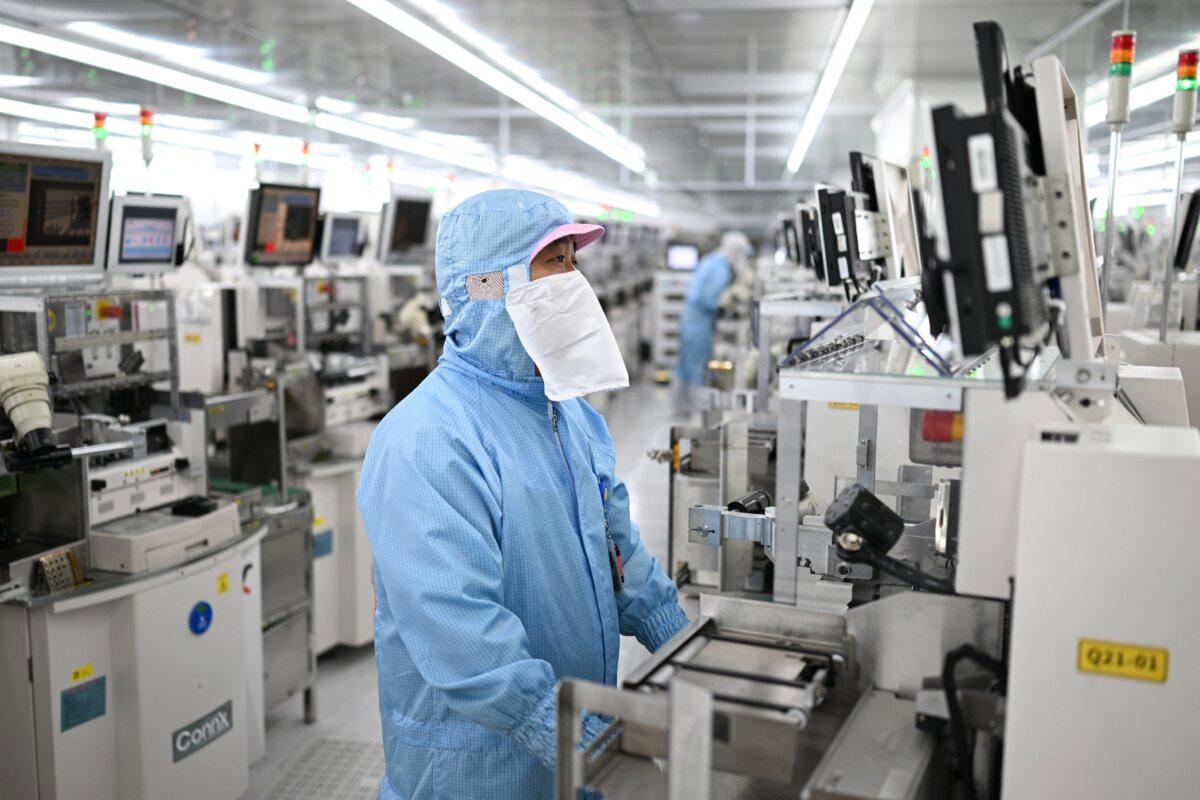
Nexperia is one of the world’s largest producers of simple computer chips, including diodes and transistors. While not cutting-edge, these chips are essential for Europe’s automotive and industrial supply chains. Up to 80 percent of Nexperia’s products are packaged in China before redistribution.Dutch authorities acted after former Chinese CEO Zhang Xuezheng reportedly began transferring key operations, data, and equipment from Europe to China. On Oct. 1, the Dutch government froze assets across 30 Nexperia entities worldwide and removed Zhang from his post.
Nexperia’s parent company, Wingtech, was once private but is now partially state-owned, directly placing it under CCP control. Wingtech acquired Nexperia in 2019 for roughly $3.78 billion, marking China’s largest cross-border semiconductor acquisition at the time.
Why Nexperia Became a Target
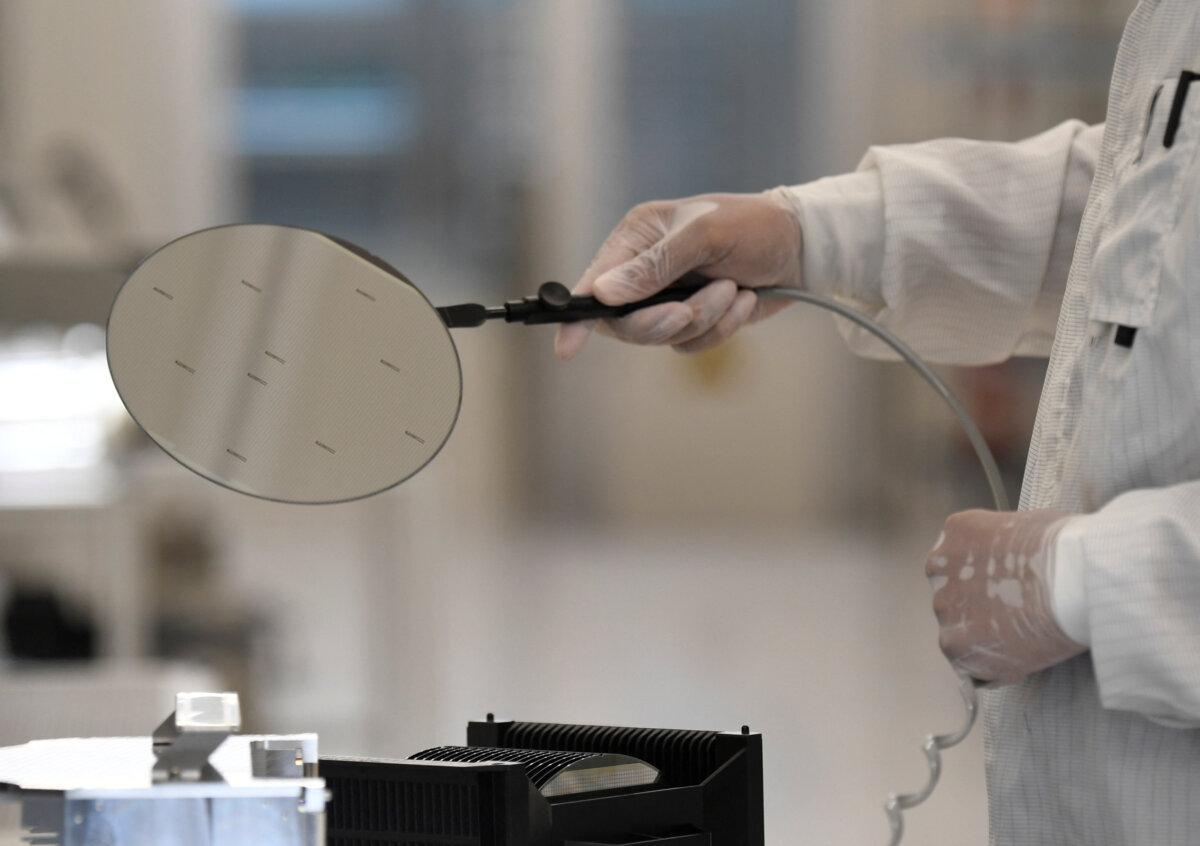
While Nexperia’s chips are not advanced by modern standards, experts say the Dutch action reflects how export controls in Western countries have expanded beyond cutting-edge technologies like AI accelerators to include basic manufacturing processes and supply chain infrastructure.Experts say the case underscores a fundamental shift in how the United States and its Western allies view technological sovereignty.
Su Tzu-yun, a researcher and director of the Division for Defense Strategy and Resources at Taiwan’s National Institute for Defense and Security Research, told The Epoch Times that even so-called mature nodes involve proprietary manufacturing know-how that determines yield rates and chip performance, which is critical to the chips’ quality.
“For example, both TSMC and Samsung produce advanced chips, but TSMC’s yield and stability are far superior,” he said.
Su warned that if Chinese manufacturers obtain such techniques from foreign firms, it would unfairly boost their capabilities and distort competition.
.
The Broader Shift in Policy
Sun Kuo-hsiang, a professor of international affairs and business at Nanhua University in Taiwan, told The Epoch Times that the Netherlands’ decision reflects Europe’s deepening realization that the CCP’s industrial ambitions pose not only commercial but national security risks.“First, if a single critical node in Europe’s auto industry were to fall under the control of the CCP, it would create serious supply chain risks,” he said. “Second, there’s the risk to technological sovereignty—the manufacturing know-how, production parameters, quality systems, and R&D teams that Europe has built up over decades could be entirely transferred to subsidiaries in China and absorbed into China’s industrial system, leaving Europe’s original base hollowed out.”
According to Sun, by invoking the Cold War-era law, the Netherlands has effectively defined mature process chips as “sensitive technologies,” a category previously reserved for frontier nodes such as 3-nanometer chips or AI accelerators.
“Europe and America are now moving toward a concept of ‘supply chain sovereignty,’ not just dominance in cutting-edge chips,” he said. “The Nexperia case is the first time this new logic has been fully displayed.”
Adopting a Cold War Mindset
Feng Chongyi, associate professor of China studies at the University of Technology Sydney in Australia, told The Epoch Times that the Netherlands’ move was “long overdue,” saying that the West must recognize it is already in a de facto Cold War with the CCP.“Western governments talk about an ‘axis of evil,’ but many still hesitate to see the CCP as part of the communist authoritarian bloc,” he said. “In reality, the ongoing tech war, information war, and trade war are all manifestations of a new Cold War dynamic.”
He warned that failure to acknowledge this reality would lead to critical strategic mistakes.
“The Cold War was fundamentally a clash between incompatible systems,” Feng said. “To transfer technology to the CCP is to aid the enemy.”
He noted that after the collapse of the Soviet Union, Western elites embraced the “end of history illusion,” assuming that economic engagement would lead to the liberalization of China. Such unrealistic optimism opened the door for the CCP to plunder Western technology under the cover of globalization.
The CCP’s ‘Copy and Steal’ Development Model
Experts note that since its founding, the CCP’s technological rise has relied heavily on copying, reverse engineering, theft, and espionage. Beijing’s latest Five-Year Plan openly called for extraordinary measures to advance semiconductor self-sufficiency—language that analysts say betrays the regime’s intentions.Sun said that the CCP’s “state capitalism” model treats the absorption of foreign technology as a normal shortcut for surpassing rivals.
“[Beijing] abandons gradual, independent research and development,” he said. “Chinese companies excel not at original innovation, but at industrializing and scaling up existing technologies, driving down unit costs, and using policy and subsidies to erode global markets.”
Feng added that the CCP’s system itself suppresses originality. “Without freedom of thought, speech, or academic inquiry, there can be no innovation,” he said. “Like the Soviet Union, China relies on theft to keep up.”
He emphasized that capitalist systems protect intellectual property to reward creativity, while the CCP’s bureaucratic model breeds corruption and plagiarism. “All the [research] achievements announced every year are fake,” he said. “They are made up by forcibly transferring technology and theft.”
.
Europe Follows the US Lead
The Nexperia case is only the latest in a growing list of European pushbacks against Chinese acquisitions. Since the Trump administration’s first wave of tech controls, Europe has steadily tightened scrutiny of Chinese investments.In 2016, Chinese conglomerates bought Volvo, Syngenta, and the German robotics firm Kuka. Since then, Europe has been reversing course.
However, Feng cautioned that Europe’s actions remain fragmented. “Most are still isolated corporate cases, not yet elevated to national strategy,” he said. “[For true effectiveness,] countries like the Netherlands, Germany, and the UK must adopt coordinated export control frameworks like the United States.”
Until then, he warned, “These [European] countries essentially leave the CCP a backdoor [to Western technology].”
What's Your Reaction?
 Like
0
Like
0
 Dislike
0
Dislike
0
 Love
0
Love
0
 Funny
0
Funny
0
 Wow
0
Wow
0
 Sad
0
Sad
0
 Angry
0
Angry
0














Comments (0)