

Chinese Super Embassy in London Would Boost Capacity for Transnational Repression, Experts Say


.
The British government is due to announce by Dec. 10 whether it is giving the go-ahead to a controversial new Chinese “super embassy” in London, which activists fear could become a hub for the coordination of transnational repression.
The Chinese regime purchased the site, Royal Mint Court, in 2018 and wants to convert it to create a much larger embassy than that in its existing building in London.
“The embassy will definitely increase transnational repression,” Duncan Smith said. “It will also increase spying and espionage, because they'll have more bodies to do it.”
Chinese regime leader Xi Jinping last year requested that British Prime Minister Keir Starmer intervene, and ministers took control of the process.
‘Numerous National Security Concerns’
In a letter to Reed on Oct. 13, parliament’s Joint Committee on the National Security Strategy (JCNSS), said, “The plan for the new ‘super-embassy’ in central London has raised numerous national security concerns given its proximity to fibre-optic cables, data centres, and telecommunication exchanges which serve London’s financial hubs of Canary Wharf and the City of London.”The joint committee concluded: “This presents eavesdropping risks in peacetime and sabotage risks in a crisis.”
Duncan Smith said the site is above cables that carry financial data to and from the City of London financial district, and he said, “All of that can be monitored, plugged into, disrupted.”
He said he believed there are also secure cables, which are connected to the intelligence services, MI5 and MI6.
Philip Ingram, a former senior British military intelligence officer, told The Epoch Times the new embassy should not be approved.
“China’s number one intelligence priority is anything that will give them economic advantage, and being in a position where they can tap into, or intercept and decrypt all of the financial information being transmitted to and from the whole of the City of London is too good an opportunity for them,” Ingram said.
“The Chinese do not care about the laws in the UK,” Ingram said. “This embassy will be the focus for huge amounts of action breaking our laws, stealing sensitive financial and political data, intellectual property, and coordinating the monitoring and oppression of anyone they consider a threat to the CCP.”
Bob Blackman, a Conservative Member of Parliament, told The Epoch Times there had been instances of the Chinese Communist Party (CCP) trying to capture Chinese nationals in the UK.
“That is why this super embassy is a real concern,” Blackman said. “There is ample space for dungeons. If they capture these Chinese nationals it’s a real challenge.”
“It would be the biggest embassy anywhere in the world,” Blackman said. “Why do they need that? Who is going to be inside there?”
Laura Harth, a spokesperson for Safeguard Defenders, a human rights nongovernmental organization that focuses on China, told The Epoch Times the CCP already uses an army of proxies to carry out transnational repression abroad, as well as using threats to family members back in China.
“I don’t want to exaggerate what this super embassy adds. ... I think it just ups their capacity by a lot,” Harth said.
.
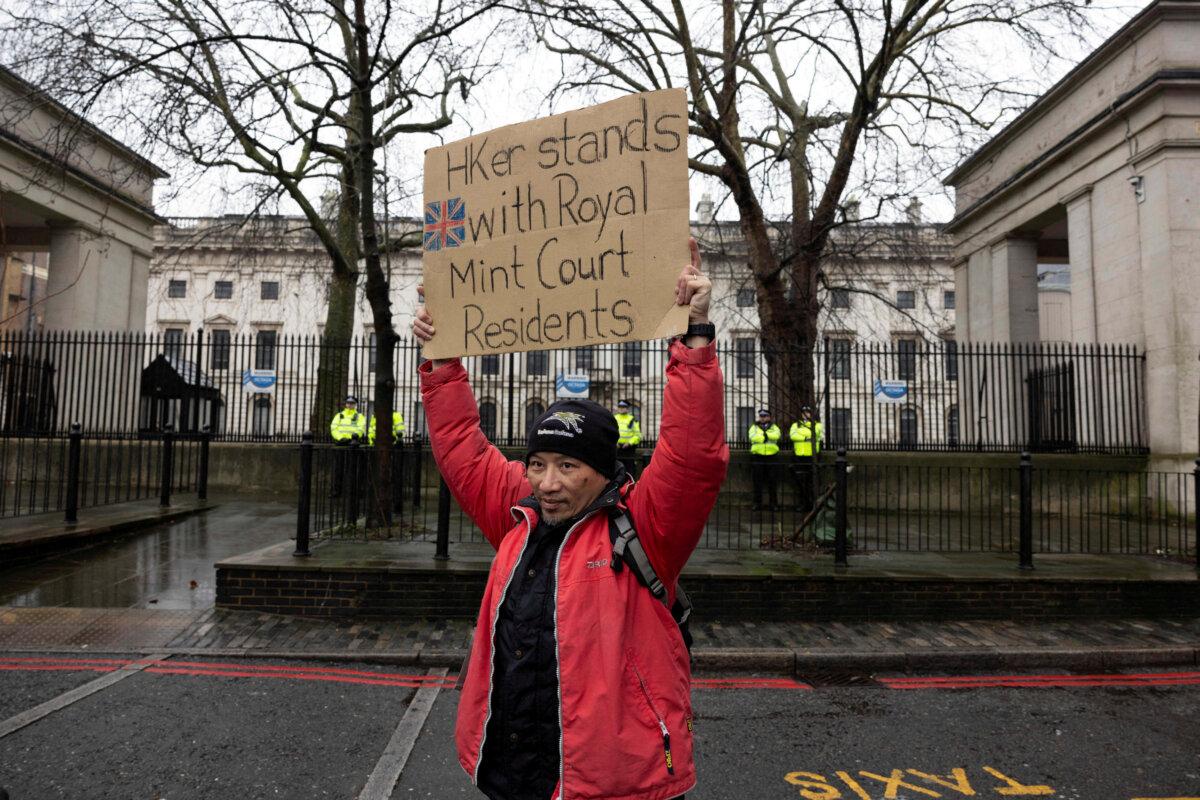
After it was announced that a decision had been postponed, Chinese foreign ministry spokesman Lin Jian called on the UK government to “immediately fulfill its obligations” over the super embassy plan, and warned of “consequences.”
Duncan Smith said Lin’s tone suggested Beijing believed London had reneged on a deal made behind closed doors.
Harth said, “Britain is being bullied and being coerced, and that’s exactly the way the CCP operates. And at some point you have to say, ’stop.'”
Duncan Smith said he understood the British government, then led by Boris Johnson, told Beijing that the Royal Mint Court site would be considered suitable for an embassy.
Gao said rejecting the London embassy plan would be “stupid” and could mark the beginning of a “very nasty chapter” in Sino-British relations.
Police Stations, Spies
In July, the JNCSS published a report that said, “the UK currently lacks a clear strategy to address TNR,” referring to transnational repression.In December 2024, Hong Kong authorities placed a 1 million Hong Kong dollar ($128,000) bounty on Chloe Cheung, a 20-year-old UK-based activist who was accused of breaching the former British colony’s National Security Law.
“Obviously, China is a threat on multiple fronts, and we should just call it what it is,” Harth said, adding that the UK government’s efforts to avoid calling Beijing an enemy were “ridiculous semantics.”
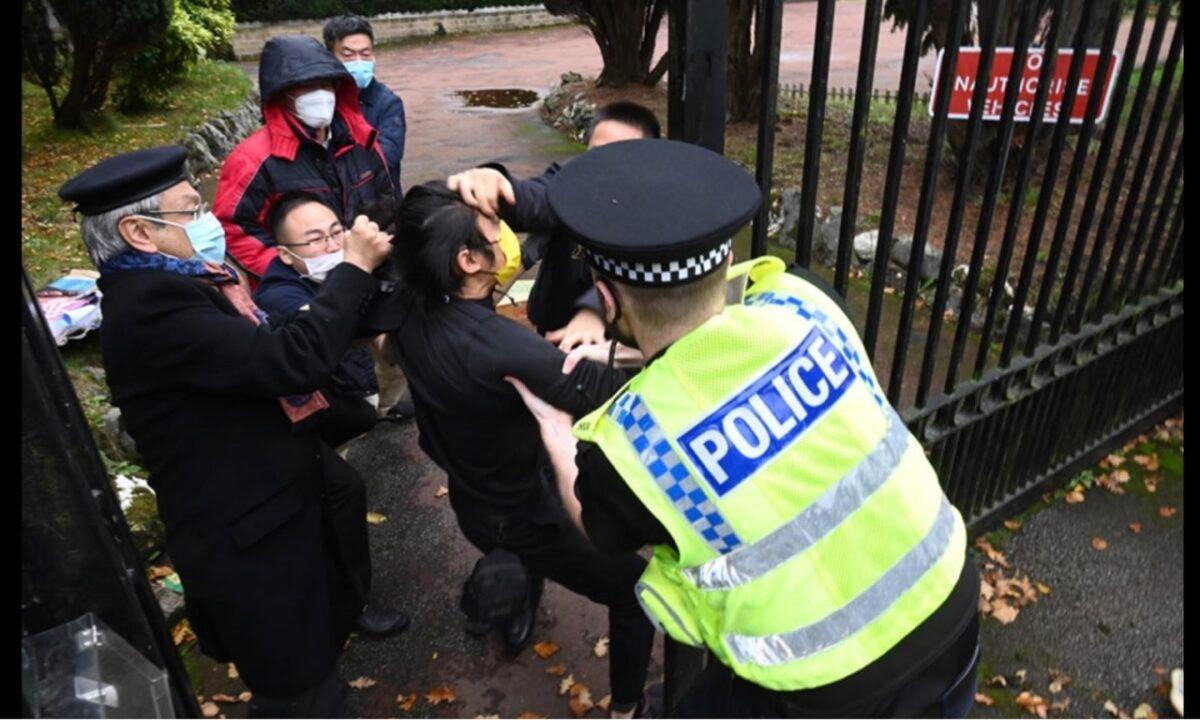
Digital Spying
“Cables running under, or near the building, are certainly at risk of being tampered with,” he said, adding that the majority of spying in 2025 is “digital.”Duncan Smith said Starmer is “between a rock and a hard place,” about the embassy, but he said, “The government should take this as an opportunity to to say ‘No, we’re not going to do it.’”
The Epoch Times asked the UK Foreign Office for comment on the plans for the British embassy in Beijing and Duncan Smith’s allegation of a secret deal, but has not received a response.
.
What's Your Reaction?
 Like
0
Like
0
 Dislike
0
Dislike
0
 Love
0
Love
0
 Funny
0
Funny
0
 Wow
0
Wow
0
 Sad
0
Sad
0
 Angry
0
Angry
0















Comments (0)