

Chinese Businesses in Laos Face Shutdown Amid Regulatory Chaos in High-Profile Belt and Road Project


.
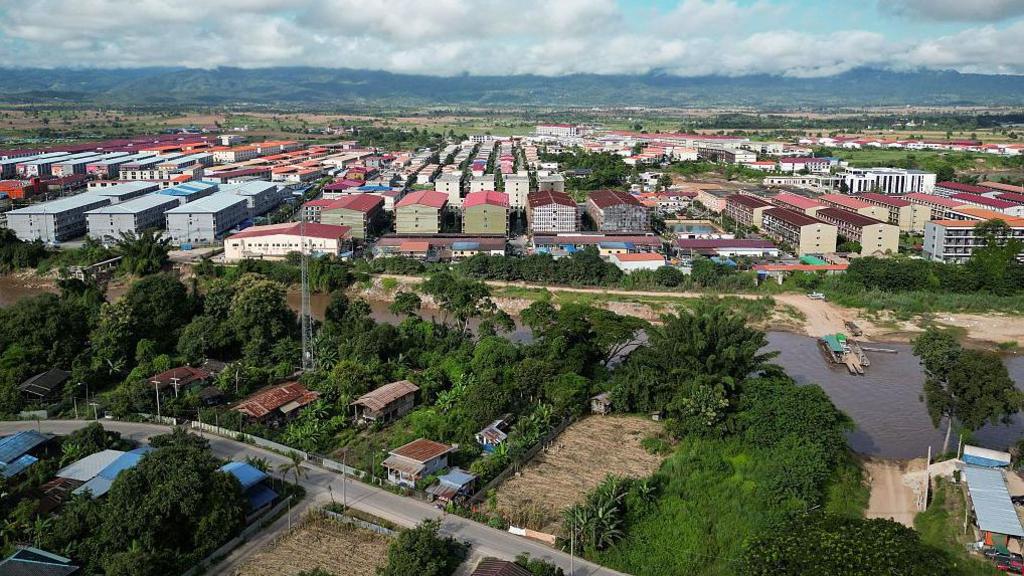
The China–Laos Mohan–Boten Economic Cooperation Zone, a flagship project personally promoted by Chinese leader Xi Jinping as part of the Belt and Road Initiative (BRI), is now facing serious setbacks. Recently, more than a dozen Chinese-funded businesses operating within the Laos portion of the zone have been forced to shut down due to the lack of proper local operating licenses.
Despite receiving official backing and promotional support from Chinese authorities, these investors now find themselves under pressure from the Laotian government, while Chinese officials deflect responsibility, leaving the businesses exposed to significant financial losses.
Approved by China’s State Council in 2016, the Mohan–Boten Zone sits on the border between China’s Yunnan Province and Laos’s Luang Namtha Province. It was envisioned as a key gateway to mainland Southeast Asia and touted as a showcase for cross-border cooperation under the BRI framework.
The Lao side of the zone has been developed by the Yunnan-based Haicheng Group. It operates under a unique policy model known as a customs-exempt bonded area within national borders.
In 2022, during the China International Import Expo in Shanghai, the Yunnan Provincial Department of Commerce aggressively promoted the zone, promising streamlined approvals for schools, hospitals, and other facilities, along with a “one-stop service center” for business registration.
One particularly attractive incentive was the claim that the zone would issue a limited number of licenses for assisted reproductive services, such as IVF—highly restricted in China—which drew investment from several Chinese medical groups, including Taizhen International Hospital.
Lao Clampdown
An investor using the pseudonym Yang Liwei, speaking on condition of anonymity for fear of retaliation, told the Chinese-language edition of The Epoch Times that he was lured by what seemed to be a nationally endorsed, government-backed project. However, he later discovered that Haicheng Group, the zone’s Chinese developer, was locally known as a “government white glove”—a front for official interests—and that the Boten region had a reputation for gambling and other illicit activities.In 2023, Yang signed a lease and officially opened his clinic in 2024, only for Lao authorities to raid the facility that October. His clinic, along with Taizhen and several others, was found to be lacking proper licensing. Some facilities had already been shut down before the raid.
Currently, Laos only permits assisted reproduction in one state-run hospital, with no private facilities authorized for such services.
Yang questioned how it was possible that 13 Chinese-run medical institutions all encountered the same legal issue, suggesting a systemic failure rather than isolated mistakes.
He described navigating conflicting information between Chinese promotional materials and opaque Lao regulations. The joint China–Laos management committee, he said, was “functionally nonexistent,” with minimal involvement from the Lao side.
Attempts to seek help from the Chinese Embassy, the Yunnan Department of Commerce, and the Shanghai Foreign Affairs Office yielded little progress. Some officials advised him to pursue legal action—a path Yang believed to be unrealistic in the Lao context.
According to Chinese state media Caixin, Taizhen International Hospital, founded by Chinese investor Dong Shouwei, received a formal eviction notice after defaulting on rent and utilities totaling roughly 150,000 yuan (about $21,087). Dong, who had invested more than 20 million yuan (about $2.8 million), claimed the rent default was not intentional but due to the hospital’s inability to obtain operating permits.
“We didn’t refuse to pay,” he told Caixin. “We just couldn’t operate. We hope the zone authorities will provide a resolution.”
Another investor, using the pseudonym Chen Zhicheng, also speaking on condition of anonymity for fear of retaliation, told the Chinese-language edition of The Epoch Times that both Chinese and Lao authorities were aware of the zone’s structural and legal problems from the beginning but failed to provide effective oversight. He believes this was a “policy trap” that exposed Chinese investors to serious risk.
During the 2022 promotional event in Shanghai, Yunnan officials, including the provincial commerce chief, reiterated their support for the zone’s infrastructure and industry plans—prompting Chen to sign a lease and hold an opening ceremony in 2024. His clinic was later featured in Chinese state media coverage.
However, in October 2024, his clinic was one of 13 institutions that the Lao authorities accused of violating local laws.
Chen has contacted the Chinese Ministry of Foreign Affairs and the Shanghai Foreign Affairs Office, but there has been no concrete resolution.
He emphasized that this is not merely a commercial dispute, as it shows both a regulatory failure on the Lao side and a lack of oversight on the Chinese side.
The Chinese-language edition of The Epoch Times contacted the Boten Investment Promotion Bureau on Sept. 16. A staff member claimed they had no involvement in the issue concerning the 13 Chinese firms. Calls to the bureau’s director and deputy director went unanswered.
.
What's Your Reaction?
 Like
0
Like
0
 Dislike
0
Dislike
0
 Love
0
Love
0
 Funny
0
Funny
0
 Wow
0
Wow
0
 Sad
0
Sad
0
 Angry
0
Angry
0











Comments (0)