

China Claims World's Fastest Supercomputer — But the Real AI Race Is Being Run Elsewhere
China has reclaimed the top spot on the world's most prestigious supercomputer ranking for the first time in three years. The achievement signals Beijing's growing chip design capabilities — but experts warn it tells us very little about who leads in the global AI computing race.

.
China Back at the Top — With a Catch
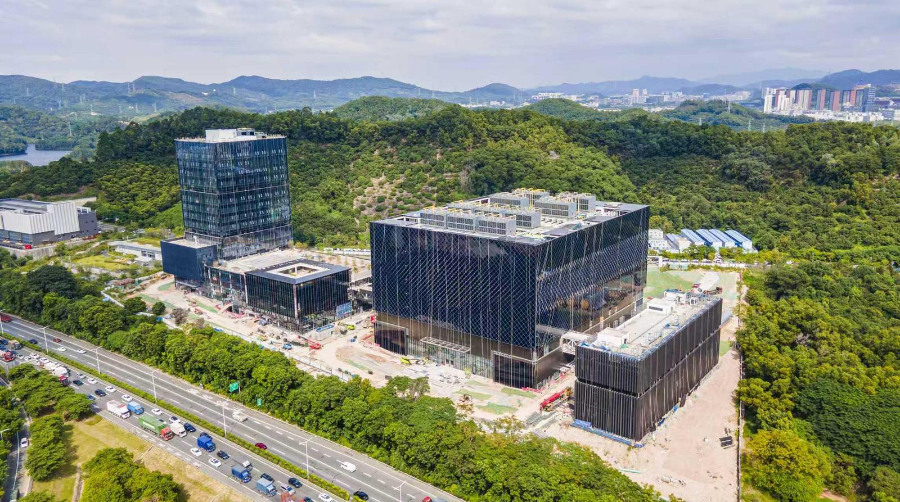
China has taken first place on the TOP500 list, the world's leading biannual ranking of supercomputers. The winning system, called LineShine, is housed at the National Supercomputing Centre in Shenzhen and runs entirely on domestically designed chips. It edged out the previous titleholder, El Capitan — a U.S. government supercomputer at Lawrence Livermore National Laboratory in California, used to develop and maintain America's nuclear weapons stockpile.
The result made headlines globally. But technology and policy experts are urging caution about what the ranking actually means — especially in the context of artificial intelligence.
The Benchmark Problem
The TOP500 list uses a specific set of tests originally designed to measure performance in traditional scientific computing. Think simulating atomic interactions or modeling climate systems — the kind of work that national laboratories and universities have relied on supercomputers for decades.
AI computing, however, is a fundamentally different kind of work. When LineShine was tested on a benchmark designed to simulate AI-style computing tasks, it ranked only fourth — not first.
That distinction matters enormously right now, when the global technology competition is increasingly defined by artificial intelligence.
The Giants Sitting This One Out
There's another reason the TOP500 results paint an incomplete picture: the most powerful AI computing systems in the world largely don't bother competing for a spot on the list.
Cloud computing giants like Microsoft, Amazon, and Google have built massive supercomputer clusters over the past several years — but designed them specifically for AI workloads, not traditional scientific computing. Most choose not to submit their systems for TOP500 ranking.
The gap is significant. A study by AI policy researchers Konstantin Pilz, James Sanders, Robi Rahman, and Lennart Heim found that xAI's Colossus system — owned by Elon Musk's SpaceX — was already likely more powerful than El Capitan, the former world number one, before LineShine even entered the picture.
"If the hyperscalers submitted their systems, this 'world's fastest' would not crack the top five," said Jimmy Goodrich, a senior fellow at the University of California's Institute for Global Conflict and Cooperation.
A Statement About Chips, Not AI
Why did China submit LineShine now, after staying off the list since 2023?
China first claimed the TOP500 top spot in 2010 and traded the title back and forth with the U.S. and Japan for over a decade. But in 2023, Beijing stopped submitting systems entirely — a period coinciding with years of escalating U.S. export controls targeting Chinese access to advanced chips and computing technology, restrictions introduced under both the Trump and Biden administrations.
Experts believe the return to the TOP500 podium is less about raw performance and more about sending a political and industrial message: that China can design and build world-class computing hardware on its own, independent of American technology.
"I'm not surprised it's the number one system. What I'm surprised by is that they submitted it and want recognition for it," said Addison Snell, CEO of Intersect360 Research, a firm specializing in supercomputing markets.
No Advanced AI Chips — By Design or By Constraint?
One telling detail stands out in the technical specifications: LineShine contains no advanced AI chips. The processors commonly used for AI training — high-end graphics processing units (GPUs) of the kind made by Nvidia — remain subject to U.S. export restrictions and are not available to Chinese operators through official channels.
That absence may explain why LineShine performs relatively worse on AI-specific benchmarks despite topping the traditional ranking.
Goodrich put it bluntly: "China is hoping to convince the world export controls are useless by hoping we ignore the details."
The National Supercomputing Centre in Shenzhen did not respond to requests for comment.
The Broader Race
The supercomputer story unfolds against a backdrop of intensifying U.S.-China competition in advanced computing. Just this week, President Donald Trump signed an executive order aimed at positioning the United States ahead of China in the rapidly developing field of quantum computing — another frontier where both nations are investing heavily.
For now, China can claim the world's fastest traditional supercomputer. But in the race that truly defines the technology landscape of this decade — artificial intelligence — the scoreboard looks considerably different.
.
Sources
- Reuters – "China beats US with world's fastest supercomputer, but race not geared for AI work" (June 23, 2026): https://www.reuters.com/world/china/china-beats-us-with-worlds-fastest-supercomputer-race-not-geared-ai-work-2026-06-23/
- TOP500 Official List – June 2026 Edition: https://www.top500.org/lists/top500/2026/06/
- Pilz, Sanders, Rahman & Heim – AI Compute Research (Georgetown / CSET context): https://cset.georgetown.edu
- White House – Executive Order on Quantum Computing (June 2026): https://www.whitehouse.gov/briefing-room/presidential-actions/
.
What's Your Reaction?
 Like
0
Like
0
 Dislike
0
Dislike
0
 Love
0
Love
0
 Funny
0
Funny
0
 Wow
0
Wow
0
 Sad
0
Sad
0
 Angry
0
Angry
0











Comments (0)