

China’s Sluggish TV Sales Blamed on Poor Content and Broader Cultural Issues
China’s Sluggish TV Sales Blamed on Poor Content and Broader Cultural Issues - Analysts link falling sales to tighter content controls, income inequality, and weak domestic demand.

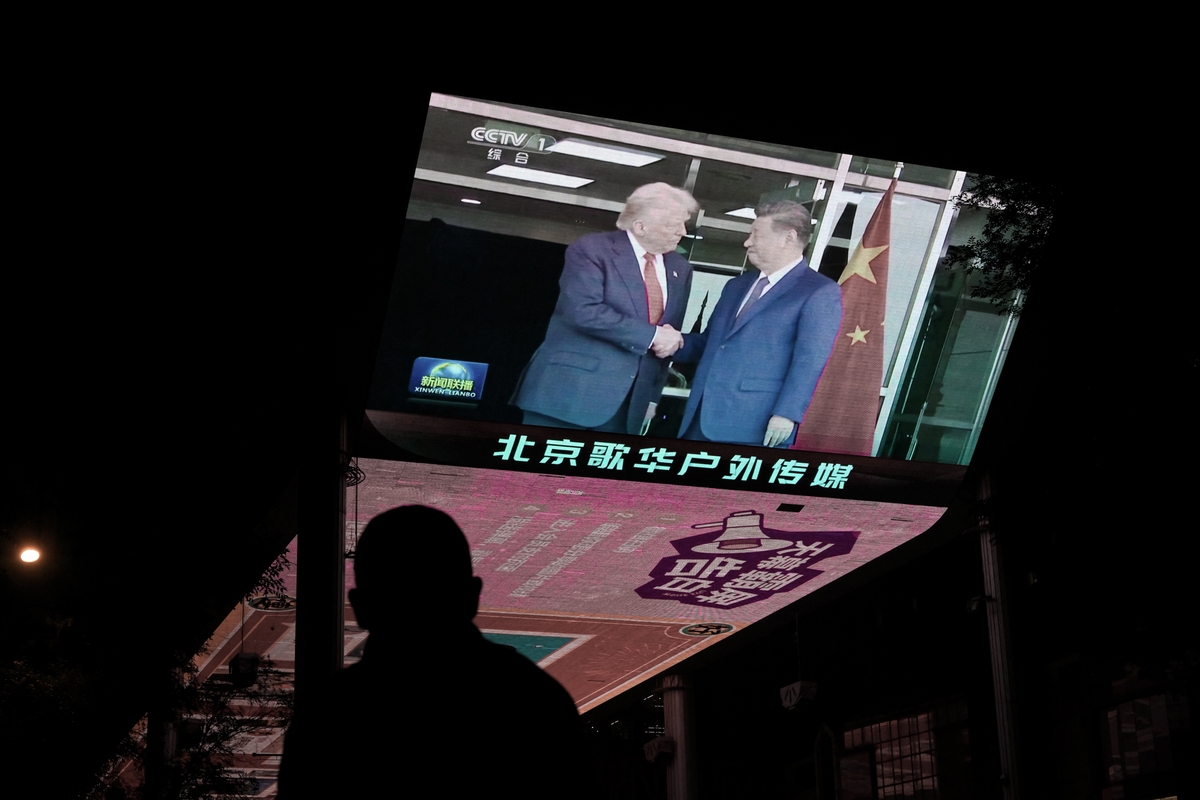
.
Television sales in China are dropping, and a top electronics executive says the decline may be more about the content on the screens than the hardware itself.
Growing Gap Between US and Chinese TV Markets
Li cited figures that highlight the contrast between the United States and China.In 2025, television sales in the United States reached 49.9 million units, a 1.6 percent increase from the previous year, according to Omdia’s TV Sets Forecast. In China, sales totaled 32.9 million units, down 8.5 percent from 2024, according to Chinese online media outlet Sina, citing data from RUNTO Tech.
When adjusted for population, the difference becomes even more pronounced. The United States sold roughly 146 televisions per 1,000 people, while China sold only about 23 per 1,000.
Li also highlighted the size of the entertainment industries in both countries: The U.S. film and TV sector produces roughly $620 billion annually, while China’s production is about 1.5 trillion yuan ($220 billion).
“In China, many people may only turn on their televisions a few times a year,” Li said. “This is not a hardware problem; it means the content simply isn’t attractive.”
U.S.-based Chinese current affairs commentator Wang He told The Epoch Times that Li’s assessment has merit.
“In many ways, China’s film and television cultural industry has actually declined compared to 10 or 20 years ago,” he said.
He largely blames increased political control over cultural production.
“The Chinese Communist Party’s political climate has shifted to the left, and regulation in all areas has become much stricter,” Wang said. “Many programs have been banned.”
In recent years, China’s stand-up comedians have faced penalties, leading to the suspension of some traditional comedy acts and to many popular reality talent shows that once dominated TV significantly diminishing. Additionally, China’s annual Lunar New Year gala—traditionally the most-watched live TV program—has been perceived by audiences as declining in quality, according to Wang.
In his view, the CCP has become more cautious about entertainment content that offers room for social commentary, resulting in the industry having “little vitality.”
As a result, audiences are gradually drifting away from television.
U.S.-based political economist Davy J. Wong agreed.
“The issue is the entire entertainment ecosystem,” Wong told The Epoch Times.
In the United States, strong TV demand is supported by a broad content supply chain, including Hollywood films, major sports leagues, streaming platforms, and a large advertising market, according to Wong. China’s entertainment options have become more limited in recent years, while regulatory oversight has increased.
Haves and Have-Nots
The gap in TV sales also reflects broader differences in household income and spending patterns.According to the International Monetary Fund (IMF), the United States has a per capita GDP of roughly $93,000, compared with about $15,000 in China, giving American households significantly greater purchasing power.
In the United States, televisions are often treated as upgrade products, with many households replacing them every three or four years, according to Wong. In China, televisions are still considered durable goods and are replaced far less frequently.
From a macroeconomic perspective, the television market also reflects structural problems in China’s consumer economy.
“For most people, income remains quite low,” he said.
“In China, those who have money can only consume so much, while the majority who want to spend simply don’t have the money,” Wang said.
U.S.-based Chinese economist Li Hengqing told The Epoch Times that despite China’s status as the world’s second-largest economy, wealth concentration remains extreme.
“The elite class has enormous wealth, while ordinary citizens are weighed down by housing, education, medical, and retirement costs,” Li said.
Under such conditions, even Chinese households with savings may hesitate to spend due to uncertainty about the future, according to Li.
That caution, the analysts say, is likely to weigh not only on television sales but on China’s broader efforts to revive domestic consumption.
What's Your Reaction?
 Like
0
Like
0
 Dislike
0
Dislike
0
 Love
0
Love
0
 Funny
0
Funny
0
 Wow
0
Wow
0
 Sad
0
Sad
0
 Angry
0
Angry
0












Comments (0)