

China's Silent Iron Curtain: How Beijing Is Cutting Off Its Own Officials From the Outside World
When a San Francisco resident — using a pseudonym for his own safety — returned to his hometown of Shijiazhuang in early March, he tried to meet up with a middle school friend who works for the local public security bureau. He sent three messages. No reply. He arranged a class reunion dinner. His friend said yes, then quietly backed out at the last minute. Phone calls went unanswered.

.
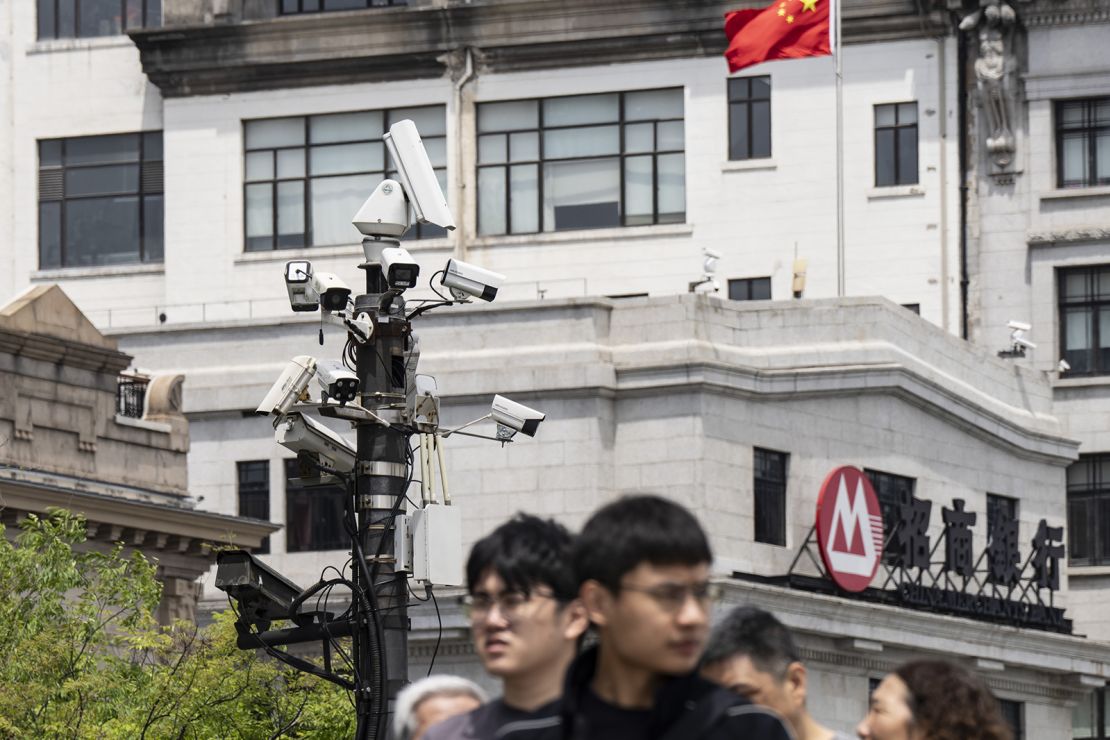
State employees across China are being ordered to sever ties with overseas friends and relatives — a sweeping social control campaign that reveals a regime growing increasingly paranoid about the information its own people carry.
.
A Knock at the Door That Never Comes
When a San Francisco resident — using a pseudonym for his own safety — returned to his hometown of Shijiazhuang in early March, he tried to meet up with a middle school friend who works for the local public security bureau. He sent three messages. No reply. He arranged a class reunion dinner. His friend said yes, then quietly backed out at the last minute. Phone calls went unanswered.
He later found out why: his friend had been required to seek prior approval from superiors before meeting anyone with an overseas background. The process involved submitting a background report on the person to be met — and if that person happened to be traveling from the United States, additional internal review was mandatory. The risk of meeting privately was simply too high.
"He did not dare meet with me," the San Francisco resident explained.
This is not an isolated story. Across China, a quiet but sweeping new form of social control is reshaping the daily lives of millions of state employees — and severing personal bonds that once crossed borders freely.
New Directives Target Police, Courts, and Prosecutors
Multiple insiders with direct knowledge of China's judicial system have described a wave of internal directives issued in early January 2025 across the public security, procuratorial, and judicial sectors of the People's Republic of China.
The directives are unambiguous: any contact involving individuals with overseas backgrounds is to be treated as a potential security risk. Employees are required to formally report such contact. In serious cases, complete severance of ties is mandated.
The primary concern, according to insiders, is the leakage of sensitive internal information. State employees working in law enforcement or the courts are privy to details about ongoing investigations — corruption cases, senior official purges, internal Party proceedings — that Beijing does not want escaping the country's tightly controlled information environment.
"When chatting with friends or family abroad, some people may inadvertently disclose internal details," one insider explained. "Including sensitive matters currently unfolding — such as the arrests of corrupt officials."
As a result, judicial employees are increasingly avoiding any informal meeting with old acquaintances returning to China from abroad, even when those acquaintances are lifelong friends.
The Surveillance Web Extends Beyond Security Forces
The restrictions are not limited to law enforcement and judicial workers. Chinese nationals living abroad who have recently returned for visits report running into the same invisible wall across multiple government sectors.
A British-based engineer — also using a pseudonym — described trying to meet a friend who holds a position in a ministry under China's State Council. The friend did not respond to a WeChat invitation. Instead, she borrowed a family member's phone to reach an intermediary, who relayed the message: due to the nature of her work, it would be "inconvenient to meet at this time."
"It's terrifying," the engineer said. "How has this regime become so paranoid? Are we on the brink of war? It's absolutely bizarre."
A former customs employee from Tianjin described a similar dynamic. When he tried to reconnect with a former colleague after returning from Australia, the colleague declined a dinner invitation and instead suggested a brief public encounter at a school entrance — in a location where surveillance cameras were present and the meeting could be explained away as a chance encounter.
The colleague had told him plainly: meeting in public, on camera, was safer. If supervisors ever inquired, it could be passed off as accidental.
The Legal Framework Behind the Crackdown
This is not a local or informal phenomenon. It is backed by a rapidly expanding body of national law.
China's revised Counter-Espionage Law, which came into force on July 1, 2023, dramatically broadened the legal definition of espionage. Where previous law focused narrowly on "state secrets and intelligence," the updated version covers all "documents, data, materials and articles concerning national security and interests" — a formulation so vague that legal experts have noted it could apply to virtually any information. The United States National Counterintelligence and Security Center warned at the time that the ambiguity creates potential legal risks not just for spies, but for journalists, academics, and ordinary professionals.
The law also expanded surveillance powers: national security agencies can now inspect electronic devices of suspects, compel telecommunications companies to hand over data, and impose exit bans on individuals deemed a potential risk.
In 2024, China went further. A revised state secrets law expanded protections to cover a new category called "work secrets" — broadly defined as any information whose leakage would cause "an adverse impact." Critics noted the formulation is sweeping enough to apply to almost any internal government communication.
Internal documents circulating within China's bureaucracy, obtained and reported by Chinese-language media, show that state employees across the country are now required to fill out a "Registration Form for Overseas Relatives' Information." Failure to report overseas contact can result in disciplinary action during political vetting — a process that can affect promotions, salary, and continued employment.
From Controlling Behavior to Controlling Relationships
Analysts who study the Chinese Communist Party's (CCP) administrative logic say this shift represents something qualitatively new.
For decades, the CCP's internal control mechanisms focused on what employees did in their official capacity — how they voted, what they said in Party meetings, whether they attended political study sessions. The new framework goes further: it maps and monitors the social networks of government employees, treating personal relationships as potential security vectors.
A veteran media professional in Tianjin described it this way: authorities are no longer solely concerned with what a state employee does at work. They have incorporated those employees' entire social and interpersonal networks into a risk assessment system. Every overseas connection — an old classmate, a cousin in Canada, a former professor in Germany — becomes a data point that must be logged and evaluated.
"This method of control is severing connections between those inside and outside the system," he noted. "It has also prompted many government employees to exercise greater caution in their daily social interactions — not just with foreigners, but with anyone who has lived abroad."
A Pattern Already Confirmed by Independent Reporting
This dynamic has been corroborated by major independent news organizations, underscoring that the phenomenon extends well beyond any single source.
Reporting by The New York Times, confirmed by multiple sources within China's civil service, described how state employees across the country have been required to surrender their passports to employers upon returning from overseas travel. In many cities, even personal trips abroad require prior approval. Some provinces have gone as far as disqualifying job applicants from civil service positions if they have a spouse or close relative who moved abroad.
A professor at City University of Hong Kong who studies China's civil service told the Times that many of these restrictions likely did not originate from a single central directive — but as the Party center's scrutiny of mid-level officials intensified, those officials began preemptively restricting their subordinates to avoid any potential source of trouble.
The Associated Press reported separately in early April 2025 that China has been tightening controls on its own overseas diplomatic personnel as well — barring promotions for civil servants whose spouses acquired foreign citizenship, and rotating diplomats home more frequently to prevent them from building relationships abroad.
What This Means for Overseas Chinese
For the millions of Chinese nationals who have settled abroad and who still have parents, siblings, or childhood friends in mainland China, the implications are significant and personal.
Visits home are no longer simply emotional reunions. They now carry the risk of placing the people left behind — the teachers, the police officers, the local government clerks — in a politically precarious position. Meeting an old friend who moved to Australia, or having dinner with a cousin from London, can trigger mandatory reporting requirements and internal review.
Some Chinese-Americans and Chinese-Europeans who have returned to visit family report that former close friends now simply go silent on messaging platforms, refuse phone calls, or invent reasons to avoid in-person meetings.
The social cost of Beijing's security architecture is being paid not just by dissidents or activists, but by ordinary people whose only transgression is having a connection to the world outside China's borders.
.
Sources
-
Associated Press — "US bans government personnel in China from romantic or sexual relations with Chinese citizens" (April 3, 2025): https://www.usnews.com/news/us/articles/2025-04-03/us-bans-government-personnel-in-china-from-romantic-or-sexual-relations-with-chinese-citizens
-
The New York Times / MCLC Resource Center — "China limits public employees' travel" (August 2025): https://u.osu.edu/mclc/2025/08/05/china-limits-public-employees-travel/
-
CNBC — "China doubles down on national security, expanding its state secrets law" (February 28, 2024): https://www.cnbc.com/amp/2024/02/28/china-doubles-down-on-national-security-expanding-its-state-secrets-law.html
-
Library of Congress — "China: Counterespionage Law Revised" (September 2023): https://www.loc.gov/item/global-legal-monitor/2023-09-21/china-counterespionage-law-revised/
-
Hogan Lovells — "China amends the Anti-Espionage Law" (May 2023): https://www.hoganlovells.com/en/publications/china-amends-the-anti-espionage-law
-
Human Rights Watch — Mass Surveillance in China (ongoing coverage): https://www.hrw.org/tag/mass-surveillance-china
-
CNN — "Exit bans in China: What are they and why are they causing friction with US?" (July 2025): https://www.cnn.com/2025/07/23/business/exit-bans-china-explainer-intl-hnk
.
What's Your Reaction?
 Like
2
Like
2
 Dislike
0
Dislike
0
 Love
1
Love
1
 Funny
0
Funny
0
 Wow
2
Wow
2
 Sad
0
Sad
0
 Angry
0
Angry
0














Comments (0)