

China Turns Up the Heat on Japan — and the Entire Indo-Pacific Is Watching
A soldier breaks into an embassy. A lawmaker gets sanctioned. New missiles get deployed. In just one week, the fault lines between Beijing and Tokyo cracked wider than they have in decades — and analysts say the danger of a serious miscalculation is growing.

.
A soldier breaks into an embassy. A lawmaker gets sanctioned. New missiles get deployed. In just one week, the fault lines between Beijing and Tokyo cracked wider than they have in decades — and analysts say the danger of a serious miscalculation is growing.
.
A Week of Escalation
The last week of March 2026 brought a rapid-fire sequence of diplomatic shocks between China and Japan.
On March 24, a 23-year-old officer of Japan's Ground Self-Defense Force (GSDF) scaled the fence of the Chinese Embassy in Tokyo and forced his way inside, carrying a knife. Japanese authorities confirmed his arrest on suspicion of trespass. According to Japanese media, the soldier wanted to confront the Chinese ambassador over Beijing's aggressive stance toward Japan — and threatened to take his own life if refused.
Beijing's reaction was swift and furious. China said it was "deeply shocked" and lodged a formal protest, accusing Japan of failing to properly manage its military personnel and protect Chinese diplomatic premises. When Japanese Defense Minister Shinjiro Koizumi described the incident as "deeply regrettable," Beijing dismissed the response as far from adequate.
Then, on March 30, China escalated further. Beijing imposed sanctions on Japanese lawmaker Keiji Furuya, a close aide to Prime Minister Sanae Takaichi, accusing him of "collusion with Taiwan independence forces." The sanctions ban Furuya from entering mainland China, Hong Kong, and Macau and prohibit contact with organizations and individuals there.
Japan's Deputy Chief Cabinet Secretary Masanao Ozaki called the move "absolutely unacceptable," saying China was acting as if to intimidate those who hold different views.
Who Is Keiji Furuya — and Why Does Beijing Care?
Furuya, 73, chairs the Japan-ROC Diet Members' Consultative Council, a cross-party parliamentary group dedicated to Japan-Taiwan relations. He has visited the self-ruled island many times, most recently on March 16, when he met Taiwanese President William Lai Ching-te in Taipei.
Taiwan's Deputy Minister of Foreign Affairs Chen Ming-chi called China's sanction "truly regrettable," warning that Beijing's reliance on intimidation could backfire.
Furuya himself was unfazed. He said he had not traveled to mainland China in decades and held no personal assets there, adding that "it is only natural" for parliamentary groups to promote exchanges between countries with shared values.
This is not Beijing's first move of this kind. China previously sanctioned China-born Japanese lawmaker Seki Hei for allegedly spreading false claims about Taiwan and disputed territories. Critics note that this earlier sanction had the unintended effect of raising Seki's public profile considerably — raising questions about how effective these punitive measures actually are.
The Roots of the Crisis
The current tensions trace back to November 2025, when Prime Minister Takaichi made a statement that broke with decades of Japanese diplomatic ambiguity. She said a hypothetical Chinese military action against Taiwan would amount to a "survival-threatening situation" for Japan that could justify the deployment of Japanese forces.
Beijing responded furiously. China's Ministry of Commerce placed 20 Japanese companies on an export control list in February 2026. The Chinese military stepped up exercises around Taiwan and Japan's southwestern island chain. Chinese state media signaled that Japan's "remilitarization" was becoming an official talking point in Beijing.
The embassy break-in and the Furuya sanctions are the latest chapters in what has become a prolonged, multi-front pressure campaign.
Japan Responds With Steel — Literally
Tokyo has not been standing still. On March 31, Japan crossed a milestone that would have been unthinkable just a few years ago.
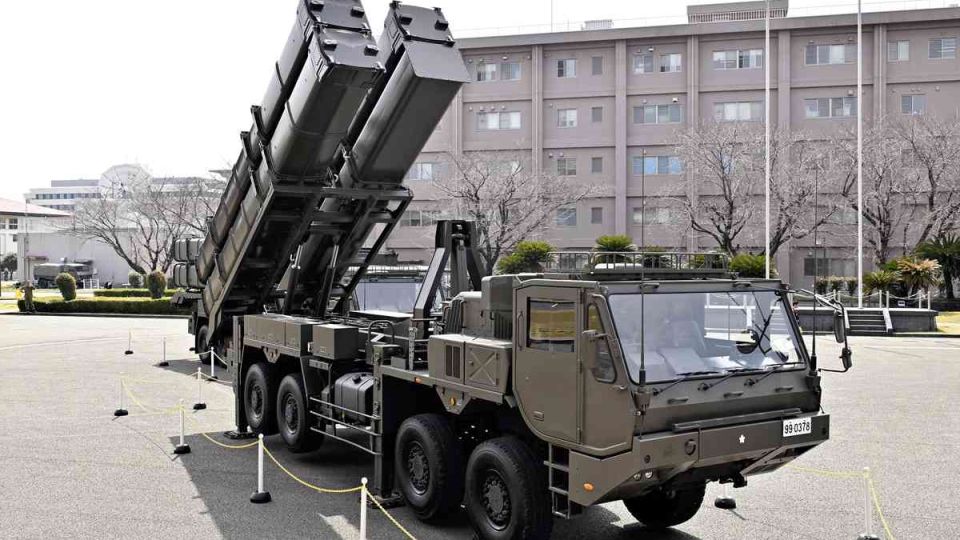
Japan's Defense Ministry deployed long-range missile systems for the first time, activating its counterstrike capability. Upgraded Type-12 surface-to-ship missiles with a range of approximately 1,000 kilometers were stationed at Camp Kengun in Kumamoto Prefecture, while Hyper Velocity Gliding Projectiles — which travel at supersonic speeds on irregular trajectories, making them difficult to intercept — were deployed at Camp Fuji in Shizuoka Prefecture.
From Kumamoto, the missile's range extends across much of East Asia, potentially reaching large portions of North Korea and parts of China's eastern coastline.
The deployment was moved forward by one full year, reflecting the urgency Tokyo feels as Chinese military activity around Japan's islands and near Taiwan intensifies.
The move sparked protests near Camp Kengun, where residents expressed concern about their region becoming a potential military target. Local officials also criticized the government for failing to notify them in advance.
A Strategy of Sustained Pressure
Analysts say Beijing is not pursuing a single dramatic confrontation — it is playing a longer game.
Security experts describe a deliberate pattern of overlapping pressure: targeted political sanctions, export controls on key industries, increased coast guard and naval activity near the disputed Senkaku Islands in the East China Sea, and sustained diplomatic friction. Each step is calibrated to raise costs for Tokyo without crossing into open military confrontation.
Experts warn this approach is reshaping the broader security environment across the Indo-Pacific. Countries that once relied heavily on trade ties with China are accelerating what economists call "de-risking" — reducing their economic dependence on Beijing, which has shown a willingness to weaponize trade relationships.
The Senkaku Islands remain a particular flashpoint. Administered by Japan but claimed by both China and Taiwan, the islands have seen a consistent pattern of Chinese coast guard vessels operating in surrounding waters — a low-level provocation that never quite crosses a line, but keeps pressure steadily applied.
The Danger of Miscalculation
What worries analysts most is not a single dramatic incident, but the accumulation of smaller ones.
When every diplomatic interaction becomes a potential flashpoint, when military deployments accelerate on both sides, and when political rhetoric leaves less and less room for compromise, the threshold for escalation becomes blurry. A misread signal — a vessel too close to contested waters, a military exercise interpreted as preparation for something more — could trigger a response that neither side actually wanted.
The upcoming diplomatic calendar adds another layer of complexity. The APEC summit is scheduled for November in Shenzhen, China. If Beijing fails to find a way to de-escalate with Tokyo before then, hosting a major international gathering in the shadow of a bilateral crisis could become a serious embarrassment for Xi Jinping.
For now, Japan is signaling that it intends to build the strongest possible deterrence along its archipelago while deepening security ties with like-minded partners across the region. China is signaling that it will not ease pressure as long as Japan continues to engage with Taiwan and expand its military posture.
Both signals are becoming harder to reconcile — and that, experts say, is precisely the problem.
.
Sources
- Reuters — China sanctions aide of Japan PM Takaichi for Taiwan ties (March 30, 2026): https://www.usnews.com/news/world/articles/2026-03-29/china-sanctions-aide-of-japan-pm-takaichi-for-taiwan-ties
- AP / ABC News — China sanctions Japanese lawmaker, Japan calls it "unacceptable" (March 30, 2026): https://abcnews.com/International/wireStory/china-sanctions-japanese-lawmaker-close-takaichi-ties-taiwan-131533711
- South China Morning Post — Beijing sanctions Japanese lawmaker for "colluding with Taiwan independence forces" (March 30, 2026): https://www.scmp.com/news/china/diplomacy/article/3348343/beijing-sanctions-japanese-lawmaker-colluding-taiwan-independence-forces
- AP / ABC News — China protests to Japan over embassy break-in (March 25, 2026): https://abcnews.com/International/wireStory/china-protests-japan-alleged-break-embassy-tokyo-131355285
- The Diplomat — Japan will begin deploying homegrown longer-range missiles (March 2026): https://thediplomat.com/2026/03/japan-will-begin-deploying-homegrown-longer-range-missiles-as-counterstrike-strategy-takes-shape/
- Japan Times — Japan's counterstrike capability takes shape with missile deployments (March 31, 2026): https://www.japantimes.co.jp/news/2026/03/31/japan/japan-sdf-missiles-counterstrike/
- Semafor — Japan, China tensions flare over embassy break-in (March 25, 2026): https://www.semafor.com/article/03/25/2026/japan-china-tensions-flare-over-embassy-break-in
- Wikipedia — 2025–2026 China–Japan diplomatic crisis (ongoing): https://en.wikipedia.org/wiki/2025%E2%80%932026_China%E2%80%93Japan_diplomatic_crisis
.
What's Your Reaction?
 Like
0
Like
0
 Dislike
0
Dislike
0
 Love
0
Love
0
 Funny
0
Funny
0
 Wow
0
Wow
0
 Sad
0
Sad
0
 Angry
0
Angry
0














Comments (0)