

China Detains Two Japanese Nationals Over Alleged Rare Earth Smuggling
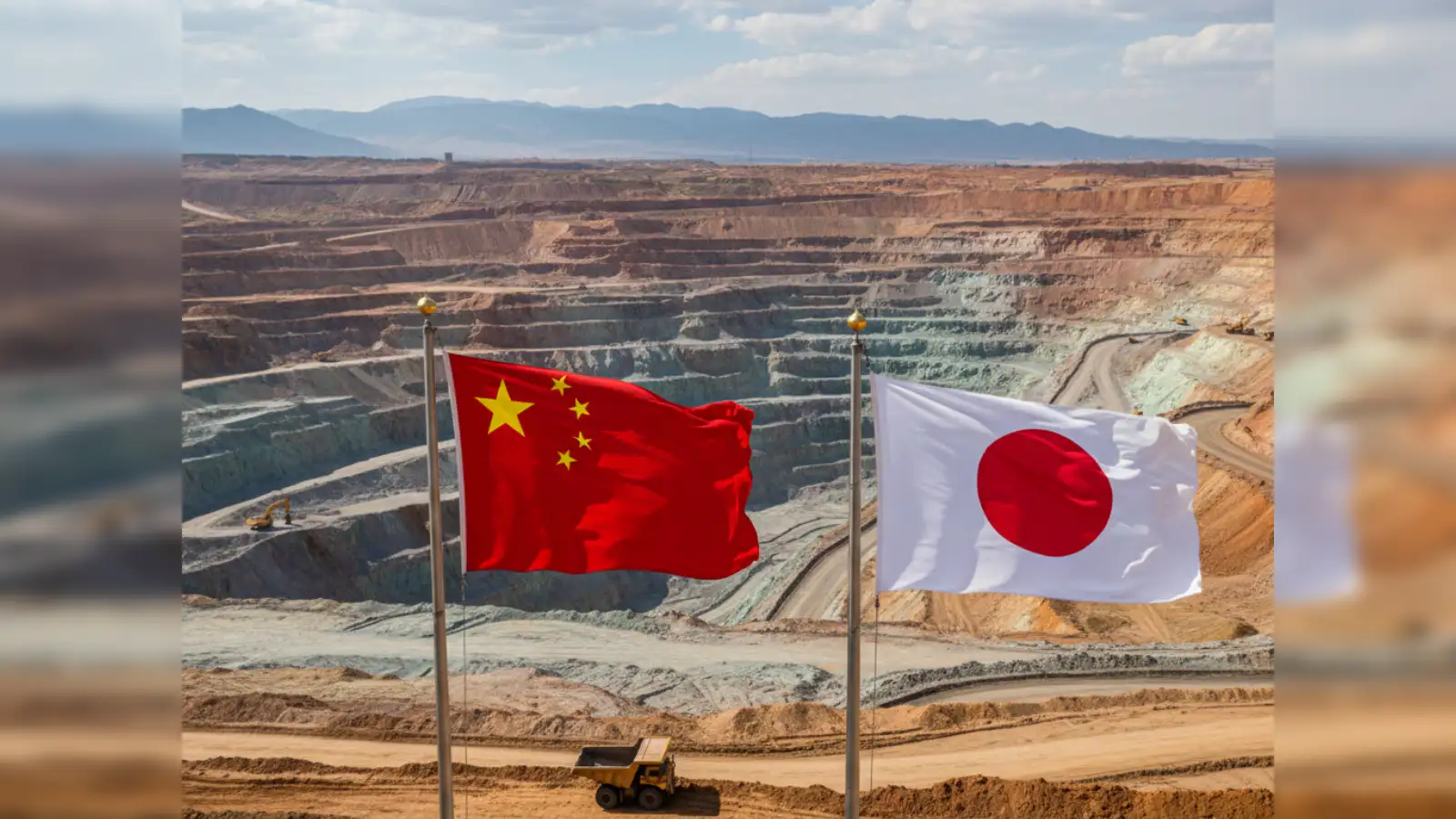
Two employees of a major Japanese machinery company were detained in China in May on suspicion of smuggling restricted materials — reportedly linked to rare earths. The case is the latest flashpoint in rapidly deteriorating relations between Asia's two biggest economies.

.
What Happened
Japan's Chief Cabinet Secretary Minoru Kihara confirmed on Wednesday that China has detained two Japanese citizens in the northeastern port city of Dalian. One was detained on May 18, the other on May 25 — both on the same charges of smuggling goods subject to export restrictions.
Local media reported that the goods allegedly smuggled were rare earth-related products, and that one of the detainees is an employee of a major Japanese electronics and machinery firm.
Kihara said both men are in good health. Japanese authorities declined to name the individuals or share further details, citing privacy concerns and the ongoing investigation.
Beijing Responds with a Warning
China's Foreign Ministry confirmed the detentions but offered little transparency. Spokesperson Guo Jiakun said the two were held in accordance with Chinese law — and used the occasion to issue a pointed message.
"We would like to emphasize that the Japanese side should educate and remind Japanese citizens and companies in China to abide by Chinese laws and regulations," Guo said at a daily briefing.
The statement was widely read as a warning to Japanese businesses operating inside China.
.
Rare Earths at the Center
Rare earths are a group of 17 metallic elements essential for modern technology — from electric vehicles and smartphones to military hardware and semiconductors. China dominates global supply.
China accounts for more than 60% of global rare earth mining and roughly 90% of global processing capacity, giving Beijing enormous leverage over manufacturing supply chains worldwide.
China's spy agency had previously stated that foreign agents were attempting to steal rare earth materials, and pledged a crackdown on smuggling attempts. The detention of the two Japanese nationals fits directly into that declared enforcement posture.
.
A Relationship in Freefall
The arrests come at a moment of severe strain between Tokyo and Beijing. The trigger was a statement by Japanese Prime Minister Sanae Takaichi late last year.
Takaichi stated in parliament that a Chinese attack on Taiwan could constitute an "existential threat" to Japan — potentially justifying a military response. The comment infuriated Beijing.
In response, China targeted Japan with new export restrictions on dual-use technologies in January, including rare earth elements, permanent magnets, and other critical minerals used in defense production. A Chinese Foreign Ministry spokesperson later stated publicly that the restrictions were intended to prevent what Beijing described as Japan's remilitarization.
Since then, China has choked off supplies of certain key minerals to Tokyo, cancelled trade and cultural events, and ordered its citizens not to travel to Japan.
.
Japan Is Not Powerless — But It's Exposed
The current episode is not the first time Chinese authorities have detained Japanese nationals. A high-profile case ended last year with an employee of pharmaceutical company Astellas Pharma receiving a three-and-a-half-year prison sentence on espionage charges — reinforcing the sense among Japanese firms that legal risk in China can escalate rapidly and with little public explanation.
For executives with operations in China, the message is not only commercial but personal: nationals who travel, manage supply chains, or oversee cross-border logistics can become exposed when bilateral relations harden.
At the same time, Japan is actively working to reduce its dependence on Chinese rare earths. Prime Minister Takaichi proposed closer coordination on critical mineral stockpiles at last week's G7 summit, an initiative reflected in the summit's joint communiqué.
Japan has also begun trial mining of rare earth-rich seafloor sediments near Minamitorishima — a site believed to hold one of the largest rare earth deposits in the world — as part of a state-backed program to build strategic independence from Chinese supply.
.
Outlook
The detained Japanese nationals remain in custody in China, with diplomatic channels open but limited in their reach. Tokyo's realistic options are narrow: consular contact, quiet diplomatic pressure, and little real leverage over a process that remains opaque to outside observers.
With Sino-Japanese relations at a modern low — and rare earths now firmly a geopolitical instrument — the arrests signal that Beijing is willing to use individual detentions as part of its broader pressure campaign. Whether the two men will face formal charges or be used as diplomatic leverage remains to be seen.
.
Sources
- AP News – Japan says China has detained 2 of its citizens suspected of smuggling banned items: https://apnews.com/article/japan-china-detention-rare-earths-41c4dea2bbda6e7ab6cb3d556ee902af
- Japan Times – Two Japanese nationals detained in China on suspicion of smuggling export-restricted goods: https://www.japantimes.co.jp/news/2026/06/24/japan/china-japanese-nationals-detain-rare-earths/
- CNBC – China detains two Japanese nationals suspected of smuggling banned goods: https://www.cnbc.com/amp/2026/06/24/china-detains-2-japanese-nationals-suspected-of-smuggling-banned-goods.html
- South China Morning Post – 2 Japanese held in China over alleged rare earths smuggling: https://www.scmp.com/news/china/diplomacy/article/3358187/2-japanese-held-china-over-alleged-rare-earths-smuggling
- CSIS – China's Rare Earth Campaign Against Japan: https://www.csis.org/analysis/chinas-rare-earth-campaign-against-japan
.
What's Your Reaction?
 Like
0
Like
0
 Dislike
0
Dislike
0
 Love
0
Love
0
 Funny
0
Funny
0
 Wow
0
Wow
0
 Sad
0
Sad
0
 Angry
0
Angry
0











Comments (0)