

Bessent: US Considering Export Controls on Software to China


.
“I will confirm that everything is on the table, that we are going into the negotiations with good intentions [and] with great respect,” Bessent told White House reporters during a press briefing.
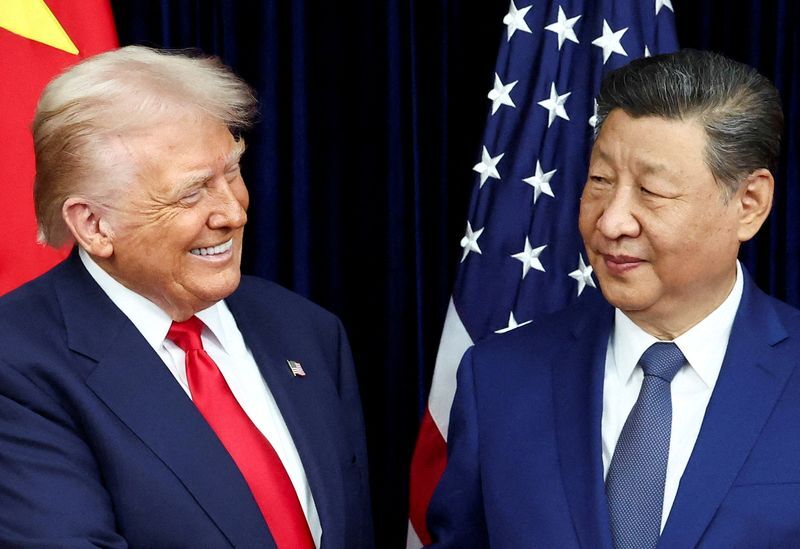
President Donald Trump first raised the possibility of restricting China’s access to critical software after the Chinese regime announced it would be widely restricting its export of products containing rare earths mined or processed in China. That move is expected to be highly disruptive to many industries, as China accounts for more than 90 percent of the processing of rare earths.
Bessent said that if Beijing does not roll back the latest restriction, retaliation would come not just from the United States but from global allies.
“The Chinese have put these rare earth export controls not only on the U.S. but on the whole world,” Bessent said. “If these export controls, whether it is software, engines, or other things happen, it will likely be in coordination with our G7 allies.”
U.S. companies have a monopoly on a wide range of software. The Chinese regime is aware of this strategic leverage and has urged its domestic tech industry to build out replacements.
Trump has also raised the possibility of restricting China’s access to aircraft engines, where U.S. companies dominate the market.
China is currently covered by 55 percent tariffs on goods it exports to the United States and would see that increase to 155 percent on Nov. 1 unless Beijing changes its rare earths policy.
“The tariffs are a lot more powerful than the rare earth [controls],” Trump told reporters during a White House briefing on Oct. 22.
He said he has received several calls related to rare earths supply.
The U.S. president has expressed optimism that the two countries can strike a “fantastic” deal. He said he expects China to commit to soybean purchases and do its part in the fentanyl crisis by curbing precursor exports, and lowering tariffs would be contingent on these commitments.
Trump suggested the Chinese economy cannot continue to bear the high tariffs.
“They’re paying an unbelievable amount of money to the United States,” he said. “They probably can’t pay that much, and I’m OK with that. We can lower that, but they have to do things for us, too.
“I want to help China ... but they have to give us things, too.”
.
What's Your Reaction?
 Like
0
Like
0
 Dislike
0
Dislike
0
 Love
0
Love
0
 Funny
0
Funny
0
 Wow
0
Wow
0
 Sad
0
Sad
0
 Angry
0
Angry
0















Comments (0)