

Bessent in Paris: Washington Turns Up Pressure on China and Iran
U.S. Treasury Secretary Scott Bessent used a high-profile G7 finance meeting in Paris to send clear signals on two fronts: Washington is in no hurry to renew its trade truce with Beijing, and the United States expects its allies to join a tougher crackdown on Iran's financial networks.


.
The Stage: G7 Finance Meeting in Paris
On the sidelines of the G7 finance leaders' meeting in Paris on Tuesday, U.S. Treasury Secretary Scott Bessent sat down with reporters and covered a lot of ground. His remarks touched on two issues that will shape global economic security in the months ahead: trade relations with China and the international effort to choke off Iran's access to money.
The timing was deliberate. With a critical trade deadline approaching and Iran under intensifying pressure, Bessent used the Paris gathering to send coordinated messages to both allies and adversaries.
China Trade Truce: No Rush to Renew
The 90-day tariff truce between the United States and China, agreed in May 2026, is set to expire in November. Many observers had expected Washington to seek an early extension. Bessent made clear that is not the plan.
"We're not in a rush to extend it," Bessent told Reuters. "Things are stable."
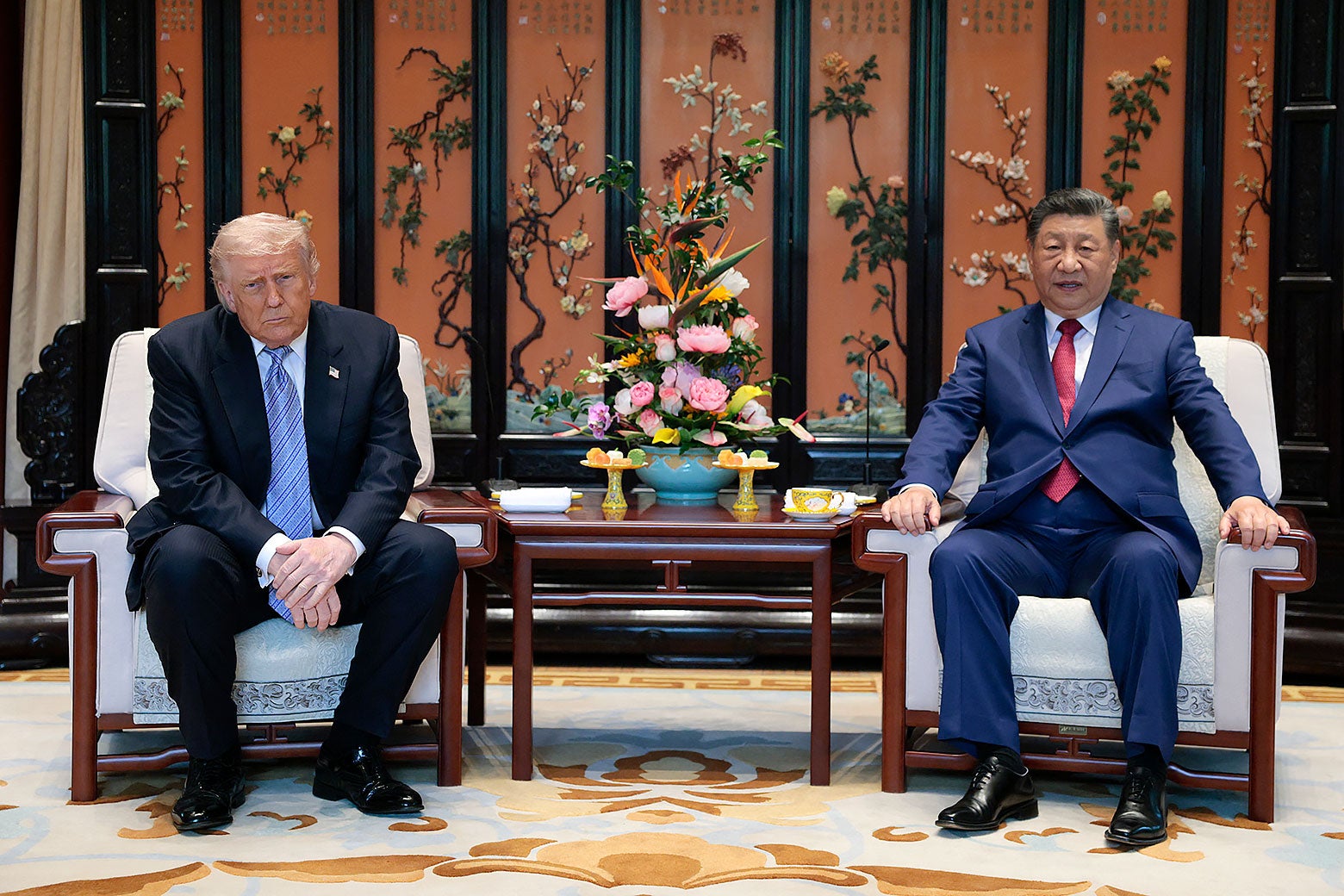
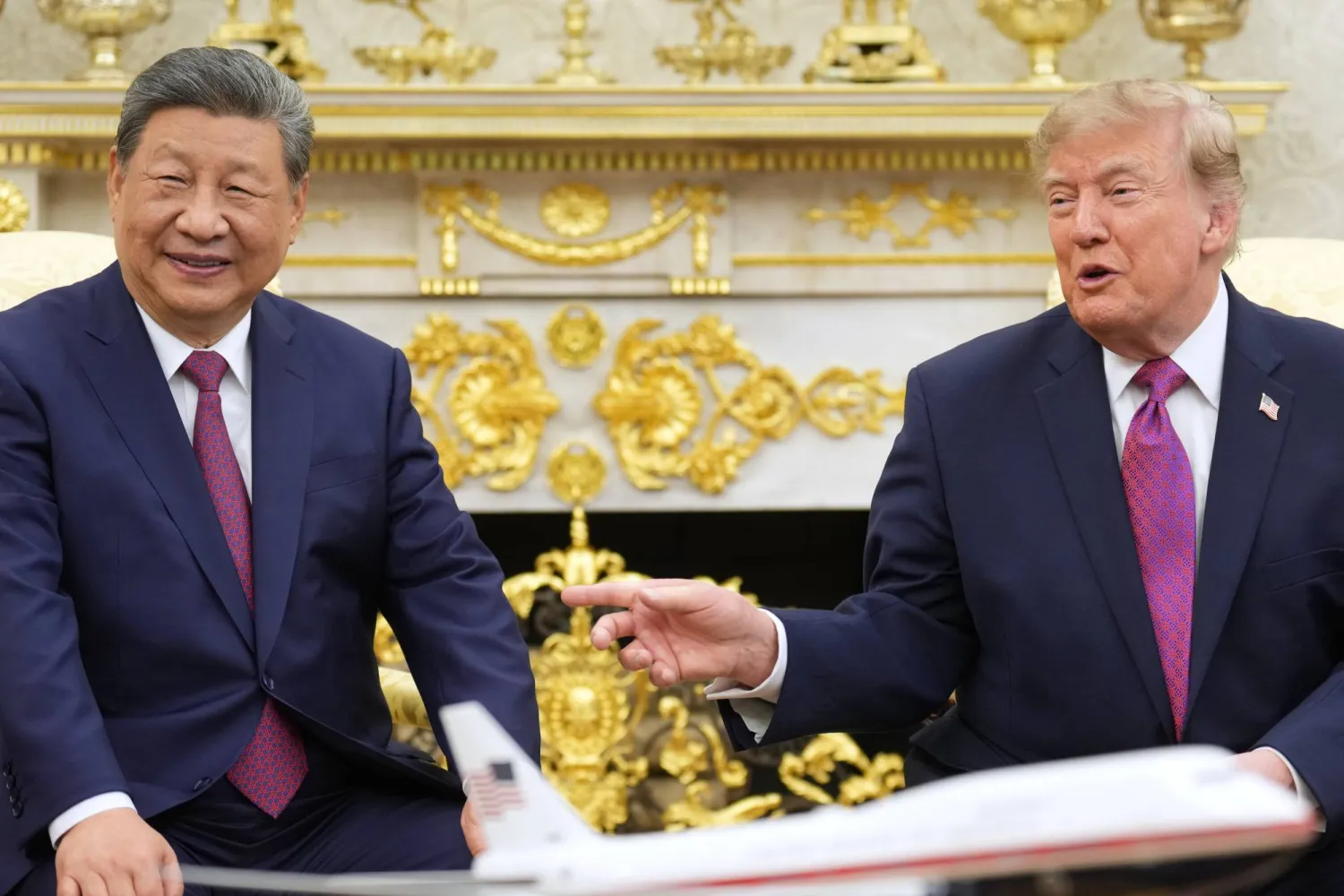
He added that he intends to meet with his Chinese counterpart, Vice Premier He Lifeng, ahead of a planned summit in September — when Chinese President Xi Jinping is expected to visit the White House to meet President Donald Trump. Those meetings, Bessent indicated, will be the appropriate venue to work out the next steps.
Critical Minerals: China Falls Short
On the sensitive issue of critical minerals — the raw materials essential for semiconductors, batteries, and defense technology — Bessent offered a measured but pointed assessment. China's compliance with its side of the agreement, he said, has been "satisfactory, but not excellent."
Beijing had restricted exports of certain rare earth elements and minerals earlier this year, a move widely seen as economic leverage in trade negotiations. Bessent's language suggests Washington is keeping score.
The Supreme Court Factor
There is another layer to this story. The U.S. Supreme Court recently struck down the broad emergency tariffs that the Trump administration had imposed globally. As a result, China has effectively benefited from lower tariff rates — a development Bessent described bluntly: Beijing "got a deal" it did not negotiate.
Bessent said he believes China will accept the reinstatement of prior tariff levels through a separate legal mechanism (Section 301 duties, which are trade penalties authorized under U.S. law), as long as the rates do not increase beyond what they were before. That is a narrow but significant assurance.
Iran: "Stand With Us in Full Measure"
Separately, Bessent addressed a conference on anti-terrorism financing held in Paris following the G7 session. His message to European, Middle Eastern, and Asian partners was unambiguous: do more to cut off Iran's money.
"That will require our European partners to join the United States in taking action against Iran," Bessent said in prepared remarks — calling specifically for partners to identify and designate Iran's financial backers, expose shell companies, shut down Iranian-linked bank branches, and dismantle what he called Iran's "proxies."
For partners in the Middle East and Asia, he called for rooting out Iran's "shadow banking networks" — the informal and often opaque financial channels the regime uses to move money around international sanctions.
"Economic Fury": Half a Billion Frozen
The Trump administration has branded its financial offensive against Iran "Economic Fury." The program has already frozen nearly $500 million worth of cryptocurrency linked to the Iranian regime — a sign that sanctions enforcement is now extending well beyond traditional banking.
Washington is simultaneously pressuring Tehran over the Strait of Hormuz, the critical waterway through which a significant share of the world's oil passes. Access to the strait was disrupted following U.S.-Israeli military strikes on Iran, and the administration wants it reopened.
Modernizing the Sanctions Toolbox
Bessent also announced that the Treasury Department will conduct a thorough review of its sanctions list — a vast database containing tens of thousands of individuals, companies, and entities that are cut off from the global dollar-based financial system.
The reason: the list has grown so large that it may actually be counterproductive. Financial institutions face difficulty distinguishing between low-risk, outdated entries and the most dangerous active threats.
"Our adversaries adapt and innovate," Bessent said, explaining the need to modernize. He emphasized that sanctions are a tool meant to change behavior, not to punish entire populations — and that designations left in place indefinitely without measurable results can have "generational impacts that are nearly impossible to predict."
He pointed to recent decisions to ease sanctions on Syria and Venezuela following political transitions in those countries as examples of how the administration intends to use sanctions more strategically — tightening where necessary, lifting where justified.
Outlook
The dual messaging from Paris reflects the Trump administration's broader approach: keep economic pressure high, but stay flexible on timing and negotiation. On China, Washington appears confident enough in the current stability to let the November deadline approach without urgency. On Iran, the administration is pushing harder than ever — and calling on the rest of the world to match its pace.
Whether allies in Europe, the Middle East, and Asia will respond as Bessent demands remains to be seen.
.
Sources:
- Reuters – "US not in hurry to extend China trade truce, Bessent says" (May 19, 2026): https://www.reuters.com/world/china/us-not-hurry-extend-china-trade-truce-bessent-says-2026-05-19/
- Reuters – "Bessent urges more disruption to Iran's financing, will review US sanctions list" (May 19, 2026): https://www.reuters.com/business/finance/bessent-urges-more-disruption-irans-financing-will-review-us-sanctions-list-2026-05-19/
- U.S. Department of the Treasury – Sanctions Programs and Country Information: https://ofac.treasury.gov/sanctions-programs-and-country-information
- Office of the United States Trade Representative – Section 301 Overview: https://ustr.gov/issue-areas/enforcement/section-301-investigations
.
What's Your Reaction?
 Like
0
Like
0
 Dislike
0
Dislike
0
 Love
0
Love
0
 Funny
0
Funny
0
 Wow
0
Wow
0
 Sad
0
Sad
0
 Angry
0
Angry
0










Comments (0)