

"Killed to Order": The Dark Truth About China's Industrial-Scale Organ Harvesting

.
A new book pulls together two decades of evidence pointing to one of the most disturbing crimes of our era — the systematic killing of prisoners of conscience so their organs can be sold on demand.
A Crime Too Horrifying to Believe
When journalist and senior editor Jan Jekielek first encountered the evidence, his reaction was instinctive and deeply human.
"When I first heard about it, I didn't want to believe it. I just felt revulsion," he said recently in a widely viewed interview. "I already knew what the Chinese Communist Party was capable of, broadly, but I didn't want to accept that this could be happening, because it's so extreme."
His new book — Killed to Order: China's Organ Harvesting Industry and the True Nature of America's Biggest Adversary — is the result of years spent wrestling with that revulsion and forcing himself to follow the evidence wherever it led. It launched in March 2026 and represents the most comprehensive single volume yet assembled on a crime that governments and international bodies have increasingly confirmed is real — and ongoing.
How It Began: A Spiritual Practice Becomes a Target
To understand how China built a transplant industry on the bodies of its own citizens, you have to understand one policy decision made in 1999.
Falun Gong — also known as Falun Dafa — is a peaceful spiritual practice rooted in the principles of truthfulness, compassion, and tolerance. By the late 1990s, an estimated one in thirteen Chinese citizens had taken it up. Then-CCP leader Jiang Zemin, alarmed by its popularity, ordered its eradication overnight — branding practitioners enemies of the state and sending millions into the detention system.
After a peaceful gathering of 10,000 Falun Gong followers in April 1999, the government banned the movement, declaring it an "evil cult." Thousands of practitioners were imprisoned and sentenced to labor camps, where many faced torture and died in custody — while others were, according to investigators, killed by medical professionals for their vital organs.
What made this population particularly valuable to the CCP's growing transplant system was their health: practitioners, who follow strict physical and moral disciplines, typically arrive in detention in excellent physical condition.
The Numbers That Don't Add Up
The first serious alarm bells rang in the early 2000s, when China's organ transplant industry began growing at an extraordinary — and medically inexplicable — rate.
In 2016, investigators David Matas, David Kilgour, and journalist Ethan Gutmann published an exhaustive report concluding that it is likely between 60,000 and 100,000 organ transplants had been conducted per year in China since 2000 — and that Falun Gong practitioners were the main source of organs. For comparison, the United States — a country with four times China's registered organ donors and a well-developed voluntary donation system — recorded a record high of just over 48,000 transplants in 2024.
Congressional findings note that China claimed more than 900,000 registered organ donors by early 2019, with data showing 5,818 actual donors and 19,454 transplants that year — a donor-to-transplant ratio 44 times higher than observed in comparable countries like the United States, United Kingdom, and Canada. Put simply: the math does not work unless thousands of donors were not donors at all.
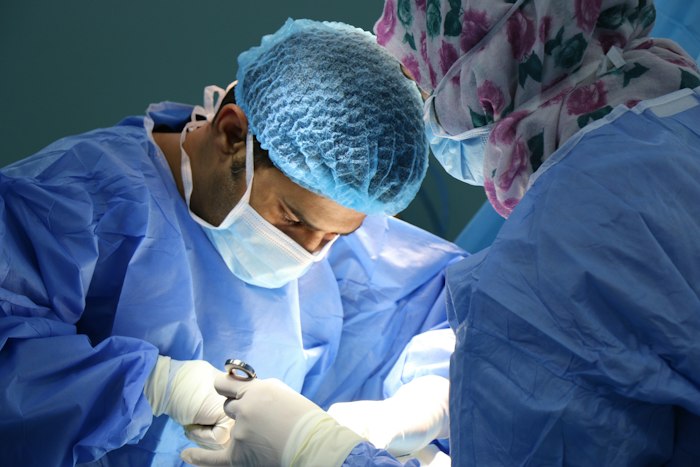
In the early 2000s, reports began emerging from detained Falun Gong practitioners who had received unexplained injections and undergone blood tests while imprisoned. The purpose became clear in 2006, when a whistleblower disclosed that her ex-husband — a surgeon — had performed operations to remove the corneas of living prisoners of conscience.
An Independent Court Delivers Its Verdict
The question of whether this evidence met a legal threshold of proof was addressed head-on by a landmark independent investigation.
The China Tribunal — the Independent Tribunal into Forced Organ Harvesting from Prisoners of Conscience in China — issued its final judgment in March 2020, concluding that forced organ harvesting has been committed for years throughout China on a significant scale and continues to this day. It found that Falun Gong practitioners have been one — and probably the main — source of organ supply, and that crimes against humanity against both Falun Gong practitioners and Uyghurs have been proven beyond reasonable doubt.
The Tribunal examined extensive written evidence and interviewed more than 50 witnesses over a twelve-month period. It was led by Sir Geoffrey Nice, the British barrister who prosecuted former Yugoslav president Slobodan Milošević at the International Criminal Tribunal.
The verdict was unambiguous. The response from Beijing was equally predictable: denial.
The Uyghur Dimension
As investigators dug deeper, a second victim group came into focus.
In June 2021, United Nations human rights experts said they were extremely alarmed by credible information that detainees from ethnic, linguistic, and religious minorities — including Falun Gong practitioners, Uyghurs, Tibetans, Muslims, and Christians — may be forcibly subjected to blood tests and organ examinations without their informed consent, with results registered in a database of living organ sources to facilitate organ allocation.
The European Parliament noted with alarm that Chinese transplant centers had advertised so-called "halal organs" from Uyghur and Muslim minorities — specifically targeting buyers in Gulf Region countries. This is the global market that Jekielek refers to in his book: a two-tiered industrial system that matches buyers with victims based on organ compatibility, ethnicity, and religion — and kills on demand.
Testimony before the U.S. Congressional-Executive Commission on China revealed that a twenty-minute drive from large re-education camps in Xinjiang leads to an airport equipped with a dedicated "Human Organ Transport Channel" — a fast lane for exporting organs. Liver transplants at a designated hospital in Zhejiang Province reportedly increased by 90 percent in 2017, while kidney transplants rose by 200 percent.
An Industrial System — Not a Rogue Operation
One of the key arguments in Killed to Order — and one supported by the weight of available evidence — is that what is happening in China is not the work of rogue surgeons or corrupt officials acting alone. It is a state-organized system operating at industrial scale.
The U.S. Tom Lantos Human Rights Commission confirmed that China's transplant system does not comply with the majority of World Health Organization guidelines — with organs reported to be primarily sourced from prisoners without voluntary consent, traded for payment, with minimal transparency, and no access permitted for independent verification.
The Chair of the Congressional-Executive Commission on China described forced organ harvesting on an industrial scale in China as "an atrocity unmatched in its wickedness," adding that "state-sanctioned forced organ harvesting in China amounts to crimes against humanity."
Before a surgeon ever picks up a scalpel, thousands of people must participate in the process: prison administrators, medical testers, database managers, logistics coordinators, transplant nurses, and hospital executives. This is not a crime of opportunity. It is a crime of system.
Why the World Has Been Slow to Act
Despite the volume and credibility of evidence accumulated over two decades, the international response has remained fragmented and largely ineffective. Why?
Part of the answer lies in the nature of the crime itself. It is almost too extreme to accept. When asked in a documentary why this issue lacks attention in the media, a Falun Gong practitioner explained: "This is a new form of evil. When there's a new form of evil, people don't want to accept it."
Part of the answer also lies in economics. China is a major trading partner for most Western countries, a manufacturer of essential medical equipment, and deeply embedded in global pharmaceutical and biotechnology supply chains. Testimony before Congress highlighted the complicity of the U.S. business and medical communities — including companies selling DNA profiling kits used specifically to identify and match the organs of Uyghur and Tibetan ethnic minorities.
And part of the answer lies in the CCP's extraordinary capacity for concealment. No independent investigators are permitted inside China's transplant system. Data is manipulated. Witnesses are imprisoned, silenced, or discredited.
The Book — and the Moment
Killed to Order arrives at a moment when legislative pressure is finally beginning to build. The Stop Forced Organ Harvesting Act, introduced in both the U.S. House and Senate, would impose sanctions on individuals responsible for organ trafficking, prohibit the export of transplant devices to implicated entities, and mandate reporting on organ trafficking in foreign countries.
The European Parliament has called for a full, independent investigation and urged member states to prosecute those found to have engaged in these practices.
Whether any of this translates into meaningful accountability remains to be seen. What Jekielek's book does — and what the evidence accumulated over twenty years demands — is make ignorance increasingly difficult to justify.
The crime continues. The victims have names, faiths, and families. And the only thing standing between them and the operating table is the world's willingness to look.
.
Sources:
- United Nations Office of the High Commissioner for Human Rights – "China: UN Human Rights Experts Alarmed by Organ Harvesting Allegations" (June 2021): https://www.ohchr.org/en/press-releases/2021/06/china-un-human-rights-experts-alarmed-organ-harvesting-allegations
- European Parliament – Motion for a Resolution on Organ Harvesting in China (2022): https://www.europarl.europa.eu/doceo/document/B-9-2022-0251_EN.html
- U.S. Tom Lantos Human Rights Commission – "Forced Organ Harvesting in China: Examining the Evidence": https://humanrightscommission.house.gov/events/hearings/forced-organ-harvesting-china-examining-evidence
- U.S. Congressional-Executive Commission on China – "Stopping the Crime of Organ Harvesting": https://www.cecc.gov/media-center/press-releases/hearing-examines-the-crime-of-forced-organ-harvesting-in-china
- U.S. Congress – Stop Forced Organ Harvesting Act (H.R.6319): https://www.congress.gov/117/bills/hr6319/BILLS-117hr6319ih.htm
- McCain Institute – "Uncovering Evil: Illegal Organ Harvesting in China and the 2025 Stop Forced Organ Harvesting Act": https://www.mccaininstitute.org/resources/blog/uncovering-evil-illegal-organ-harvesting-in-china-and-the-2025-stop-forced-organ-harvesting-act/
- International Bar Association – "Organ Trafficking: China Tribunal Finds Evidence of Forced Harvesting Crimes": https://www.ibanet.org/article/0D8860DC-A94D-4E9B-80AE-46FAB2902879
- Wikipedia – "Forced Organ Harvesting from Falun Gong Practitioners in China": https://en.wikipedia.org/wiki/Forced_organ_harvesting_from_Falun_Gong_practitioners_in_China
- World Without Genocide – "Forced Organ Harvesting": https://worldwithoutgenocide.org/genocides-and-conflicts/genocide-of-the-uyghurs-in-western-china/forced-organ-harvesting
.
What's Your Reaction?
 Like
0
Like
0
 Dislike
0
Dislike
0
 Love
0
Love
0
 Funny
0
Funny
0
 Wow
0
Wow
0
 Sad
0
Sad
0
 Angry
0
Angry
0











Comments (0)