

Your Kidneys Do Far More Than Filter Blood — And Scientists Are Just Beginning to Understand How
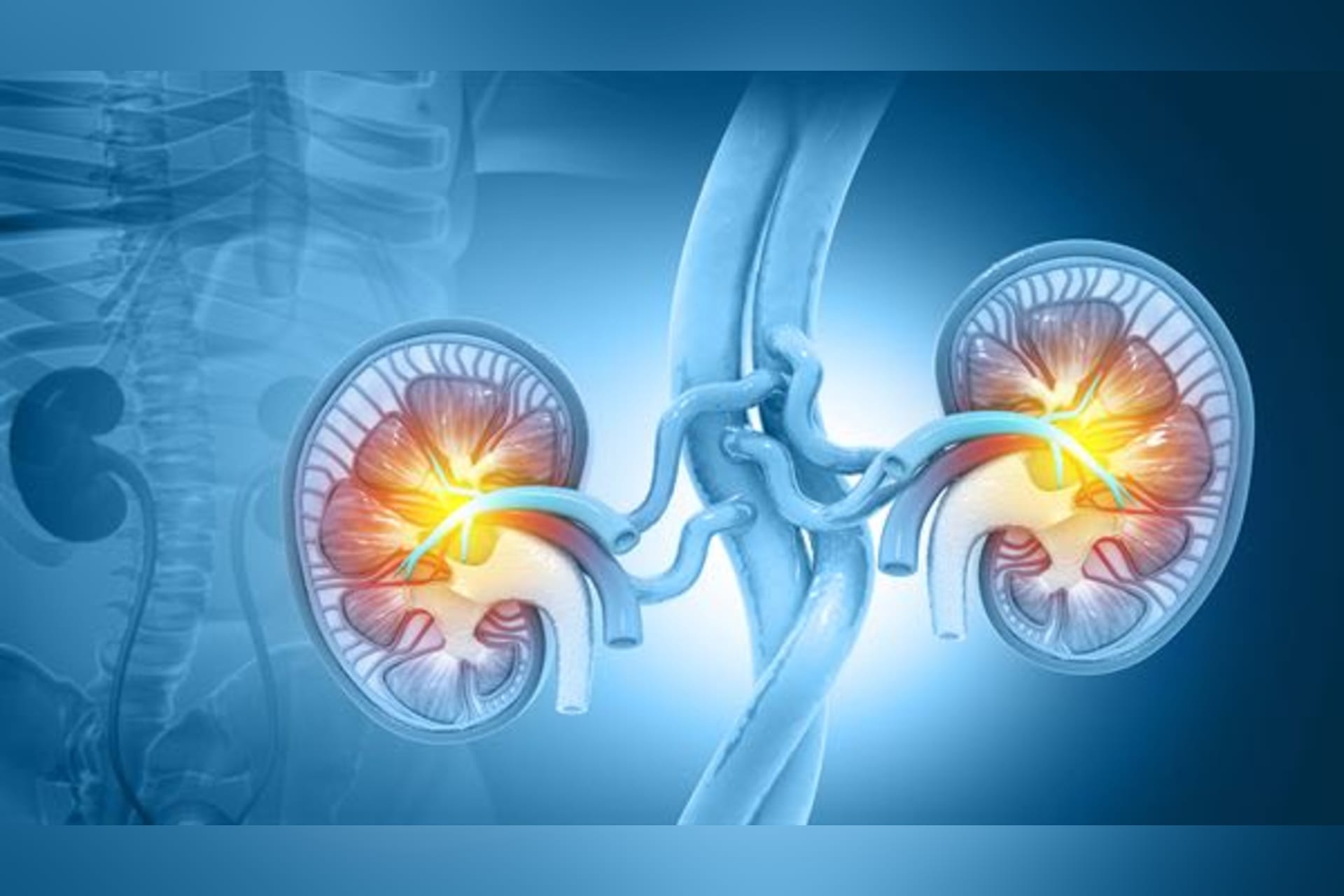
New research from the American Physiological Society's 2026 kidney conference is reshaping how scientists understand one of the body's most underrated organs. From influencing salt cravings to regulating blood pressure and speeding up recovery from injury, the kidneys are proving to be far more powerful than most people — or even most doctors — have long assumed. Here are five key findings that are changing the picture.

.
More Than a Filter
Most people think of the kidneys as a cleaning system — two bean-shaped organs that quietly filter waste out of the blood. But a wave of new research presented this week at the American Physiological Society's Control of Renal Function in Health and Disease conference in Fontana-on-Geneva Lake, Wisconsin, tells a very different story.
The studies — many based on animal models and still in early stages — suggest the kidneys are deeply embedded in the body's communication networks. They shape behavior, metabolism, immunity, and blood pressure in ways that scientists are only now beginning to map.
1. Your Kidneys May Be Behind Your Salt Cravings
Why is it so hard for many people to cut back on salt? A new study from the University of Minnesota Medical School offers a surprising answer: the kidneys themselves may be driving the craving.
Researchers discovered that the kidneys contain sensory nerves that constantly send signals to the brain about the body's internal state — a process the research team calls "renal interoception." In experiments with rats, animals whose kidney nerve signaling remained intact drank significantly more saltwater when sodium-depleted, compared to animals where those kidney-brain connections had been severed. Water intake was the same in both groups.
The findings suggest that salt appetite is not purely a brain-driven phenomenon. If the same mechanism holds true in humans, it could help explain why sodium restriction is so difficult for many patients — and open up new treatment strategies for managing high blood pressure.
Further reading: A peer-reviewed study published in Kidney International (2024) demonstrated a similar link in hypertensive rats, showing that removing kidney sensory input selectively reduced salt-seeking behavior without affecting water intake. (Source 3)
2. When You Eat May Matter as Much as What You Eat
Health advice about kidneys usually focuses on what to eat — less salt, less processed food. But a new study in rats suggests the timing of meals could be just as important for kidney health.
Researchers divided salt-sensitive rats into two groups, feeding both a high-sodium diet. One group could eat whenever they wanted. The other was restricted to eating only during a set daily window — a method often called intermittent fasting or time-restricted feeding. Despite consuming the same food, the fasting group showed significantly less kidney inflammation at the molecular level. Their kidneys also showed more efficient energy metabolism, burning fats and carbohydrates more effectively.
Researchers observed increased activity in metabolic pathways including gluconeogenesis (the process by which the kidneys produce glucose), suggesting broader shifts in how the organ processes energy under time-restricted conditions.
The findings raise a practical question: could scheduling meals differently help protect kidney function, even when diet quality is poor?
3. Exercise Builds Kidney Resilience
Exercise is well-known to protect the heart and muscles. Now, research in mice suggests it may also help the kidneys bounce back from injury.
Scientists at the University of Louisville's Center for Cardiometabolic Science found that mice who exercised voluntarily for several weeks recovered significantly faster from ischemia-reperfusion injury (damage caused when blood flow is cut off to the kidneys and then restored — a common occurrence during surgery or certain medical procedures). Three days after the injury, the exercised mice showed near-normal kidney function, while sedentary mice continued to show signs of ongoing damage.
The research team also observed changes in immune cell populations in the exercised mice, with a shift toward cells that reduce inflammation and support tissue repair. Additionally, exercise appeared to increase blood volume within the kidney, potentially helping the organ better withstand physical stress.
The practical message is clear: staying physically active is good for kidney health — not just for the heart.
4. Some Immune Cells Actually Protect Against High Blood Pressure
It has long been assumed that the immune system works against the body in cases of high blood pressure — causing inflammation that makes things worse. New research from the University of Edinburgh challenges that assumption.
Scientists studying salt-sensitive hypertension (a condition where blood pressure spikes more sharply after eating salty food) found that removing a specific class of immune cells, called myeloid cells, actually worsened outcomes in mice. Animals without these cells retained more sodium, showed poorer blood vessel function, and produced less nitric oxide — a molecule that helps blood vessels stay relaxed and flexible.
The data suggest that certain white blood cells actively help the body manage excess dietary salt — both by assisting the kidneys in flushing out sodium and by keeping blood vessels healthy. Whether the same is true in humans remains to be determined, but the findings could point toward a more nuanced approach to treating high blood pressure.
5. The Kidney's Repair Crew: Immune Cells That Change Jobs Mid-Recovery
A fifth study, from Washington University in St. Louis, used advanced imaging and genetic tools to track immune cells called macrophages (a type of white blood cell) through the different stages of kidney recovery after acute injury.
The results were striking: these cells did not behave the same way throughout recovery. Early after injury, they clustered in damaged areas, appearing to trigger inflammation. Later, they shifted roles — clearing cellular debris and actively supporting tissue repair.
When researchers removed these macrophages before the injury, outcomes actually improved. But when the cells were removed during the recovery phase, healing slowed down, damaged material accumulated, and the risk of long-term scarring increased.
The study reinforces a growing realization: immune cells are neither simply "good" nor "bad." Their effects depend entirely on timing, location, and the signals they receive from surrounding tissue. Understanding those signals could eventually lead to therapies that guide the kidney's own immune cells toward healing rather than harm.
A New Picture of an Old Organ
Taken together, these five studies point toward the same conclusion: the kidneys are not passive filters. They are active participants in regulating behavior, metabolism, blood pressure, and immune responses — organs whose influence reaches far beyond the urinary system.
Most of this research is still preliminary, based on animal models and not yet confirmed in large human studies. But the direction is clear. Scientists are increasingly recognizing the kidneys as central players in whole-body health, and the clinical implications — from new approaches to hypertension treatment to lifestyle recommendations for kidney disease prevention — could be significant in the years ahead.
.
Sources:
-
American Physiological Society – 2026 Control of Renal Function in Health and Disease Conference (official program): https://www.physiology.org/professional-development/meetings-events/control-of-renal-function-in-health-and-disease-2026/program-for-the-2026-aps-renal-physiology-conference
-
Newswise / American Physiological Society Press Release – "11 New Kidney Research Findings on Diet, Exercise and Stress" (June 23, 2026): https://www.newswise.com/articles/11-new-kidney-research-findings-on-diet-exercise-and-stress
-
Kidney International / PubMed Central – "Removing interoceptive input from the kidney to the brain reduces salt appetite in DOCA hypertensive rats": https://pmc.ncbi.nlm.nih.gov/articles/PMC11585427/
-
Nature Reviews Nephrology – "Innate immune cells in acute and chronic kidney disease" (2025): https://www.nature.com/articles/s41581-025-00958-x
-
PubMed Central / Frontiers in Immunology – "The multifaceted role of macrophages in kidney physiology and diseases" (2025): https://pmc.ncbi.nlm.nih.gov/articles/PMC12490994/
-
PubMed / American Heart Association – "Physiological Mechanisms of Dietary Salt Sensing in the Brain, Kidney, and Gastrointestinal Tract": https://pubmed.ncbi.nlm.nih.gov/37671571/
.
What's Your Reaction?
 Like
0
Like
0
 Dislike
0
Dislike
0
 Love
0
Love
0
 Funny
0
Funny
0
 Wow
0
Wow
0
 Sad
0
Sad
0
 Angry
0
Angry
0













Comments (0)