

Why Some Carbs Actually Fight Inflammation Instead of Causing It
Carbohydrates have a bad reputation in the inflammation conversation, but not all carbs deserve it. Foods like sweet potatoes, legumes, and buckwheat contain fiber, resistant starch, and plant compounds that can actively calm inflammation in the body. Recent laboratory and clinical research is now showing exactly how — and which foods work best.

.
The Myth: "Carbs Cause Inflammation"
Carbohydrates are often blamed as one of the biggest dietary drivers of chronic inflammation. That reputation mostly comes from ultra-processed carbs — white bread, pastries, and packaged snacks made with refined flour and added sugar.
Whole-food carbohydrates are a different story. Foods like sweet potatoes, beans, lentils, and buckwheat are carbohydrate-rich, yet research links them to lower, not higher, inflammation markers.
Two mechanisms explain the difference. The first is fiber. A 2021 study of more than 300 men, published in the journal Genome Medicine, found that higher fiber intake was linked to lower levels of C-reactive protein (CRP), a standard marker doctors use to measure inflammation in the blood.
The second mechanism is resistant starch, a type of starch that isn't broken down in the small intestine. Instead, it travels to the colon, where gut bacteria ferment it into short-chain fatty acids such as butyrate — compounds with well-documented anti-inflammatory effects throughout the body.
.
Sweet Potatoes: More Than Just Beta-Carotene
Sweet potatoes are known for their vitamin A content, but newer research points to another set of active compounds: plant sterols.
A laboratory study published in the journal Molecules in January 2026 identified two sterols in sweet potato extract — beta-sitosterol and campesterol — that suppressed the production of interleukin-6 (IL-6), a key inflammatory signaling molecule, in immune cells exposed to bacterial toxins. The effect appeared at concentrations similar to those naturally found in the sweet potato extract itself, suggesting the vegetable's whole-food matrix, not just isolated supplements, may carry real anti-inflammatory potential.
Ordinary potatoes, while less discussed, also contribute fiber and resistant starch, and colorful varieties add anthocyanins — the same pigment compounds found in blueberries and red cabbage.
.
Legumes: A Proven Effect on Inflammation Markers
Beans, lentils, and chickpeas are some of the most fiber-dense carbohydrates available, and clinical trials are now confirming their impact on inflammation.
A 12-week randomized trial presented at the American Society for Nutrition's 2025 annual meeting followed 72 adults with prediabetes. Participants ate one cup daily of either black beans, chickpeas, or white rice as a control. By week 12, the black bean group showed a significant drop in interleukin-6 levels — from an average of 2.57 to 1.88 picograms per milliliter. The chickpea group saw a meaningful, though shorter-lived, reduction in CRP at the six-week mark, alongside a significant drop in total cholesterol by week 12.
The takeaway: even without dramatic diet changes, swapping a daily portion of refined starch for legumes appears to measurably shift inflammatory and metabolic markers within weeks.
.
Buckwheat and Quinoa: The Underrated Whole Grains
Despite its name, buckwheat is not related to wheat. It's a gluten-free seed that's prepared like a grain, making it a useful option for people avoiding gluten.
Buckwheat's standout compound is rutin, a flavonoid found in far higher concentrations in buckwheat than in most other foods. Research reviewed in a 2023 nutritional overview describes rutin as supporting blood vessel elasticity, reducing oxidative stress, and contributing measurable anti-inflammatory activity — properties tied to healthy circulation throughout the body.
Quinoa, technically a seed rather than a true grain, pairs fiber with a relatively high protein content, which helps slow blood sugar spikes after meals. Some research also links quinoa consumption to a healthier balance of gut bacteria, an area increasingly connected to whole-body inflammation control.
.
How to Add These Carbs to Your Plate
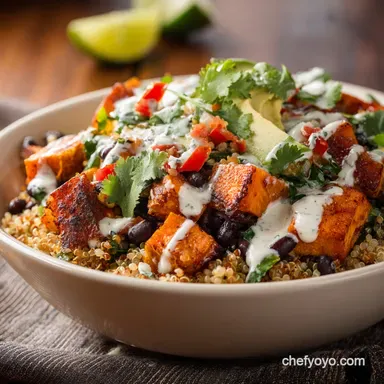
None of this requires an elaborate diet overhaul. A simple approach: build a bowl around one root vegetable, one legume, and a handful of vegetables.
Roast cubed sweet potato until caramelized, then combine it with canned or cooked beans, pre-cooked quinoa, leafy greens, and chopped tomato or cucumber. A drizzle of olive oil and lemon juice adds healthy fat and finishes the dish.
For a Mediterranean-style version, cook lentils and top them with diced tomato, cucumber, red onion, and fresh herbs, finished with olive oil and a squeeze of lemon. Both combinations deliver fiber, resistant starch, and plant compounds in a single, simple meal.
.
The Bottom Line
The idea that all carbohydrates promote inflammation doesn't hold up against the evidence. Whole-food carbs — legumes, root vegetables, and pseudo-grains like buckwheat and quinoa — are consistently linked to lower inflammatory markers in both laboratory and human studies.
The real dividing line isn't "carbs versus no carbs." It's whole, fiber-rich foods versus heavily refined ones. Choosing more of the former is a simple, evidence-backed step toward reducing chronic inflammation.
.
Sources
- Genome Medicine (Springer Nature) – "Dietary fiber intake, the gut microbiome, and chronic systemic inflammation in a cohort of adult men": https://link.springer.com/article/10.1186/s13073-021-00921-y
- Molecules / PMC (National Institutes of Health) – "Identification of Active Anti-Inflammatory Compounds in Sweet Potato Storage Roots Extracted with Ethanol via LC-Q-TOF-MS" (2026): https://pmc.ncbi.nlm.nih.gov/articles/PMC12898583/
- Current Developments in Nutrition (American Society for Nutrition) – "Effects of Chronic Intake of Black Beans and Chickpeas on Metabolic and Inflammatory Markers in Adults With Pre-diabetes": https://cdn.nutrition.org/article/S2475-2991(25)01621-X/fulltext
- ClinicalTrials.gov (U.S. National Library of Medicine) – Study registration NCT04267705: https://clinicaltrials.gov/study/NCT04267705
- PMC (National Institutes of Health) – "Nutritional and bioactive characteristics of buckwheat, and its potential for developing gluten-free products: An updated overview": https://pmc.ncbi.nlm.nih.gov/articles/PMC10171551/
.
What's Your Reaction?
 Like
0
Like
0
 Dislike
0
Dislike
0
 Love
0
Love
0
 Funny
0
Funny
0
 Wow
0
Wow
0
 Sad
0
Sad
0
 Angry
0
Angry
0



















Comments (0)