

Heavy Drinking and Belly Fat: What a Large Oxford Study Says About the Fat You Can’t See
A major study from the University of Oxford links heavier drinking to more visceral fat, the dangerous fat stored deep in the abdomen. The link held even after researchers accounted for total body fat, age, smoking and physical activity. The study shows an association, not proof that alcohol causes the effect. Still, it adds to growing evidence that where your body stores fat matters as much as how much you carry.


.
Two People, Same Weight, Different Risk
Imagine two people with the same body weight and the same BMI. One stores most of their fat just under the skin. The other stores it deep inside the abdomen, around organs such as the liver and intestines.
The second person is at greater risk. Fat stored around the organs, called visceral fat, is tied to type 2 diabetes, heart disease and chronic inflammation. Fat under the skin, called subcutaneous fat, is far less harmful.
This is why the bathroom scale and even BMI can mislead. Neither shows where the fat sits.
.
What the Oxford Study Found
Researchers at the University of Oxford analysed data from 5,761 men and women in the Oxford Biobank, a population-based research cohort. Participants reported their typical weekly alcohol intake and underwent DXA scans. A DXA scan is a low-dose X-ray that can tell abdominal fat types apart far more precisely than a tape measure.
The result was a dose-dependent link. Even after adjusting for age, smoking, height, physical activity, socio-economic status and total fat mass, higher alcohol intake went along with a larger share of visceral fat.
The effect was clearest at the top. The heaviest-drinking quarter of participants had a visceral fat share more than 10 percent higher than the group just below them. Their median intake was about 24 UK units a week for men (roughly 14 US standard drinks) and 14 units for women (roughly 8 US drinks).
The lead author, Professor Fredrik Karpe, also noted that drinking within recognised safe limits showed no such association in this analysis. The study was published in February 2026 in the International Journal of Obesity.
.
Other Studies Point the Same Way
The Oxford findings fit earlier research.
A 2022 analysis of 1,869 adults aged 40 to 80 in the UK Biobank found that more beer and spirits went along with more visceral fat. More red wine was linked to less. That does not mean red wine is a health tool. The study could only show associations, and it covered older white adults.
An earlier Framingham Heart Study analysis used CT scans. It found that men who drank more than 14 drinks a week had more visceral fat than men who drank less. Among women, that analysis found no significant difference in visceral fat.
.
Why Might Alcohol Matter?
The exact mechanism is not settled. Researchers point to a few plausible factors.
First, alcohol is energy-dense. At seven calories per gram, it carries nearly twice the calories of carbohydrates or protein, and those calories add up quickly, especially with sugary mixers. Alcohol may also encourage people to eat more than they planned.
Second, the body gives priority to breaking alcohol down, which temporarily slows fat burning. Scientists also suspect effects on hormones and insulin that could steer fat toward the abdomen. These ideas remain hypotheses, and it is hard to separate alcohol's direct effects from the extra calories it brings.
.
What the Studies Cannot Tell Us
The Oxford study captured one moment in time. It did not follow people as their habits and bodies changed, so it cannot show cause and effect.
Drinking was self-reported, which can be inaccurate. The researchers also lacked full details on diet and drinking patterns, such as binge drinking versus steady intake. Non-drinkers are a mixed group that can include lifelong abstainers and former drinkers, which makes comparisons tricky. Karpe's team says long-term studies would be needed to show whether cutting back actually reduces visceral fat.
One practical finding stands out: waist circumference did not reliably capture these differences. A normal-looking waistline does not guarantee a low level of visceral fat.
.
The Policy Backdrop
The 2025–2030 Dietary Guidelines for Americans, released in January 2026 under the Trump administration, advise people to "consume less alcohol for better overall health." They dropped the earlier numeric limits of one drink a day for women and two for men.
Reactions were mixed. Some beverage-industry groups welcomed the approach, while medical bodies such as the American Association for the Study of Liver Diseases (AASLD) criticised the loss of clear numbers. The Oxford study is not a guideline, but it shows why many researchers still want concrete benchmarks.
.
What You Can Do
The encouraging news is that visceral fat responds to lifestyle changes.
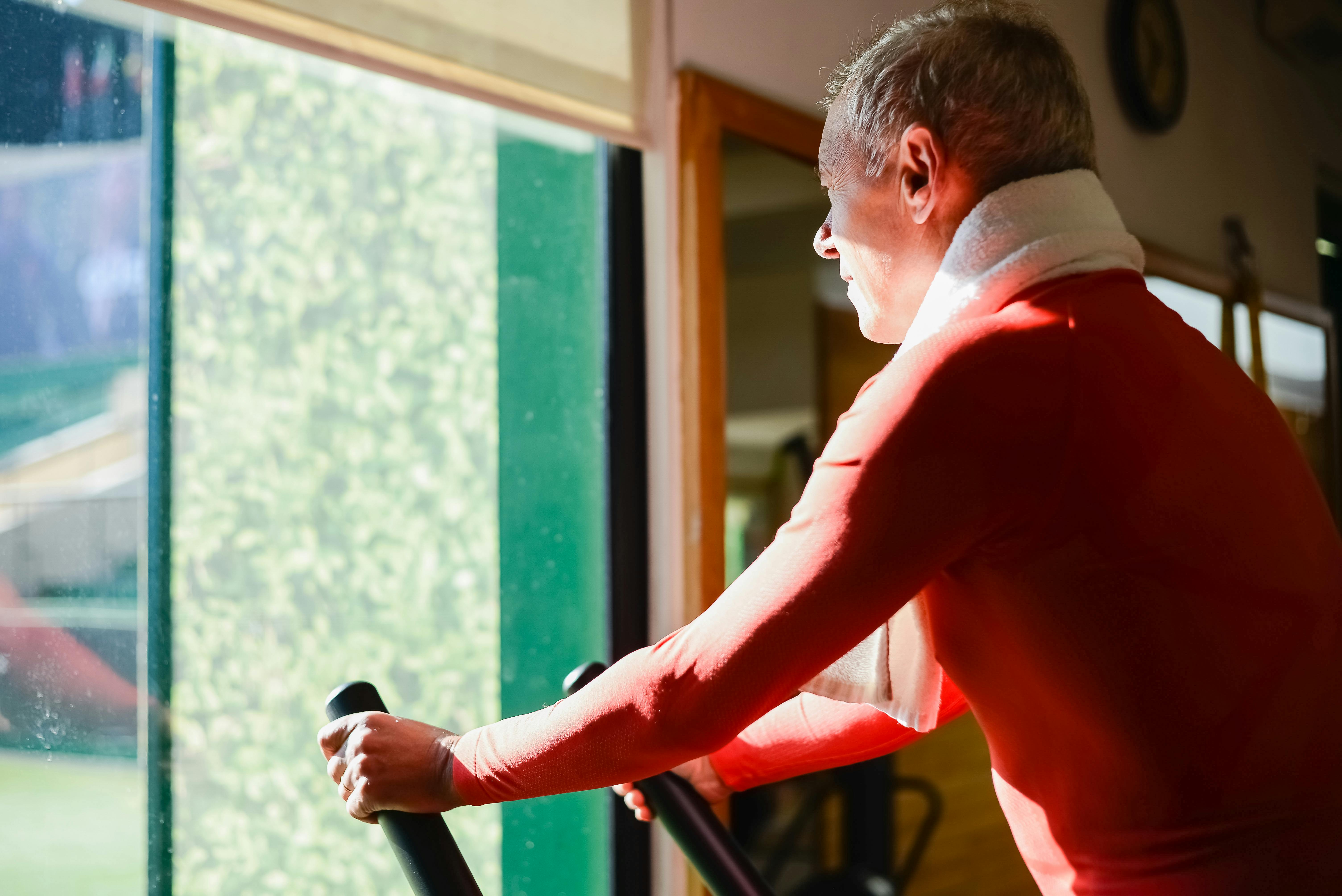
A 2024 review in Obesity Reviews pooled 84 randomised controlled trials with 4,836 adults who were overweight or obese. It found that aerobic exercise of at least moderate intensity, resistance training, combined programmes and high-intensity interval training all reduced visceral fat. Vigorous aerobic exercise and interval training ranked best, and resistance training ranked lowest. The review also noted that weight loss alone does not always reveal changes in visceral fat.
Practical steps include:
- Cut back gradually. Alcohol-free days and alternating drinks with water are realistic starting points.
- Watch the extras. Sugary mixers and cocktails add calories quickly.
- Move regularly. Consistency matters more than any single "fat-melting" routine.
- Look beyond the scale. Ask your doctor about waist measurements and metabolic checks.
This article is for general information and is not medical advice.
.
Outlook
Researchers now want long-term studies that track drinking, diet and body fat over time. Until then, the message is cautious but clear: heavier drinking and a hidden fat deposit tend to go together. A stable weight does not necessarily mean everything is fine beneath the surface.
.
Sources
- Chesters J., Neville M.J., Karpe F. "Greater visceral fat mass accumulation with high alcohol consumption." International Journal of Obesity, 2026 (open access, CC BY 4.0). https://ora.ox.ac.uk/objects/uuid:cbaf18f9-955f-4b21-a46d-3336bbea914e
- University of Oxford, Radcliffe Department of Medicine: "Heavier drinking linked to higher levels of harmful 'hidden' fat, study finds." https://www.rdm.ox.ac.uk/news/heavier-drinking-linked-to-higher-levels-of-harmful-201chidden201d-fat-study-finds
- Pembroke College, University of Oxford: "Alcohol consumption and visceral fat: new study by Professor Fredrik Karpe confirms link." https://www.pmb.ox.ac.uk/news/alcohol-consumption-and-visceral-fat-new-study-professor-fredrik-karpe-confirms-link
- Larsen B.A. et al. "Beer, wine, and spirits differentially influence body composition in older white adults – a United Kingdom Biobank study." Obesity Science & Practice, 2022. https://pubmed.ncbi.nlm.nih.gov/36238230/
- Molenaar E.A. et al. "Association of lifestyle factors with abdominal subcutaneous and visceral adiposity: the Framingham Heart Study." Diabetes Care, 2009. https://pmc.ncbi.nlm.nih.gov/articles/PMC2646037
- Chen X. et al. "Effects of various exercise types on visceral adipose tissue in individuals with overweight and obesity: a systematic review and network meta-analysis of 84 randomized controlled trials." Obesity Reviews, 2024. https://pubmed.ncbi.nlm.nih.gov/38031812/
- American Association for the Study of Liver Diseases (AASLD): "AASLD Raises Concern Over Removal of Evidence-Based Alcohol Guidance in 2025–2030 Dietary Guidelines for Americans." https://www.aasld.org/aasld-raises-concern-over-removal-evidence-based-alcohol-guidance-2025-2030-dietary-guidelines
- FOX19: "New dietary guidelines urge Americans to avoid processed foods and added sugar." https://www.fox19.com/2026/01/07/new-dietary-guidelines-urge-americans-avoid-processed-foods-added-sugar/
.
What's Your Reaction?
 Like
0
 Dislike
0
 Love
0
 Funny
0
 Wow
0
 Sad
0
 Angry
0












Comments (0)