

Nvidia Chief’s Fall Puts Washington’s China Chip Policy Under Pressure
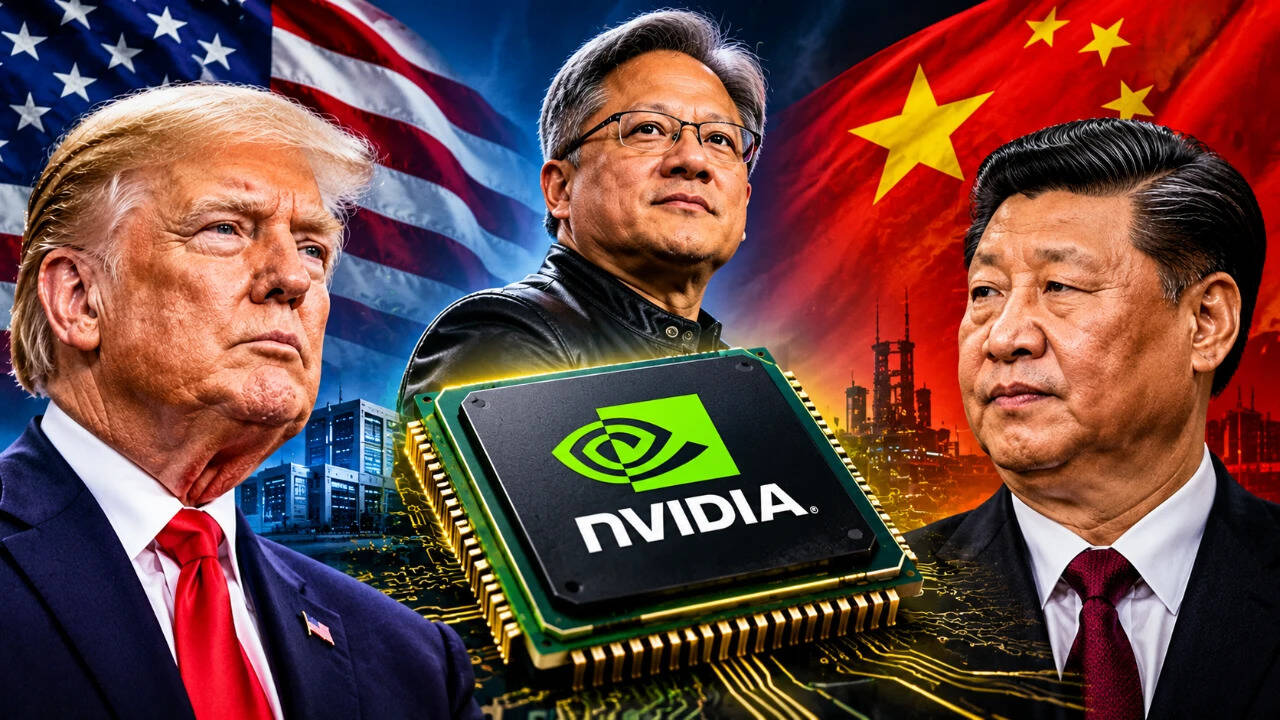
Nvidia CEO Jensen Huang has resigned after reports of a relationship with a woman whom US authorities suspect of spying for Beijing. The scandal has triggered a wave of criticism in Congress. Lawmakers from both parties are now questioning why the Commerce Department has not blacklisted more Chinese firms. House Speaker Mike Johnson says a consensus on tighter chip export limits is forming.

.
A Resignation That Shook the AI Industry
Nvidia announced on Thursday that Jensen Huang is leaving his posts as CEO and board member, effective immediately. Chief Financial Officer Colette Kress will serve as interim CEO. Board member Harvey Jones becomes the company's first-ever board chair.
The move came after reports that Huang had a relationship with Alice Huang (no relation). She was an executive at Megaspeed, a Singapore-based cloud company and Nvidia partner. US authorities suspect she worked for Chinese intelligence. Huang apologized publicly and said he did not compromise national security or company secrets. The board has opened an outside investigation.
Markets reacted sharply. Al Jazeera reported that Nvidia lost more than $600 billion in market value. Beijing rejects the spying allegations and calls them a smear.
Lawmakers Turn Their Attention to Commerce
The scandal has quickly become a political issue. Washington has long suspected that Megaspeed helped China obtain advanced AI chips that US export rules restrict. Critics now ask why the company, and many others, are not on the Commerce Department's Entity List. This is a trade blacklist that limits access to American technology.
According to Reuters, the US has added no names to that list since October 2025. That is the longest pause in more than a decade. Earlier this year, the administration also held off on listing DeepSeek, chipmaker CXMT and more than 100 other firms flagged as security risks.
Commerce Secretary Howard Lutnick is at the center of the criticism. Axios reported that he stalled a crackdown on suspected chip diversion that President Donald Trump had approved. It also reported that Treasury Secretary Scott Bessent questioned him about Megaspeed in a White House meeting on November 5. Commerce denies that exchange took place.
The White House says Trump has full confidence in Lutnick.
Pressure From Both Parties
The criticism is not limited to one side of the aisle. Democratic Senator Elizabeth Warren demanded that Lutnick and Under Secretary Jeffrey Kessler explain why export loopholes remain open. Republican Senator John Kennedy also wants answers about approved chip sales to China.
Senator Tom Cotton, the Republican chair of the Senate Intelligence Committee, went further. In a letter, he urged Lutnick to bar CXMT, a Chinese memory chipmaker, from the US market. He warned that the company threatens American economic and military strength.
Speaker Johnson said he favors limiting chip exports to China. He believes the recent events could change some minds in Congress.
Background: Why Chips Matter
Advanced AI chips are essential for building powerful AI systems, including those with military uses. For years, Washington has tried to keep the most capable chips away from China's military and security services. The Chinese Communist Party (CCP) openly pursues "military-civil fusion," which means commercial technology is meant to serve the armed forces.
Huang was one of the industry's strongest voices for selling more chips to China. Critics from both parties argued that this approach carried security risks. His downfall gives them new arguments.
What Comes Next
House Foreign Affairs Chairman Brian Mast expects Huang to testify before Congress within about a week. Mast and two other Republicans had already asked him to brief them privately.
Meanwhile, the Entity List decisions on Megaspeed and CXMT remain open. Whether the Trump administration moves toward a tougher line, as its congressional allies now urge, will be a key question in the coming weeks.
.
Sources
- Reuters, "Trump's Commerce chief Lutnick criticized over chip exports after Nvidia CEO resignation" (Nov 12, 2026): https://www.reuters.com/world/china/republican-senator-urges-ban-chinese-chipmaker-cxmt-us-market-2026-11-12/
- Reuters, "Speaker Johnson says Congress developing consensus on limiting chip exports to China" (Nov 12, 2026): https://www.reuters.com/world/china/speaker-johnson-says-congress-developing-consensus-limiting-chip-exports-china-2026-11-12/
- Al Jazeera, "Nvidia CEO Jensen Huang steps down amid spy scandal and market loss" (Nov 12, 2026): https://www.aljazeera.com/news/2026/11/12/ai-titan-jensen-huang-out-as-nvidia-ceo
- Implicator.ai, "Lutnick Holds Up Chip Curbs Trump Approved Three Times" (Nov 12, 2026): https://www.implicator.ai/lutnick-holds-up-nvidia-chip-curbs-megaspeed/
- Brussels Times (AFP photo credit), "Nvidia CEO Jensen Huang steps down after affair with alleged Chinese spy": https://www.brusselstimes.com/belgium/2404392/nvidia-ceo-jensen-huang-steps-down-after-affair-with-alleged-chinese-spy
- US Senate Banking Committee (Warren letter on Entity List stagnation, July 2026): https://www.banking.senate.gov/newsroom/minority/warren-presses-trump-administration-over-failure-to-protect-us-economic-and-national-security
.
What's Your Reaction?
 Like
0
 Dislike
0
 Love
0
 Funny
0
 Wow
0
 Sad
0
 Angry
0











Comments (0)