

How Washington's Chip Blockade Backfired: Beijing Turned a Ban Into a Billion-Dollar Boom for Huawei
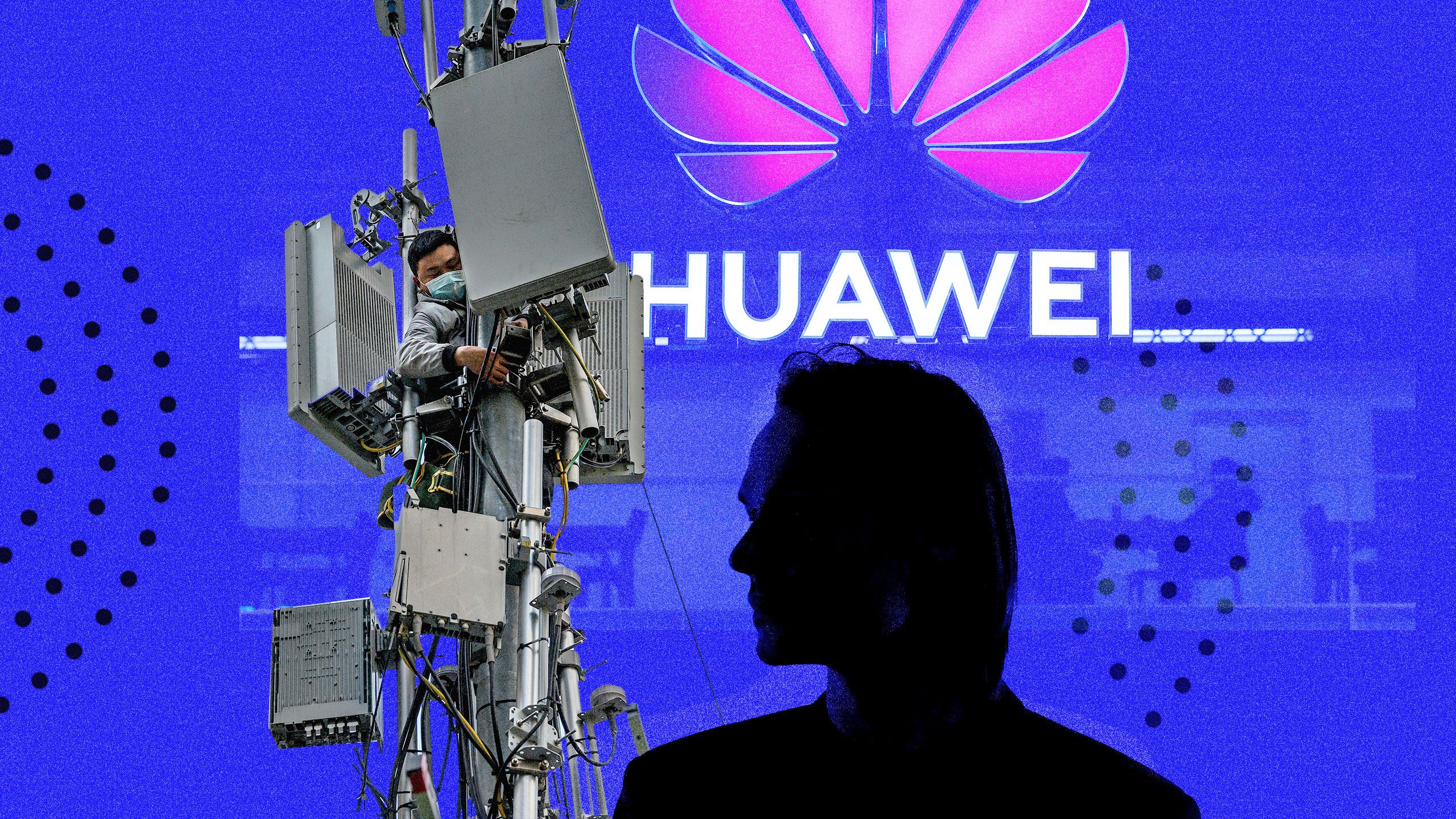
U.S. export controls were designed to cripple Huawei's access to advanced semiconductors. Instead, Beijing turned the ban into an industrial policy triumph, pouring billions in subsidies into the company. Huawei's chip revenue is now projected to hit $12 billion in 2026, and the debate over whether sanctions helped or hurt is intensifying in Washington.


.
Three years after the United States tried to cut Huawei off from the world's most advanced chip technology, the Chinese company is posting the kind of growth that sanctions were supposed to prevent. Huawei's chip revenue is expected to climb roughly 60 percent this year, reaching about $12 billion, up from $7.5 billion in 2025, according to a Financial Times report cited by Reuters and multiple industry outlets.
The surge is forcing a hard question in Washington: did years of export restrictions inadvertently hand Beijing the incentive — and the cash — to build a domestic chip champion faster than it otherwise would have?
A Ban Meets a Subsidy Machine
Washington's restrictions on Huawei began in 2019, when the company's equipment was blacklisted from U.S. government use over national security concerns. The Biden administration tightened the screws further: a 2022 ban on sales and imports, followed months later by a full halt on export licenses.
Beijing's response was not retreat but reinvestment. Chinese state agencies were directed to buy hardware, chips, devices and software from Huawei, while government grants to the company jumped sharply — from roughly $403 million in 2021 to billions of yuan in the years that followed, according to Huawei's own annual disclosures.
Nvidia CEO Jensen Huang, whose company is Huawei's chief rival in AI chips, has openly acknowledged the result. He told the Financial Times earlier this year that Huawei is "the single most formidable technology company in China" and has "conquered every market" it has entered.
The Numbers Behind the Surge
Most of Huawei's 2026 growth is tied to a single product: the Ascend 950PR processor, which entered mass production in March and is manufactured on a 7-nanometer process by China's largest chipmaker, SMIC. An upgraded version, the 950DT, is due in the fourth quarter.
Reuters, citing the Financial Times, reported that major Chinese technology firms — including Alibaba, ByteDance and Tencent — have rushed to secure orders as Nvidia's access to the Chinese market has narrowed. Huang himself has said Nvidia's share of China's AI accelerator market has fallen to zero. Demand accelerated further after Chinese AI developer DeepSeek said it built its new "V4" model to run on Huawei's hardware.
Even so, independent analysts caution against reading the revenue figures as proof that Huawei has closed the technology gap. The Council on Foreign Relations noted that Huawei's own published roadmap shows its next-generation chip will actually be less powerful than Nvidia's current lineup, and that even under highly optimistic production assumptions, Huawei would generate only a small fraction of the aggregate computing power Nvidia produces.
Cracks in the "Made in China" Narrative
Much of Huawei's earlier chip breakthroughs turned out to be less domestic than advertised. According to a December 2025 letter from Rep. John Moolenaar, chairman of the House Select Committee on China, to Commerce Secretary Howard Lutnick, the semiconductor analysis firm TechInsights found that critical components of Huawei's 910C chip were actually manufactured by Taiwan's TSMC and by South Korea's Samsung and SK Hynix — not by Chinese factories, as Beijing had implied.
The Commerce Department subsequently penalized TSMC over nearly three million chips it had produced for a Huawei shell company, according to the same letter. Moolenaar argued that Huawei's forced pivot to purely domestic manufacturing for its next chip generation would set the company's capabilities back, not forward.
The episode has fed into a sharper political dispute inside Washington itself. When the Trump administration approved Nvidia's sale of H200 chips to approved customers in China in December 2025, Moolenaar — a member of the president's own party — publicly pressed Lutnick for a full briefing, warning that citing Huawei's "gains" to justify the decision was misleading, since those gains rested on illegally sourced foreign components.
Outlook: A Market Splitting in Two
Analysts increasingly describe the U.S.-China chip relationship not as a clean break but as what one industry report called a "managed bifurcation" — a deliberate, widening gap between American and Chinese chip capabilities rather than a single decisive victory for either side. The Center for Strategic and International Studies has pointed out that export controls only retain their power as long as the United States holds technology China genuinely cannot replace domestically; every year China narrows that gap, the leverage shrinks.
For now, Huawei's revenue numbers tell a story of resilience under pressure, not of technological parity. Whether that distinction holds — or whether Beijing's subsidy-driven strategy eventually produces chips that can match Nvidia's, rather than merely substitute for it in a closed domestic market — will shape the next phase of the U.S.-China tech rivalry.
Huawei did not respond to requests for comment.
.
SOURCES
- Reuters (via MarketScreener) – "US lawmaker demands details on Trump's decision to sell Nvidia H200 chips to China": https://www.marketscreener.com/news/us-lawmaker-demands-details-on-trump-s-decision-to-sell-nvidia-h200-chips-to-china-ce7d50d8dd80f326
- Council on Foreign Relations – "China's AI Chip Deficit: Why Huawei Can't Catch Nvidia and U.S. Export Controls Should Remain": https://www.cfr.org/articles/chinas-ai-chip-deficit-why-huawei-cant-catch-nvidia-and-us-export-controls-should-remain
- Center for Strategic and International Studies – "The Limits of Chip Export Controls in Meeting the China Challenge": https://www.csis.org/analysis/limits-chip-export-controls-meeting-china-challenge
- Data Center Dynamics – "Huawei predicts 60% revenue boost from sale of its AI chips in 2026": https://www.datacenterdynamics.com/en/news/huawei-predicts-60-revenue-boost-from-sale-of-its-ai-chips-in-2026/
- House Select Committee on the CCP – Letter to Secretary Lutnick on Nvidia H200 chips (December 2025): https://chinaselectcommittee.house.gov/sites/evo-subsites/selectcommitteeontheccp.house.gov/files/evo-media-document/select-committee-h200-letter-to-lutnick-december-2025_0.pdf
.
What's Your Reaction?
 Like
0
Like
0
 Dislike
0
Dislike
0
 Love
0
Love
0
 Funny
0
Funny
0
 Wow
0
Wow
0
 Sad
0
Sad
0
 Angry
0
Angry
0











Comments (0)