

Russia Threatens "Countermeasures" as US, Japan and Australia Prepare Record Military Drills Near Its Border
Moscow has formally protested plans by Japan, the United States and Australia to hold their largest-ever joint military exercise, warning that the deployment of an American mid-range missile system poses a direct threat to Russian security. The drills, called "Orient Shield," will run from September 8 to 24 and mark the first time the U.S. Army's Typhon missile launchers take part. The dispute comes amid a broader deterioration in Russo-Japanese relations following a rare visit by Vladimir Putin to a disputed island chain.

.
Moscow Lodges Formal Complaint
Russia's Foreign Ministry summoned Japan's embassy in Moscow on Monday to deliver a stern warning over the upcoming exercises. Foreign Ministry spokeswoman Maria Zakharova told reporters in Vladivostok that Tokyo had been "firmly informed that provocative military activity" near Russia's far-eastern border "is categorically unacceptable."
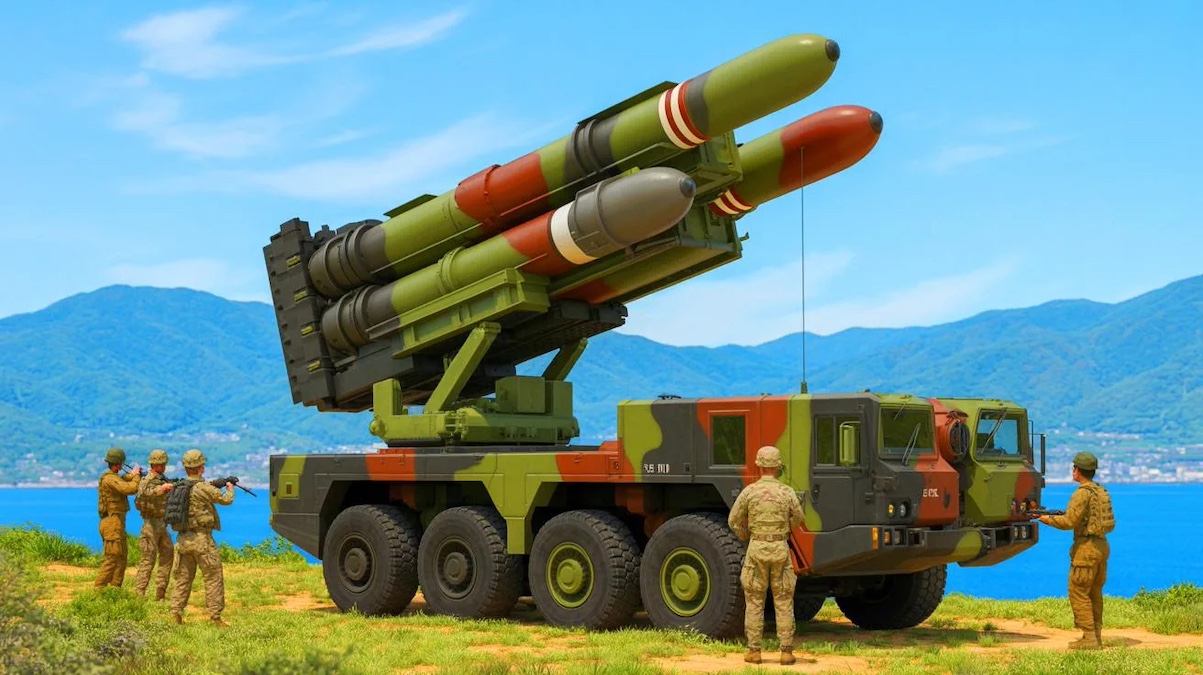
Zakharova singled out the planned deployment of the U.S. Army's Typhon ground-based launch system as the central concern. She said Moscow had warned of "compensatory countermeasures" to safeguard its own security, though she did not specify what form these might take.
.
What "Orient Shield" Actually Is
"Orient Shield" is an annual U.S.-Japan field exercise that has run for years, but the 2026 edition will be the largest yet. According to Japan's Kyodo News, roughly 3,700 troops from the United States, Japan and, for the first time, Australia will take part between September 8 and 24.
The exercise will mark the first inclusion of the Typhon system, a mobile American launcher capable of firing both SM-6 interceptor missiles and long-range Tomahawk cruise missiles. The system was previously sent to Japan's Kagoshima Prefecture in June for drills with Japan's Self-Defense Forces, and is scheduled to be moved to a permanent U.S. base in Japan around mid-October.
Typhon is not new to controversy. Both Moscow and Beijing objected when the system was first deployed to the Philippines in 2024 and to Japan in 2025, arguing it destabilizes the region by extending American land-based strike range deep into what both consider their strategic backyard.
.
A Wider Diplomatic Freeze
Tuesday's protest is the latest in a string of clashes between Moscow and Tokyo. In mid-August, Russian President Vladimir Putin made a rare visit to one of the disputed Kuril Islands — the first such trip by a Russian leader since 2010. Japan calls the island chain its "Northern Territories" and has never recognized Soviet-era annexation of the four southernmost islands at the end of World War Two.
Japanese Prime Minister Sanae Takaichi condemned Putin's visit as "absolutely unacceptable," prompting Russia to summon Japan's ambassador in return and accuse Tokyo of "anti-Russian" rhetoric. Russian Foreign Minister Sergei Lavrov went further, accusing Japan of crossing "the line of decency." The unresolved island dispute has prevented Moscow and Tokyo from signing a formal peace treaty ending World War Two, more than 80 years after the war ended.
.
Behind the Rhetoric: Deterrence, Not Provocation
Japan and its allies frame drills like Orient Shield as defensive preparation, not aggression. Tokyo has steadily expanded its security cooperation with Washington and Canberra in response to what it sees as growing pressure from both Russia and China in the Indo-Pacific — including repeated incursions near Japanese airspace and waters.
The Trump administration has continued to back a robust forward posture in the region, treating systems like Typhon as a deterrent against coercion by authoritarian powers rather than a threat in themselves. Beijing, notably, has echoed Moscow's objections to Typhon's deployment in Asia — a rare instance of open alignment between the two governments against a shared U.S.-led alliance structure in the Pacific.
.
Outlook
With the exercises set to begin September 8, attention will now turn to whether Moscow follows through on its threatened "countermeasures," and whether the drills add further strain to already tense Russo-Japanese relations. Neither side has signaled any interest in de-escalation, and the unresolved Kuril Islands dispute means further friction is likely regardless of how the current exercise plays out.
.
Sources
- Reuters — https://www.reuters.com/business/aerospace-defense/russia-slams-japanese-drills-with-us-australia-says-us-typhon-missile-systems-2026-09-01/
- Al Jazeera — https://www.aljazeera.com/news/2026/8/18/russia-protests-japan-pms-comments-after-putins-kuril-visit
- The Japan Times — https://www.japantimes.co.jp/news/2026/08/18/japan/russia-summons-jp-envoy-disputed-island-visit/
- The Moscow Times — https://www.themoscowtimes.com/2026/08/18/russia-summons-japanese-ambassador-as-dispute-over-kuril-islands-flares-up-a93520
.
What's Your Reaction?
 Like
0
Like
0
 Dislike
0
Dislike
0
 Love
0
Love
0
 Funny
0
Funny
0
 Wow
0
Wow
0
 Sad
0
Sad
0
 Angry
0
Angry
0















Comments (0)